

Picture this: a spoonful of velvety, cold cream melting slowly against your tongue, followed by that sudden, satisfying crack of a roasted almond flake. That contrast smooth and crunchy, cold and warm-toned nutty flavor is exactly why almond ice cream has quietly become one of the most requested frozen desserts in home kitchens this year.
I started making this recipe out of pure impatience. I wanted the rich, nutty flavor of the pistachio-almond kulfi my grandmother used to make, but I didn’t own an ice cream maker and definitely didn’t want to babysit a custard on the stove for an hour. What came out of that first lazy Sunday experiment was a no-churn almond ice cream so good that it’s now the one dessert my family actually requests by name.
Whether you’re chasing an easy homemade almond ice cream recipe for a weeknight treat or want to master roasted almond ice cream at home the traditional churned way, this guide walks you through both paths plus a genuinely creamy eggless almond ice cream base that works for either method.
Churned vs. No-Churn: Which Almond Ice Cream Should You Make?
Before you pull out your mixing bowls, it helps to know which route fits your kitchen and your patience level. Here’s a quick side-by-side so you’re not guessing halfway through.
| Feature | Churned (Traditional) | No-Churn (Quick) |
| Prep Time | 45–60 minutes active + churning | 15–20 minutes active |
| Freeze Time | 3–4 hours after churning | 6–8 hours (or overnight) |
| Equipment Needed | Ice cream maker | Just a hand mixer or whisk |
| Texture | Light, airy, scoopable like store-bought | Denser, richer, almost like a semifreddo |
| Ice Crystal Risk | Low (constant churning aerates it) | Moderate (needs proper technique) |
| Difficulty Level | Intermediate | Beginner-friendly |
| Best For | Ice cream purists, make-ahead batches | Busy weeknights, small kitchens |
Neither method is “better” it genuinely comes down to whether you own the equipment and how much texture control you want. If you’re searching for almond ice cream without ice cream maker, don’t worry: the no-churn version below rivals the churned one when you follow the ratios correctly. [Curious how gelato compares to ice cream in general? Check out our gelato vs ice cream guide.]
Key Ingredients & Flavor Secrets
Great almond ice cream isn’t about a long ingredient list it’s about understanding what each one is doing in the bowl.
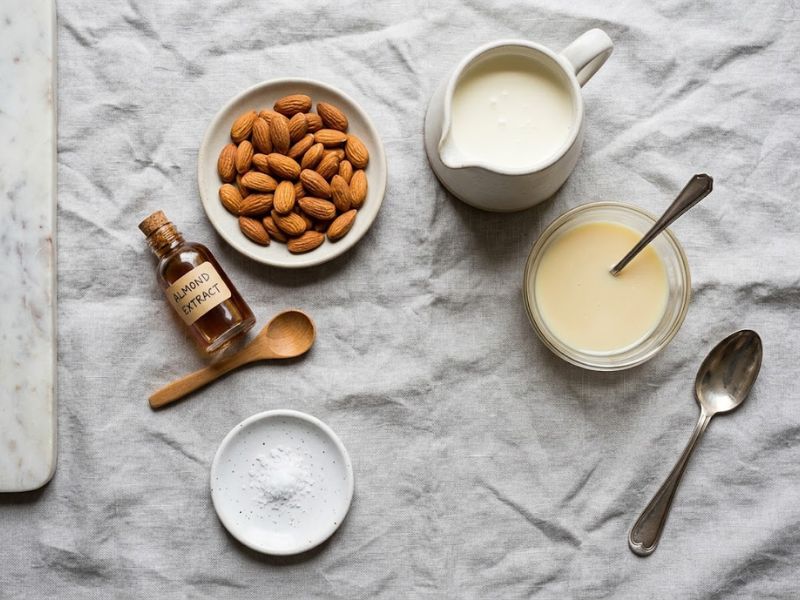
- Heavy cream (whipping cream): This is your air and richness. When whipped to soft peaks before folding, it traps air pockets that keep the ice cream scoopable instead of turning into a solid brick.
- Full-fat milk: Balances the heaviness of the cream and keeps the base from tasting overly dense. Skimping here makes the texture icier, not creamier.
- Condensed milk base: This is the secret weapon of no-churn recipes. The sugar in condensed milk lowers the freezing point of water in the mixture, which is a big part of preventing ice crystals without a machine doing the churning work for you.
- Roasted almonds (whole or roasted almond flakes): Raw almonds taste flat and slightly bitter once frozen. Roasting develops the oils and deepens the flavor, and it’s the single biggest factor in getting that satisfying crunch and texture in every bite.
- Pure almond extract: Just a teaspoon transforms the whole batch. Almond extract is far more concentrated than almonds themselves, so it’s what gives the ice cream its signature marzipan-like aroma.
- Vanilla extract (small amount): Used alongside almond extract, not instead of it. Vanilla rounds out the sharper, sweeter edge of almond extract so the flavor doesn’t taste artificial.
- A pinch of salt: Enhances every other flavor in the bowl don’t skip it just because it’s a dessert.
Pro Tip: Add roasted almond flakes at two different stages half folded into the base, half sprinkled on top before the final freeze. This gives you crunch distributed throughout and a satisfying textural top layer.
Step-by-Step Recipe Guide
Step 1: Roast the Almonds Properly
This is the step people rush, and it shows.
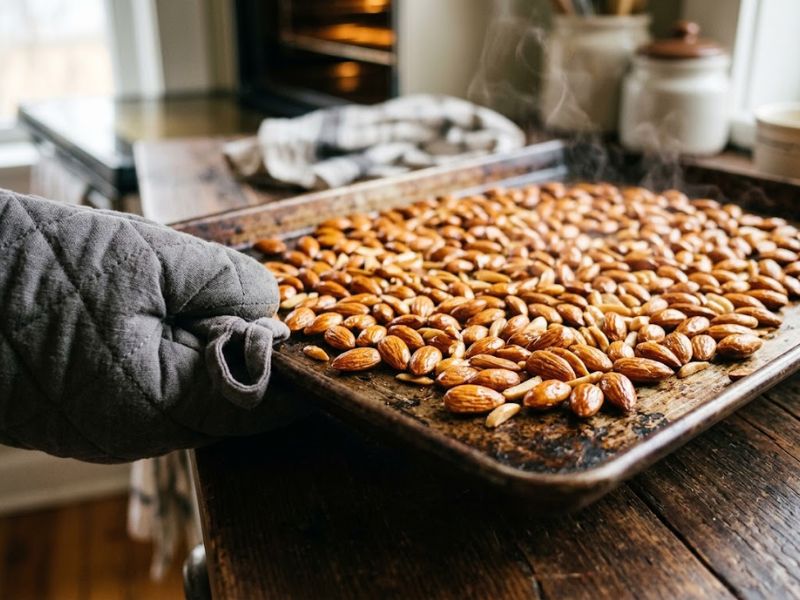
- Preheat your oven to 325°F (160°C).
- Spread raw almonds in a single layer on a baking sheet don’t overcrowd them.
- Roast for 8–10 minutes, tossing halfway, until golden and fragrant (not dark brown, which turns bitter).
- Let them cool completely before chopping warm almonds releases moisture that leads to soggy, soft nuts once frozen.
- Roughly chop into flakes or small pieces, keeping some larger chunks for bite.
Cooling fully is the part most recipes skip mentioning, but it’s genuinely what keeps your almonds crunchy instead of chewy after 24 hours in the freezer.
Step 2: Make the Eggless Base
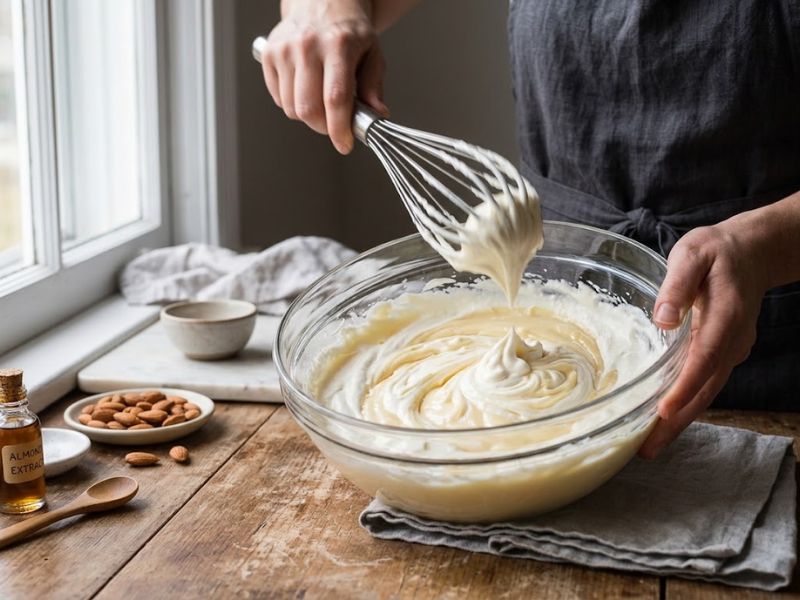
- In a large bowl, whip 2 cups of chilled heavy cream until soft peaks form — you want it thick but still pourable, not stiff.
- In a separate bowl, whisk together 1 cup of full-fat milk, 1 cup of sweetened condensed milk, 1 teaspoon of pure almond extract, ½ teaspoon of vanilla extract, and a small pinch of salt.
- Gently fold the whipped cream into the milk mixture in three batches, using a spatula in a folding motion (not stirring) to preserve the air you just whipped in.
- Fold in half of your roasted, chopped almonds.
This eggless method skips the custard-cooking step entirely, which means no tempering eggs, no risk of scrambling your base, and a genuinely creamy eggless almond ice cream in a fraction of the time.
Step 3: Churn or No-Churn Your Choice
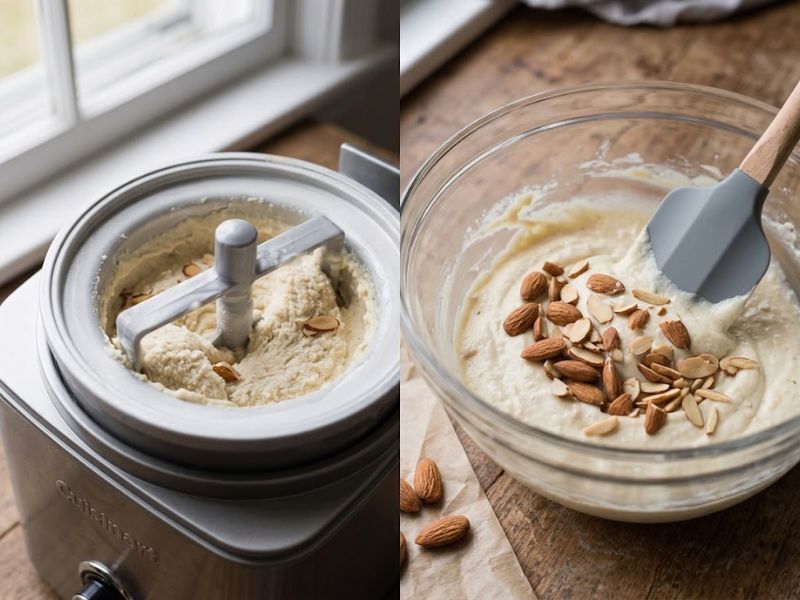
If you’re churning: Pour the base into your ice cream maker and churn according to the manufacturer’s instructions, typically 20–25 minutes, until it reaches soft-serve consistency. Fold in the remaining almonds during the last two minutes of churning so they don’t sink or get pulverized by the blades.
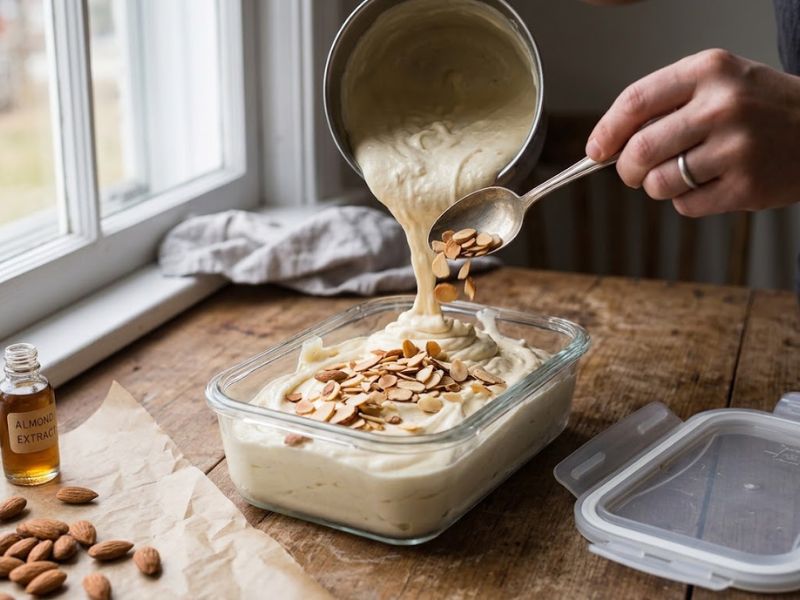
If you’re going no-churn: Pour the base directly into a freezer-safe container, smoothing the top with a spatula. Sprinkle the remaining almonds evenly over the surface and gently press them in.
Step 4: Freeze It Right
Transfer to airtight, freezer-safe containers shallow, wide containers freeze more evenly than tall narrow ones. Press a piece of parchment or wax paper directly onto the surface before sealing the lid; this small step is one of the most effective tricks for preventing ice crystals since it blocks air contact with the ice cream’s surface.
Freeze for at least 6–8 hours, or overnight for the best scoopable texture.
Modern Twists & Recipe Variations
Once you’ve nailed the base, it’s genuinely fun to riff on it. A few versions that have earned repeat requests in my house:
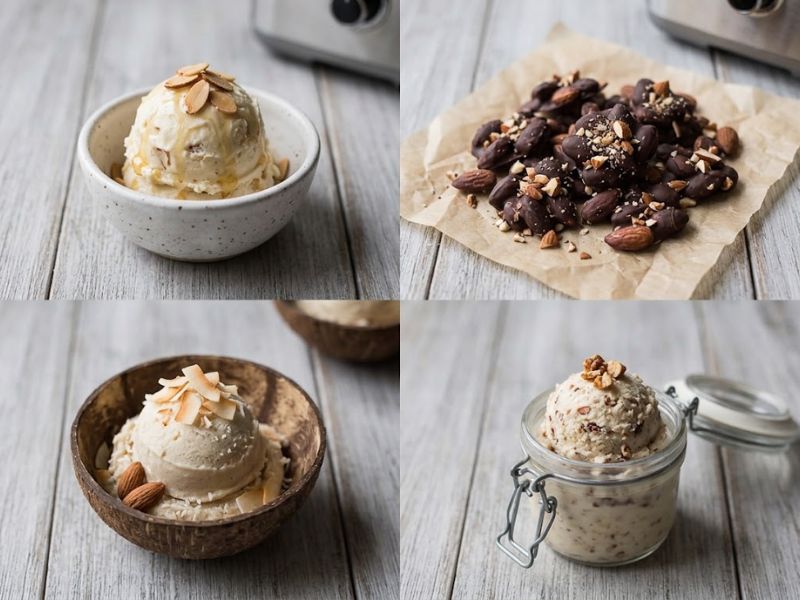
- Honey-Roasted Almond Ice Cream: Toss your almonds in a tablespoon of honey before roasting, and swap 2 tablespoons of the condensed milk for extra honey in the base. Gives a caramelized, slightly floral edge.
- Chocolate-Dipped Almond Crunch: Dip roasted almond pieces in melted dark chocolate, let them harden on parchment, then fold in once set. You get little chocolate-almond “candy bits” throughout the scoop. [If you love chocolate on its own, try our full chocolate ice cream recipe too.]
- Almond-Coconut Vegan Option: Replace heavy cream and milk with full-fat coconut milk, and use a dairy-free condensed milk (coconut condensed milk works beautifully) this doubles as a solid dairy-free almond milk ice cream base if you swap in unsweetened almond milk for part of the coconut milk too.
- Salted Almond Praline Swirl: Make a quick praline by melting sugar with a pinch of salt and folding in crushed almonds, then swirl the cooled, crushed praline through the base right before freezing.
- Keto-Friendly Almond Ice Cream: Swap condensed milk for a mix of heavy cream and a keto-friendly sweetener like allulose or monk fruit blend, and use unsweetened almond milk instead of dairy milk.
Expert Tips to Avoid Common Mistakes
A few hard-earned lessons from many, many batches:
- Don’t skip whipping the cream to soft peaks. Folding in liquid cream instead of whipped cream is the #1 reason no-churn ice cream turns out icy rather than creamy.
- Chop almonds smaller than you think you need. Large chunks can freeze rock-hard and become difficult to bite through comfortably.
- Never refreeze melted ice cream. Once it’s fully melted, the ice crystal structure is gone for good, and refreezing only makes it grainier.
- Use freezer-safe containers with tight lids. Flimsy containers let in air and odors from your freezer, which affects both texture and flavor over time.
- Let it sit for 5 minutes before scooping. Straight-from-the-freezer ice cream is harder to scoop and more likely to tear rather than curl smoothly.
Pro Tip: If you notice your almonds have gone soft after a day or two, it’s usually a sign of moisture from insufficient cooling before mixing, not a storage issue. Double-check Step 1 next time.
How to Serve Almond Ice Cream
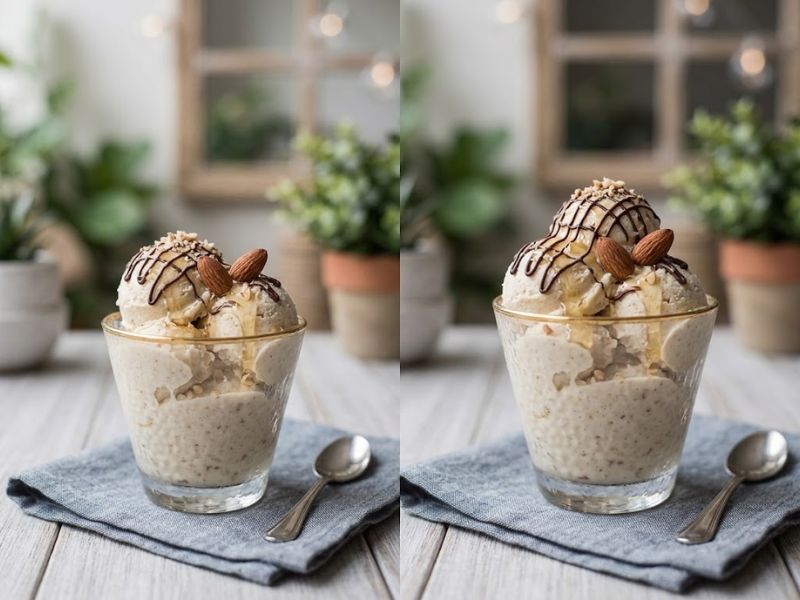
Almond ice cream is best served slightly softened, so let it sit at room temperature for about 5 minutes before scooping. For a simple but elegant presentation, add a few roasted almonds on top and finish with a light drizzle of chocolate sauce.
- Top with roasted almonds: Add a few whole or chopped roasted almonds for extra crunch and a deeper nutty flavor. for extra crunch and a deeper nutty flavor. Butter Pecan Ice Cream“
- Add chocolate drizzle: A light drizzle of chocolate sauce pairs beautifully with the creamy almond base.
- Serve in chilled glasses: For a more polished presentation, scoop the ice cream into small dessert glasses just as shown here.
- Add a simple garnish: A few extra almonds on top are enough to make each serving look inviting without overpowering the ice cream.
Nutrition & Storage Summary
| Detail | Per ½ Cup Serving |
| Calories | ~240 kcal |
| Protein | 4–5 g |
| Healthy Fats (almonds) | 8–9 g |
| Total Sugar | 18–20 g |
| Shelf Life (freezer) | 2–3 weeks in an airtight container |
| Best Consumed Within | 7–10 days for peak texture |
Note: figures are estimates and will vary based on exact brands and ingredient swaps used.
Frequently Asked Questions
Can I make almond ice cream without an ice cream maker?
Absolutely the no-churn method in this guide relies on whipped cream and condensed milk to create that same airy texture a machine would normally produce through constant churning. It genuinely holds up well against the churned version.
Why did my almonds turn soft in the ice cream?
This almost always comes down to moisture. Either the almonds weren’t roasted long enough to dry out fully, or they were chopped and mixed in while still warm, which traps steam against the nut’s surface.
How do I make this recipe dairy-free?
Swap the heavy cream and milk for full-fat coconut milk, and use a plant-based condensed milk alternative. Unsweetened almond milk can also replace part of the liquid for an even nuttier, dairy-free almond milk ice cream base.
Can I use almond butter instead of whole almonds?
You can, though it changes the texture significantly you’ll lose the crunch and get a smoother, more almond-butter-forward flavor instead. If you love that style, try folding in 2–3 tablespoons of almond butter along with your roasted almond pieces for the best of both.
Conclusion
There’s something quietly satisfying about pulling a container of homemade almond ice cream out of your own freezer, knowing exactly what went into it and how each roasted almond got its crunch. Whether you end up team churned or team no-churn, the real magic is in that first bite creamy, nutty, a little sweet, and entirely yours. Give it a try this weekend, and don’t be surprised if it becomes the dessert everyone starts asking for by name.