

What makes one scoop silky and rich while another feels light, icy, or almost chewy? The answer is more than just flavor. The ingredients, amount of fat, air, freezing method, and even cultural traditions can completely change a frozen dessert.
There are far more Types of Ice Cream than the classic vanilla and chocolate flavors found in most freezers. Some varieties are made with rich cream and egg yolks, while others use fruit, plant-based milk, or condensed milk. Gelato from Italy is dense and smooth, kulfi from South Asia is firm and intensely flavored, and sorbet offers a bright, fruit-forward alternative without dairy.
Understanding these differences makes it easier to choose a frozen dessert that matches your taste. So, let’s explore the most popular varieties and what makes each one unique.
What Makes Different Ice Cream Varieties Unique?
Before looking at individual varieties, it helps to understand what creates differences in ice cream texture and flavor.
The Role of Ice Cream Ingredients
Most traditional dairy-based desserts rely on a combination of:
- Milk or cream for richness
- Sugar for sweetness and texture
- Flavorings such as vanilla, cocoa, fruit, or nuts
- Sometimes egg yolks for extra richness
- Air incorporated during churning
The balance between these ingredients affects whether a scoop feels dense, creamy, fluffy, or icy.
Fat and Air Matter
Milk fat gives ice cream its smooth mouthfeel. Higher-fat varieties often taste richer, while lower-fat options can feel lighter.
Air also plays a major role. More incorporated air creates a lighter texture, while less air usually produces a denser frozen dessert. This is one reason two desserts with similar flavors can feel completely different when you taste them.
1. Traditional Ice Cream
Classic American-style ice cream is probably the variety most people picture when they hear the word ice cream.
What Makes It Special?
Traditional ice cream is generally a rich, dairy-based dessert made with milk and cream. It can contain a wide range of flavors and mix-ins.
- Usually creamy and scoopable
- Often contains a moderate-to-high amount of milk fat
- Available in countless flavors
- Commonly served in cones, cups, or sundaes
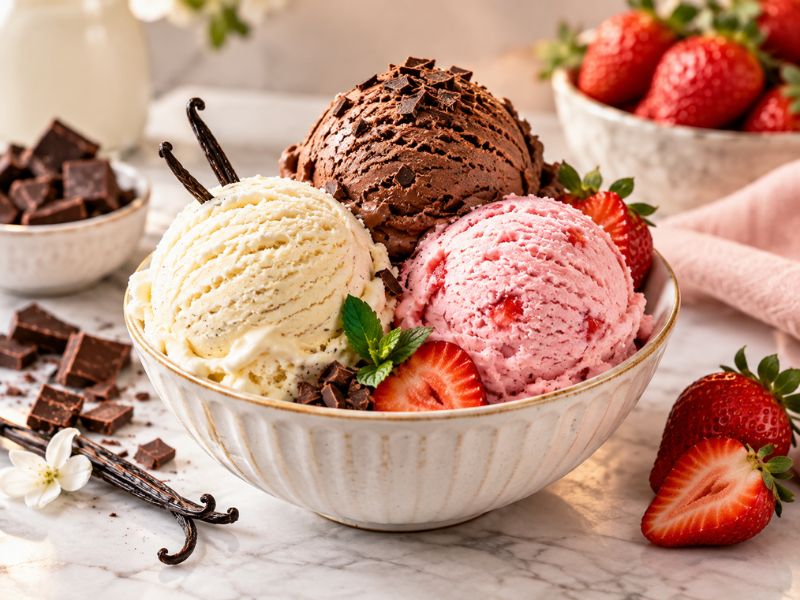
Vanilla, chocolate, strawberry, cookies and cream, and mint chocolate chip are familiar examples. The texture can range from very dense to light and fluffy depending on the formulation.
Because of its versatility, traditional ice cream remains one of the most familiar Types of Ice Cream around the world.
2. Gelato
Italian gelato has a reputation for being exceptionally smooth and flavorful. While it is related to traditional ice cream, it is not exactly the same dessert.
Gelato vs Ice Cream
The main difference often comes down to fat, serving temperature, and the amount of air incorporated during production. For a deeper comparison, see our guide to [Gelato vs Ice Cream].
- Gelato generally uses more milk and less cream
- It usually contains less fat than premium American ice cream
- It is churned with less air
- It is served slightly warmer
- Its texture is dense and silky
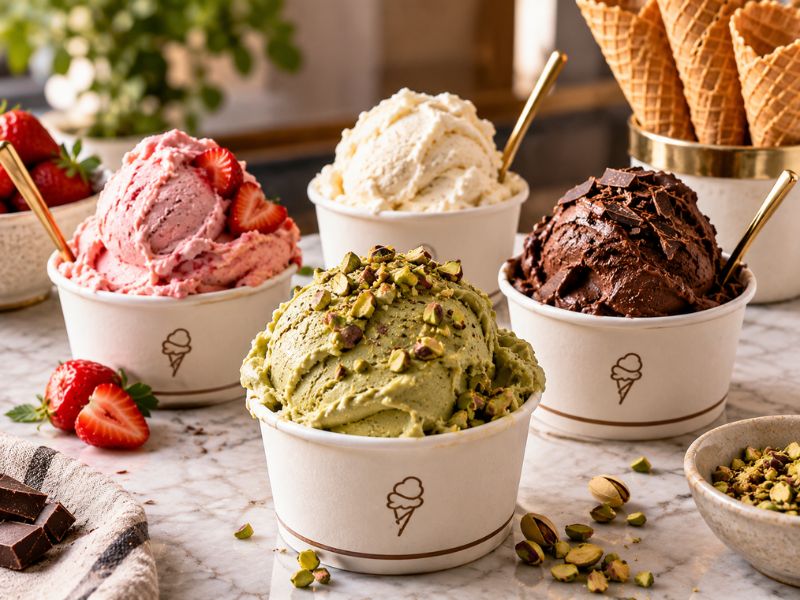
Because it is served at a warmer temperature, gelato can feel especially soft on the tongue. Its lower fat content can also allow delicate flavors such as pistachio, hazelnut, coffee, and fruit to stand out.
Gelato is closely associated with Italy, where gelaterias are a major part of everyday food culture.
3. Sorbet
Sorbet is one of the best choices when you want something fruity and refreshing.
A Dairy-Free Frozen Dessert
Unlike traditional ice cream, sorbet does not rely on milk or cream. Its basic character comes from fruit, water, and sugar.
- Dairy-free
- Usually fruit-forward
- Light and refreshing
- Often has a smooth but icy texture
- Popular flavors include lemon, raspberry, mango, and strawberry
The absence of dairy lets the natural acidity and aroma of fruit take center stage. Sorbet is also commonly served between courses in formal meals because its bright flavor can refresh the palate.
4. Sherbet
Sherbet sits somewhere between sorbet and traditional ice cream.
How Is Sherbet Different?
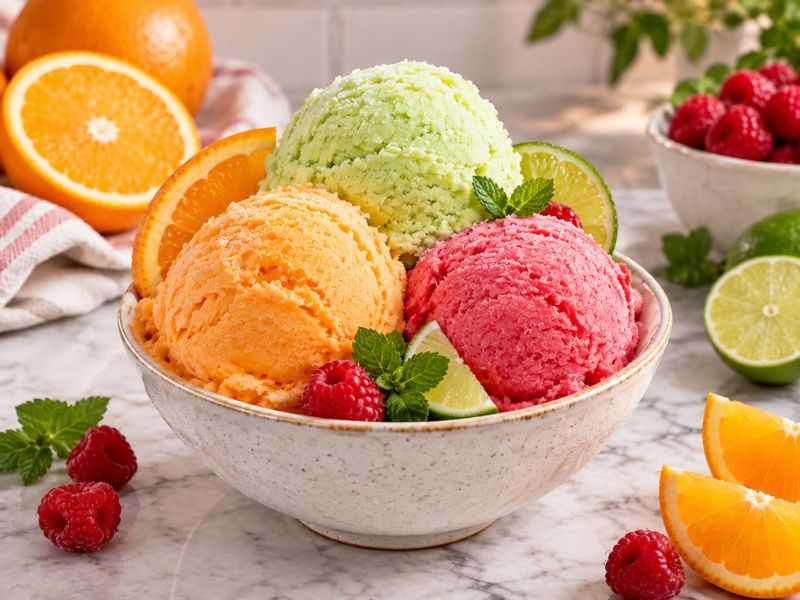
Sherbet usually contains fruit along with a small amount of dairy. That small dairy component gives it a creamier texture than sorbet without making it as rich as conventional ice cream.
- Contains a small amount of milk or dairy
- Fruit flavors are usually prominent
- Lighter than many ice creams
- Creamier than sorbet
- Often available in citrus and berry flavors
Orange, raspberry, lime, and rainbow sherbet are familiar examples.
Although the terms can sometimes be confused, sherbet and sorbet are not interchangeable. The presence of dairy is one of their key differences. For more on this refreshing frozen dessert, see our guide to [Sherbet Ice Cream].
5. Kulfi
Kulfi is a traditional South Asian frozen dessert with a character all its own. It is especially popular in India, Pakistan, Bangladesh, and surrounding regions.
Why Kulfi Is Different
Unlike churned ice cream, traditional kulfi is known for its dense texture. It is commonly flavored with ingredients such as cardamom, saffron, pistachios, almonds, and rose.
- Dense and firm
- Traditionally made with milk
- Rich, concentrated flavor
- Often served on sticks or in molds
- Popular flavors include pistachio, mango, cardamom, and saffron
Kulfi does not have the same airy texture as many commercial ice creams. Its slow-cooked milk base and traditional preparation give it a distinctive richness.
6. Vegan Ice Cream
Vegan ice cream has become increasingly common as more people look for dairy-free frozen desserts.
What Is Vegan Ice Cream Made From?
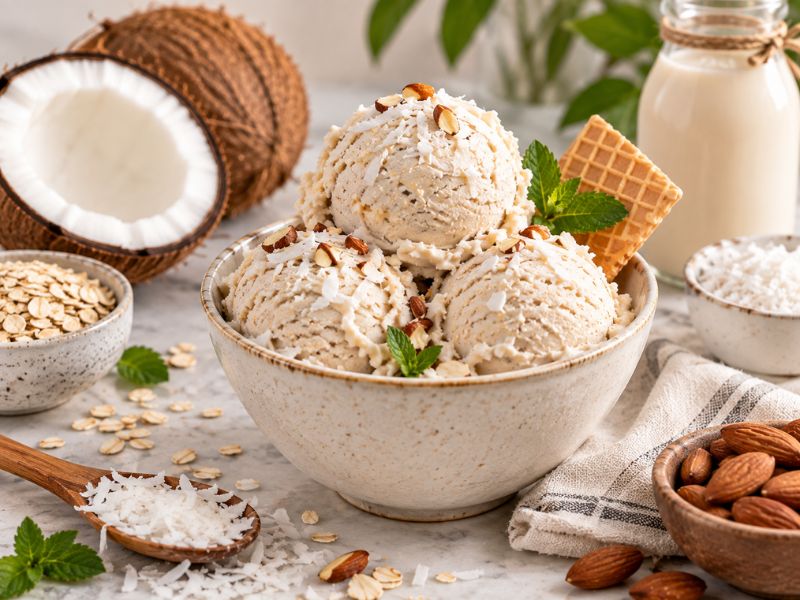
Instead of cow’s milk and cream, vegan varieties can use plant-based ingredients such as:
- Coconut milk
- Oat milk
- Almond milk
- Soy milk
- Cashew milk
The choice of base can significantly affect the final ice cream texture. Coconut milk, for example, can create a rich mouthfeel, while oat-based versions often have a smooth and mild character.
Modern vegan ice cream is one of the Types of Ice Cream that offers flavors ranging from simple vanilla to chocolate, coffee, fruit, and nut-based options
7. Soft Serve
Soft serve is instantly recognizable by its smooth swirls and lighter texture. It is usually served directly from a specialized machine rather than being stored as a hard-frozen scoop.
Why Is Soft Serve So Soft?
Temperature and air are two major factors.
- Served at a relatively soft consistency
- Contains more incorporated air than many hard-frozen varieties
- Usually has a smooth, fluffy texture
- Commonly served in cones or cups
- Often paired with toppings and sauces
The familiar vanilla and chocolate twist is a classic example, but soft serve machines can produce many different flavors.
Its texture makes it particularly popular at ice cream shops, restaurants, fairs, and roadside stands.
8. Custard Ice Cream
Custard ice cream is known for its rich, velvety character. The defining ingredient is egg yolk.
What Gives Frozen Custard Its Rich Texture?
Egg yolks contain natural emulsifiers that help create a smooth and creamy dessert. Frozen custard also tends to contain less incorporated air than lighter ice cream styles.
- Contains egg yolks
- Rich and creamy
- Dense texture
- Often served fresh
- Popular in classic American frozen-dessert shops
Frozen custard is strongly associated with places such as Wisconsin and other parts of the American Midwest.
9. Frozen Yogurt
Frozen yogurt, often called “froyo,” combines the cool texture of a frozen dessert with the tangy flavor of yogurt.
A Tangy Alternative
Its flavor is usually more tart than traditional ice cream because of the cultured yogurt base.
- Made with yogurt or cultured dairy
- Tangier flavor
- Usually lighter-tasting than rich ice cream
- Available in fruit, chocolate, vanilla, and other flavors
- Commonly served with fresh fruit and toppings
Frozen yogurt became especially popular through self-serve shops, where customers can choose different flavors and toppings.
Types of Ice Cream Compared
Although many frozen desserts look similar in a freezer, their ingredients and textures can be quite different.
| Frozen Dessert | Main Ingredients | Typical Texture | Fat Level |
| Traditional Ice Cream | Milk, cream, sugar | Creamy and smooth | Moderate to high |
| Gelato | Milk, cream, sugar | Dense and silky | Usually lower |
| Sorbet | Fruit, water, sugar | Light and icy | Very low |
| Sherbet | Fruit, sugar, small amount of dairy | Creamy and refreshing | Low |
| Kulfi | Milk, sugar, nuts/spices | Dense and firm | Moderate |
| Vegan Ice Cream | Plant-based milk, sugar, fats | Creamy to dense | Varies |
| Soft Serve | Milk/cream, sugar, flavorings | Soft and airy | Varies |
| Frozen Custard | Milk, cream, egg yolks | Rich and velvety | High |
| Frozen Yogurt | Yogurt, milk, sugar | Smooth and tangy | Low to moderate |
Exploring different Types of Ice Cream also makes it easier to understand why ingredients and freezing methods create such different textures.
10. Neapolitan Ice Cream
Neapolitan ice cream is less about a special ingredient and more about combining three classic flavors in one container.
Three Flavors, One Dessert
The traditional combination is:
- Vanilla
- Chocolate
- Strawberry
The three flavors are placed side by side, allowing everyone to choose a favorite—or enjoy all three.
Its name is linked to the style of molded ice cream associated with Neapolitan culinary traditions and immigrant food culture in the United States.
11. Dairy-Free Frozen Desserts
Not every dairy-free frozen dessert is technically the same as traditional ice cream. Some are made specifically with fruit, while others imitate the creamy texture of conventional products.
Popular Dairy-Free Bases
Common ingredients include:
- Coconut cream
- Oat milk
- Cashew milk
- Almond milk
- Fruit purees
These options show how modern ice cream varieties have expanded beyond traditional dairy. The result can be just as interesting from a flavor perspective, especially when ingredients such as dark chocolate, coffee, berries, or roasted nuts are used.
12. Specialty and Regional Frozen Desserts
One of the most fascinating things about frozen desserts is how different cultures interpret them.
Examples From Around the World
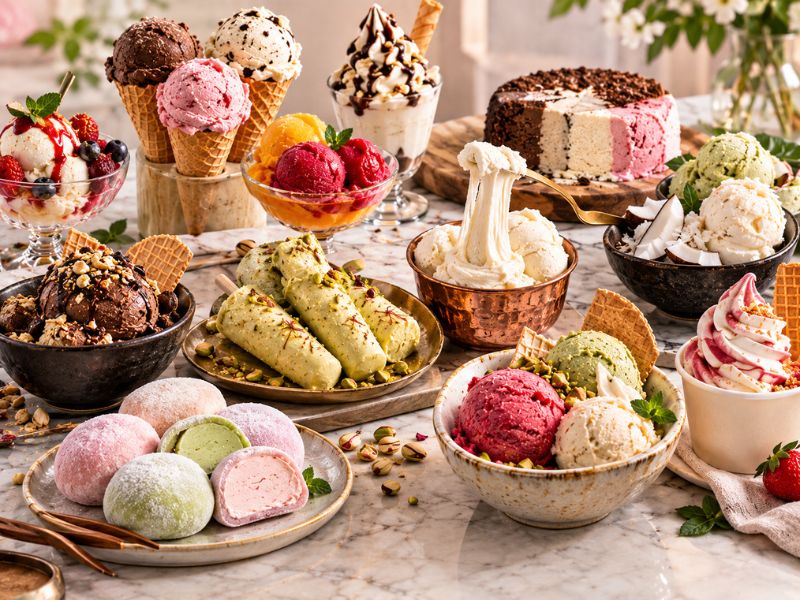
Mochi ice cream: Popularized globally from Japan, it combines ice cream with a soft rice-flour coating.
Dondurma: Turkish ice cream is famous for its stretchy, chewy texture and traditional serving style.
Mango kulfi: A fruit-forward variation of the classic South Asian dessert.
Stracciatella gelato: An Italian gelato style featuring creamy vanilla-like gelato with fine chocolate pieces.
Granita: A Sicilian frozen dessert made from flavored liquid that freezes into coarse crystals rather than a creamy scoop.
These examples show how different Types of Ice Cream can reflect the ingredients, traditions, and tastes of their region.
How to Choose the Right Frozen Dessert
With so many Types of Ice Cream available, choosing the right one often comes down to texture, richness, and flavor. If you want to explore more flavor options, check out our guide to [Ice Cream Flavors].
For a Rich and Creamy Dessert
Choose traditional ice cream or frozen custard. These are ideal when you want a fuller, richer mouthfeel.
For Something Light and Fruity
Sorbet and sherbet are excellent choices. Sorbet is completely dairy-free, while sherbet has a small dairy component.
For a Dense Texture
Gelato and kulfi are worth trying. Both offer a more concentrated texture than many standard ice creams, although their ingredients and traditions are quite different.
For Dairy-Free Options
Look for vegan ice cream or fruit-based frozen desserts. Plant-based bases can provide surprisingly creamy results.
Frequently Asked Questions
What are the main types of ice cream?
The main Types of Ice Cream include traditional ice cream, gelato, sorbet, sherbet, kulfi, vegan ice cream, soft serve, frozen custard, and frozen yogurt.
What is the difference between gelato and ice cream?
Gelato generally contains more milk, less cream, and less incorporated air than many traditional ice creams. It is also served at a slightly warmer temperature, giving it a dense and silky texture.
Is sorbet dairy-free?
Traditional sorbet is dairy-free because it is generally made from fruit, water, and sugar. However, always check the ingredient label on commercial products because formulations can vary.
Is sherbet the same as sorbet?
No. Sorbet is traditionally dairy-free, while sherbet generally contains a small amount of dairy. This gives sherbet a creamier texture.
What makes frozen custard different from ice cream?
Frozen custard contains egg yolks, which contribute to its rich, smooth texture. It is generally denser and more velvety than lighter ice cream styles.
Conclusion
The world of Types of Ice Cream is much bigger than a freezer aisle might suggest. From creamy American-style ice cream and silky Italian gelato to refreshing sorbet, dense kulfi, tangy frozen yogurt, and modern vegan varieties, every style has its own personality.
The differences come from more than flavor. Milk fat, egg yolks, plant-based ingredients, fruit, air, freezing temperature, and traditional preparation methods all influence the final experience.
Whether you prefer a rich scoop, a refreshing fruit dessert, or something dense and intensely flavored, there is a frozen dessert worth trying. Next time you visit an ice cream shop, look beyond your usual order and you may discover a new favorite among the many Types of Ice Cream available.