

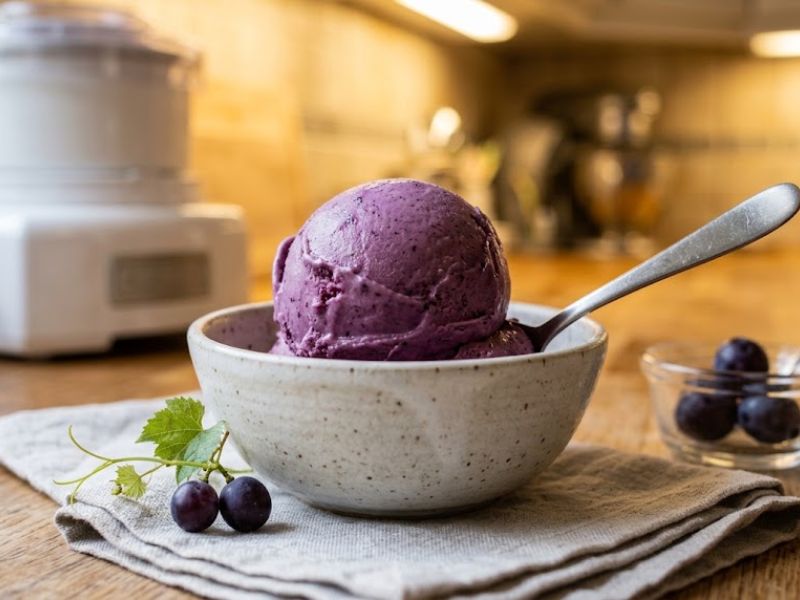
Grape ice cream is one of those frozen desserts that sounds unusual until you taste it. Fresh grapes bring a sweet, fruity character to a creamy ice cream base, creating a flavor that is both familiar and a little unexpected. The trick is making sure the grape flavor stays noticeable without adding too much liquid, which can leave the finished dessert icy.
This homemade version focuses on a smooth texture and concentrated grape flavor rather than simply mixing grape juice into cream. The grapes are cooked down first, which helps remove excess moisture and gives the fruit a deeper taste. A little lemon juice keeps the sweetness balanced, while vanilla adds a soft background note without taking over.
The result is a scoopable, creamy dessert with a gentle grape flavor that works especially well on warm days. You can make it with an ice cream maker for the smoothest texture, or use the simple no-churn method when you don’t have one.
What Makes This Grape Ice Cream Special?
The best part of this grape ice cream is the way the fruit is prepared before it reaches the ice cream base. Instead of relying entirely on grape juice, cooking the grapes briefly concentrates their natural flavor and reduces some of their water.
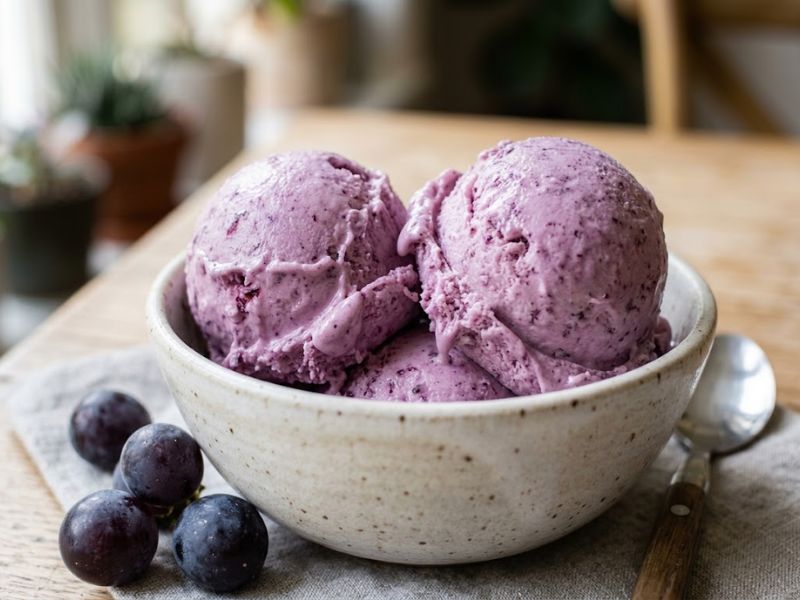
That small step makes a noticeable difference. You get a more pronounced fruity taste while keeping the ice cream rich and creamy.
The recipe also uses a straightforward dairy base made with heavy cream and whole milk. The cream contributes richness, while milk keeps the mixture from becoming overly heavy. Vanilla and lemon juice round everything out, giving the dessert a balanced flavor rather than one that tastes like artificial grape candy. The result is a Grape Ice Cream with a naturally fruity flavor and a smooth, satisfying finish.
Grape is just one way to turn fresh fruit into a creamy frozen dessert; our Fruit Ice Cream collection has more ideas for bringing that same fruity character to the freezer.
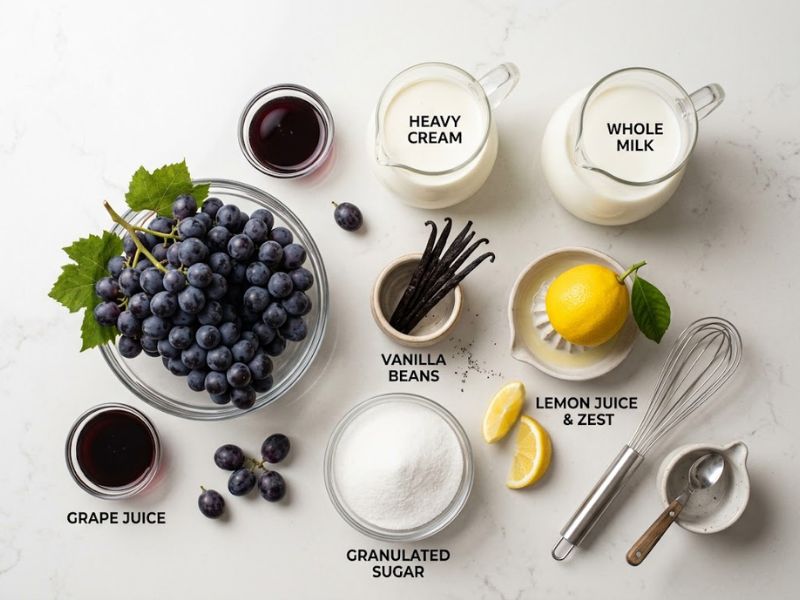
Ingredients You’ll Need
Fresh Grapes
Use ripe, flavorful seedless grapes. Red or purple grapes work particularly well because they provide a naturally fruity flavor and attractive color. Since the grapes are the star ingredient, choose fruit that tastes good on its own.
Heavy Cream
Heavy cream gives the ice cream its rich, smooth consistency. It also helps create a softer texture after freezing.
Whole Milk
Whole milk lightens the base slightly while still keeping it creamy. Avoid replacing it with water because that can make the finished dessert more icy.
Granulated Sugar
Sugar sweetens the mixture and also affects the texture of frozen desserts. It helps keep the ice cream from freezing into an overly hard block.
Vanilla Extract
A small amount of vanilla adds warmth and brings the dairy and fruit flavors together.
Lemon Juice
Fresh lemon juice is useful in a fruit-based ice cream because its acidity helps balance sweetness. You only need a little; too much can make the grape flavor seem sharp.
Grape Ice Cream at a Glance
| Detail | Information |
|---|---|
| Prep Time | 20 minutes |
| Chilling Time | 2–3 hours |
| Churning Time | 20–25 minutes |
| Freezing Time | 4–6 hours |
| Total Time | About 6–9 hours |
| Yield | About 6 servings |
| Method | Ice cream maker |
| Texture | Smooth and creamy |
| Best For | Summer dessert, family treats, and fruit lovers |
How to Make Grape Ice Cream
Step 1: Prepare the Grapes
Wash the grapes thoroughly and remove the stems. If you’re using seedless grapes, there is no need to remove seeds.
Place the grapes in a saucepan and cook them over medium heat for several minutes, stirring occasionally. As they warm, they will soften and release their juices.
Continue cooking until the fruit is very soft and the mixture has reduced slightly. You don’t want a watery grape mixture because extra moisture can form larger ice crystals during freezing.
Step 2: Build the Grape Flavor
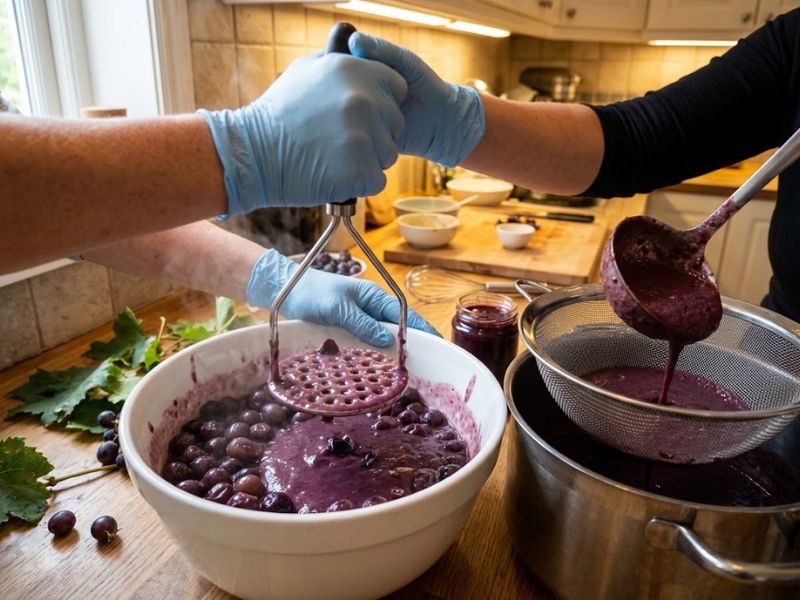
Once the grapes have softened, remove the pan from the heat. Mash the fruit gently with a fork or potato masher.
For a smoother ice cream, press the cooked grapes through a fine-mesh strainer into a bowl. This removes skins and any remaining solids while leaving you with concentrated grape flavor.
Let the grape mixture cool for a few minutes, then stir in the lemon juice and vanilla extract.
Taste it before adding it to the dairy mixture. If the grapes are particularly sweet, you may need very little adjustment. If they are more tart, the finished ice cream may benefit from slightly more sugar in the base.
Step 3: Prepare the Ice Cream Base
In a separate bowl, whisk together the whole milk and granulated sugar until the sugar has dissolved.
Add the heavy cream and stir gently until combined.
The mixture should look smooth and uniform. There’s no need to whip the cream at this stage when using an ice cream maker.
Once the grape mixture has cooled completely, add it to the dairy base. Stir until the color and flavor are evenly distributed.
Step 4: Chill the Mixture
Cover the mixture and refrigerate it until thoroughly chilled, preferably for at least a couple of hours.
This step is easy to overlook, but it matters. A cold ice cream base freezes more efficiently and gives the churning process a better starting point.
If the mixture is still warm when it goes into the machine, it can take longer to freeze and may produce a softer or less creamy result.
Step 5: Churn the Ice Cream
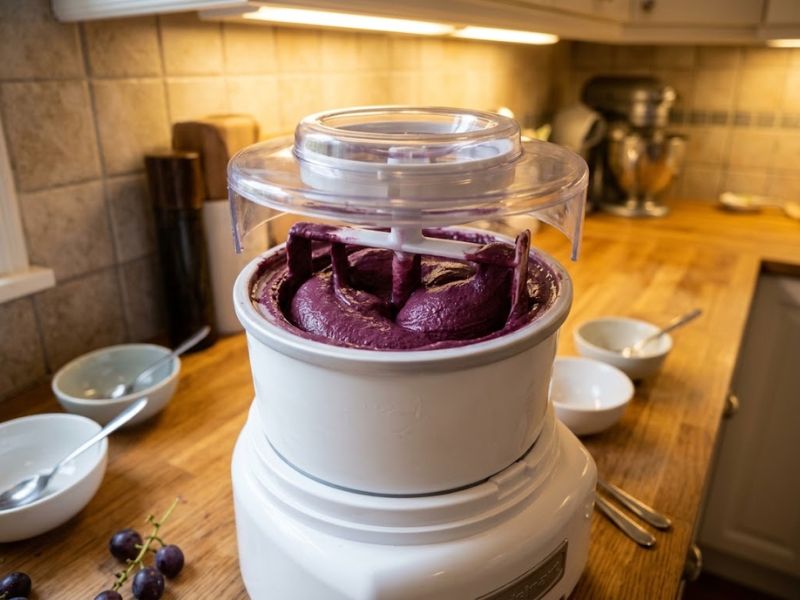
Pour the chilled mixture into your ice cream maker and churn according to the manufacturer’s instructions.
As the mixture churns, watch for a thick, soft-serve-like consistency. The ice cream should hold its shape somewhat instead of remaining completely liquid.
Don’t worry if it seems softer than store-bought ice cream at this stage. It will firm up considerably in the freezer.
Step 6: Freeze Until Scoopable
Transfer the churned ice cream to a freezer-safe container. Smooth the surface and press a piece of parchment paper or plastic wrap directly against the top if desired.
Cover tightly and freeze for several hours, or until firm enough to scoop.
Before serving, let the container sit at room temperature for a few minutes. This gives the ice cream a chance to soften slightly, making it easier to scoop without melting the entire batch.
Tips for Better Grape Ice Cream
Choose flavorful grapes. If the grapes taste bland before cooking, the finished ice cream will not suddenly develop a strong fruit flavor. Choose ripe grapes with a naturally sweet taste.
Don’t add too much grape juice. Extra liquid can make homemade ice cream icy. Concentrating the fruit first gives you more flavor without flooding the ice cream base with water.
Cool the fruit mixture completely. Warm grape puree can raise the temperature of the dairy base and make the freezing process less efficient.
Don’t skip the chilling stage. Starting with a cold mixture helps the ice cream maker work more effectively and can contribute to a smoother finished texture.
Keep the container tightly covered. Air exposure can lead to freezer burn and unwanted ice crystals. A shallow, freezer-safe container with a secure lid works well.
Don’t overdo the lemon juice. The goal is balance, not a lemon-flavored dessert. Start with a small amount and adjust only if needed.
Let it soften briefly before scooping. Homemade ice cream often freezes harder than commercial varieties. A few minutes outside the freezer can make serving much easier.
Common Mistakes When Making Grape Ice Cream
A few small mistakes can affect the texture and flavor of homemade ice cream. Keep these points in mind for a smoother batch:
- Using watery grapes: Grapes that release too much liquid can make the ice cream icy. Cooking the fruit down first helps concentrate the flavor and reduce excess moisture.
- Adding warm grape mixture: Don’t mix hot or warm fruit into the dairy base. Let it cool completely so the ice cream mixture stays properly chilled.
- Skipping the chilling step: Starting with a warm base can make churning less effective. Give the mixture enough time in the refrigerator before freezing.
- Using too much lemon juice: Lemon should brighten the grape flavor, not overpower it. Start with a small amount and adjust only when necessary.
- Overloading the ice cream with toppings: Strong sauces or large amounts of toppings can hide the delicate fruit flavor. Keep additions simple so the grape remains the main taste.
- Leaving the container uncovered: Air exposure can create unwanted ice crystals and freezer burn. Always use a tightly sealed, freezer-safe container.
- Serving it straight from the freezer: Homemade ice cream can become quite firm when fully frozen. Let it sit for a few minutes before scooping for a smoother serving texture.
- Adding too much liquid: Extra juice can dilute the base and make Grape Ice Cream freeze harder than expected. Concentrating the fruit first helps keep the texture creamy.
Easy Variations
No-Churn Grape Ice Cream
If you don’t have an ice cream maker, you can adapt the recipe using a no-churn base. Fold the cooled grape mixture into sweetened condensed milk and whipped heavy cream, then transfer everything to a freezer-safe container and freeze until firm.
The texture will be slightly different from churned ice cream, but it is a convenient option for a simple homemade dessert.
Grape and Vanilla Ice Cream
For a softer, more dessert-like flavor, increase the vanilla slightly. The vanilla complements the fruit without competing with it, making this variation especially good when the grapes have a mild flavor.
Grape Swirl
Reserve a small amount of the cooled grape mixture before combining everything with the dairy base. Once the ice cream is transferred to its container, gently swirl the reserved mixture through the partially frozen dessert.
Don’t stir too much or the swirl will disappear into the base.
Mixed Grape Ice Cream
Try combining two varieties of seedless grapes. Using grapes with slightly different levels of sweetness can create a more interesting fruit profile while keeping the recipe simple.
Once you’ve tried fruit in a creamy ice cream base, peach is another flavor worth exploring. Our Peach Ice Cream Recipe takes that idea in a softer, naturally sweet direction.
How to Store It
Store the finished ice cream in a freezer-safe container with a tight-fitting lid. Keep it toward the back of the freezer where the temperature tends to remain more stable.
For the best texture and flavor, enjoy homemade ice cream within about two weeks. It can remain frozen longer, but its texture may gradually become harder or develop more ice crystals.
Keep the container closed whenever you’re not serving it. Repeated exposure to warm air can cause condensation and refreezing, which can affect the creamy consistency.
Serving Ideas
Grape ice cream is delicious on its own, but a few simple toppings can make it feel more special.
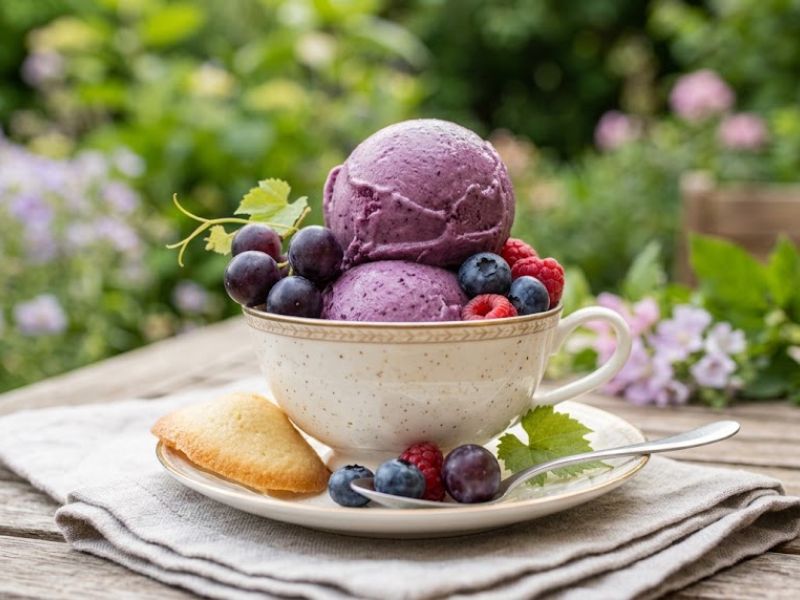
Serve scoops with fresh grapes for a clean fruit-forward presentation. A small handful of crushed vanilla cookies can add a pleasant contrast in texture, while a little whipped cream keeps the dessert classic.
For something richer, try a light chocolate drizzle. You can also serve the ice cream in chilled dessert bowls with a few berries on the side.
Because the grape flavor is delicate, simple toppings usually work better than heavily flavored sauces that can overpower the fruit. Want to stay with the fruit-forward theme? Raspberry Ice Cream brings a brighter berry note to the table and makes a fun contrast to the mellow sweetness of grapes.
Frequently Asked Questions
Can I make grape ice cream without an ice cream maker?
Yes. A no-churn version can be made with whipped heavy cream and sweetened condensed milk. Mix in the cooled grape mixture, transfer it to a freezer-safe container, and freeze until firm.
Can I use grape juice instead of fresh grapes?
You can, but the result will be different. Fresh grapes provide a more natural fruit flavor, while grape juice can add extra liquid and may make the ice cream icier if too much is used.
Why does homemade grape ice cream become icy?
Too much water is one of the main reasons. Using a concentrated grape mixture, chilling the base thoroughly, and keeping the finished ice cream tightly covered can help maintain a smoother texture.
How long does grape ice cream last in the freezer?
For the best quality, aim to enjoy it within about two weeks. Properly covering the container helps protect the texture and flavor during storage.
Can I use different varieties of grapes?
Absolutely. Seedless red or purple grapes are convenient choices, but you can experiment with other flavorful varieties. The sweetness and flavor of the grapes will affect the final taste.
How can I make the grape flavor stronger?
Use ripe grapes with a strong natural flavor and cook them long enough to concentrate their juices without scorching them. Straining the cooked fruit also gives you a smoother grape component for the ice cream base.
Conclusion
Homemade grape ice cream is a simple way to turn fresh fruit into something a little different from the usual frozen flavors. Cooking the grapes first helps concentrate their flavor, while the creamy dairy base keeps every spoonful smooth and rich. With a little chilling time and a few basic ingredients, this Grape Ice Cream makes a refreshing homemade dessert that’s easy to customize. Serve it simply or add your favorite toppings for a fruity treat that’s especially enjoyable on a warm afternoon.