
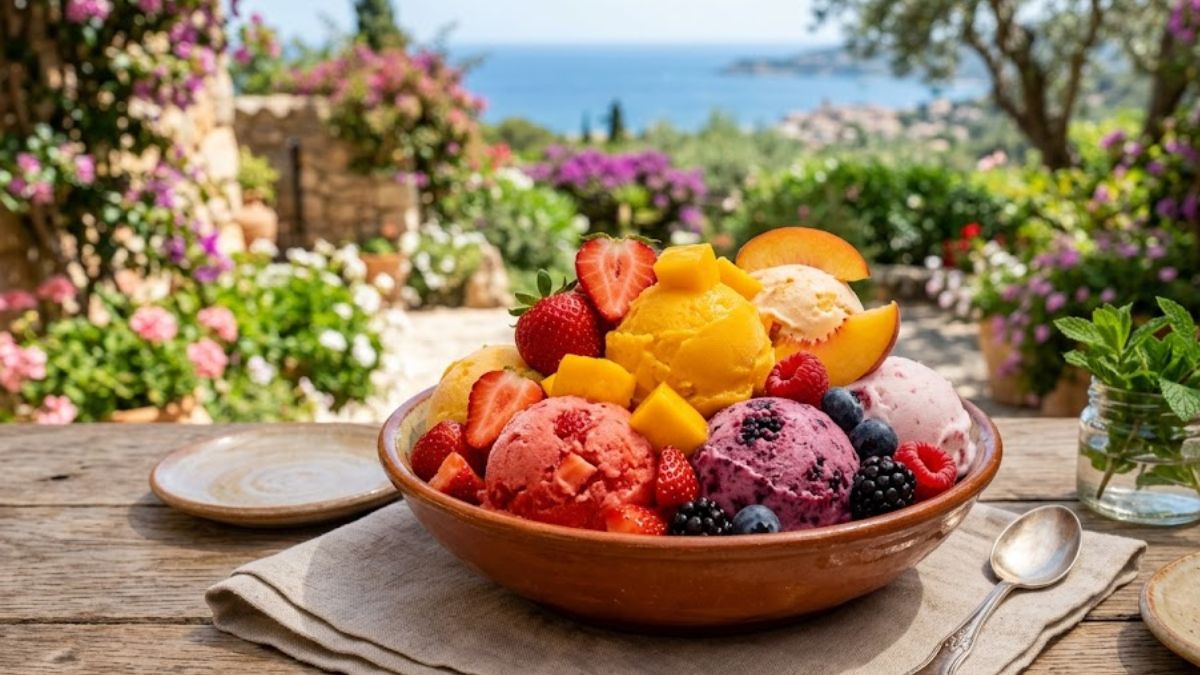
A scoop of fruit ice cream is a refreshing treat on a warm day, especially when it is made with ripe, flavorful fruit. With a creamy base and simple ingredients, you can make a delicious frozen dessert at home without complicated steps.
This fruit ice cream recipe works with favorites like strawberries, peaches, mangoes, and blueberries. In this guide, you’ll learn how to prepare the fruit, create a creamy base, and make homemade fruit ice cream with practical tips for the best texture and flavor.
What Is Fruit Ice Cream?
Fruit ice cream is a frozen dessert made by combining fruit with a creamy ice cream base. Unlike plain vanilla ice cream, the fruit contributes natural flavor, color, and texture to every scoop.
A traditional homemade version often uses heavy cream, whole milk, granulated sugar, and vanilla extract, along with fresh or prepared fruit. Depending on the fruit and recipe, the fruit may be chopped, mashed, blended, or turned into a smooth fruit puree before being added to the dairy mixture.
The best fruit for homemade ice cream is usually ripe and flavorful. Fresh strawberries, peaches, mangoes, raspberries, and blueberries are popular choices because they provide plenty of flavor. However, frozen fruit can also be useful when fresh fruit is unavailable.
The result is a creamy fruit ice cream with a fresh flavor that can be enjoyed on its own or served alongside other desserts.
Why You’ll Love This Homemade Fruit Ice Cream
One of the biggest advantages of making homemade ice cream with fruit is its flexibility. You are not limited to one particular flavor. The same basic approach can be adapted to different fruits throughout the year.
You can also control the sweetness and texture according to your preference. Very ripe fruit may need less added sugar, while tart fruit may benefit from a little more sweetness.
Another benefit is the ability to prepare the fruit yourself. Instead of relying on artificial fruit flavoring, you can use real fruit to create a naturally fruity dessert.
This recipe is also a good starting point for experimenting. Once you understand how the fruit and cream base work together, you can try combinations such as strawberry and banana, peach and raspberry, or mango and coconut.
If you enjoy rich and creamy frozen desserts, this chocolate ice cream recipe is another delicious option to try at home.
Ingredients You’ll Need
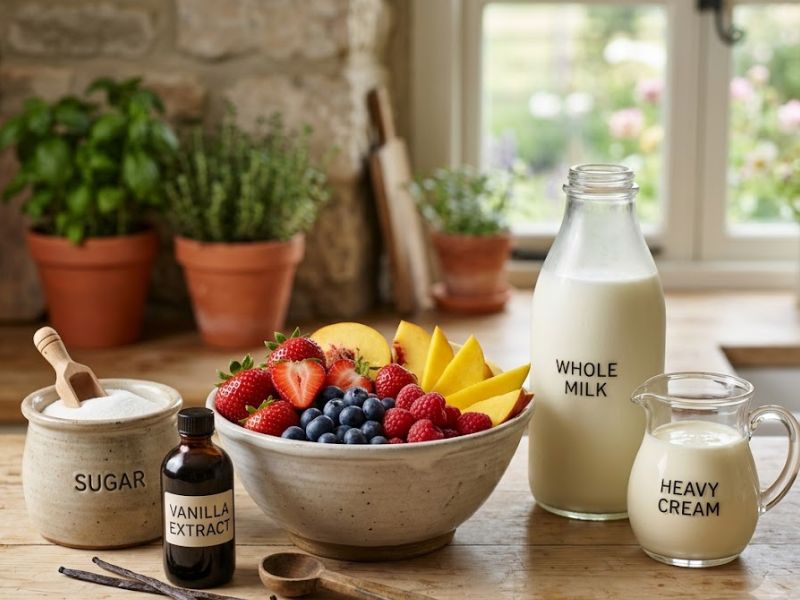
The ingredients for fresh fruit ice cream are simple, but each one has a purpose.
Fresh Fruit
Choose ripe, flavorful fruit for the strongest result. Strawberries, peaches, mangoes, and berries are especially good choices. Remove pits, stems, or unwanted seeds before preparing the fruit.
Heavy Cream
Heavy cream gives the ice cream its rich and creamy texture. It also helps create a smoother frozen consistency.
Whole Milk
Whole milk balances the richness of the cream while adding a smooth dairy flavor. Lower-fat milk can be used in some recipes, but the finished ice cream may not be quite as rich.
Granulated Sugar
Sugar adds sweetness and helps balance tart fruit. It also plays a role in the texture of a frozen dessert, so avoid removing it completely unless you are following a specifically tested alternative recipe.
Vanilla Extract
A small amount of vanilla extract can round out the flavor and complement the fruit without overpowering it.
Optional Fruit Puree
For a stronger fruit flavor, some of the fruit can be blended into a smooth fruit puree. This distributes the flavor throughout the ice cream instead of leaving all of the fruit in small pieces.
How to Make Fruit Ice Cream
Making this fruit ice cream recipe is straightforward, especially when the fruit is prepared properly before mixing.
1. Prepare the Fruit
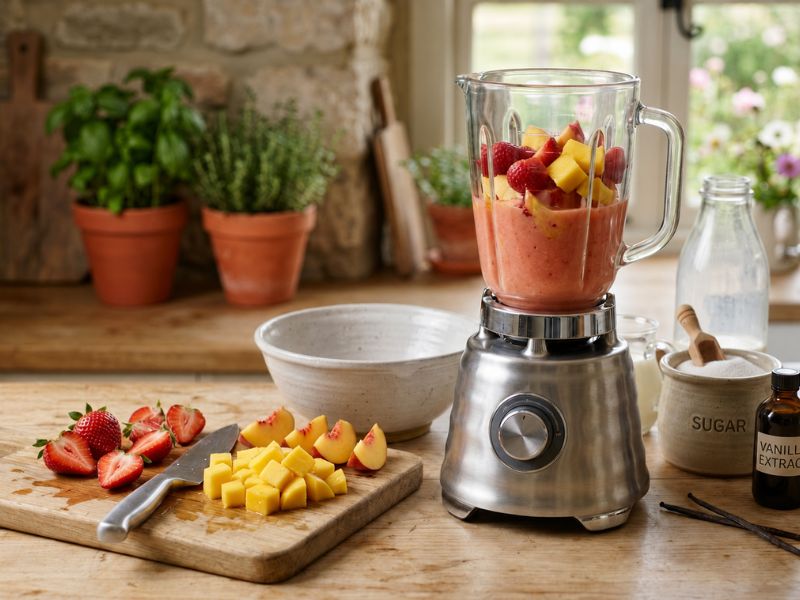
Start by washing and preparing your fruit. Remove stems, pits, or skins when necessary.
For soft fruit such as strawberries or peaches, cut it into small pieces. If you want a smoother ice cream, blend some or all of the fruit into a puree.
Taste the fruit before proceeding. Very sweet, ripe fruit may require less additional sugar than fruit that is tart or underripe.
2. Prepare the Fruit Mixture
Place the prepared fruit in a bowl. If the fruit is particularly tart, combine it with some of the granulated sugar and let it sit briefly.
This allows the fruit to release some of its juices and can make the flavor more noticeable throughout the finished dessert.
For an especially smooth texture, blend the fruit until it becomes a puree. If you prefer small pieces of fruit in every scoop, leave some of the fruit chopped.
3. Make the Cream Base
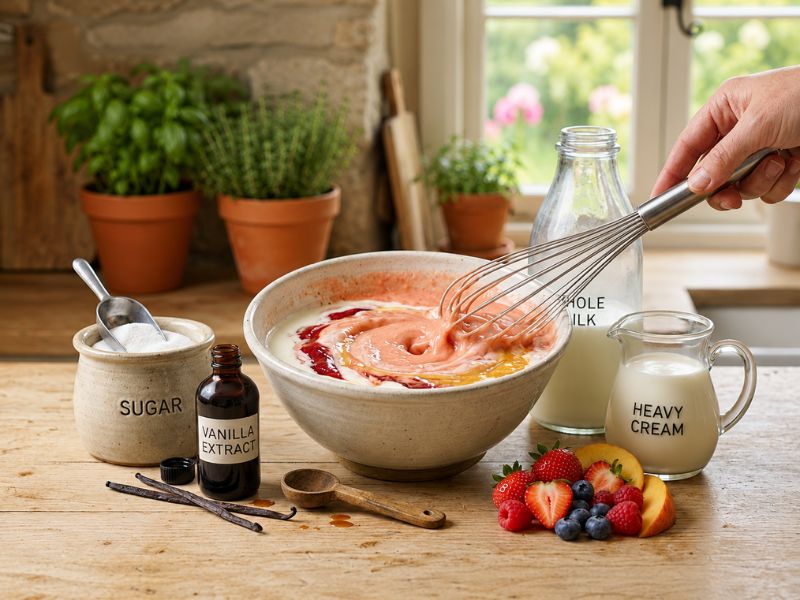
In a separate bowl, combine the heavy cream, whole milk, remaining sugar, and vanilla extract.
Stir until the sugar is well incorporated. There is no need to overwork the mixture.
Add the prepared fruit or fruit puree and gently mix everything together. At this point, the mixture should have a creamy consistency with the fruit evenly distributed.
4. Chill the Mixture
Before churning, chill the mixture thoroughly.
A cold base generally makes the freezing process easier and can help produce a smoother final texture. If your mixture has become warm during preparation, give it enough time to cool before moving to the next step.
5. Churn the Ice Cream
Pour the chilled mixture into your ice cream maker and churn according to the manufacturer’s instructions.
The exact churning time can vary depending on the machine, the quantity of mixture, and the ingredients being used.
When the ice cream reaches a soft-serve-like consistency, it can be transferred to a freezer-safe container.
6. Freeze Until Firm
Cover the container and place it in the freezer until the ice cream reaches your preferred firmness.
Allowing it to freeze for several hours will give it a more scoopable texture. If it becomes very firm, let it sit at room temperature for a few minutes before serving.
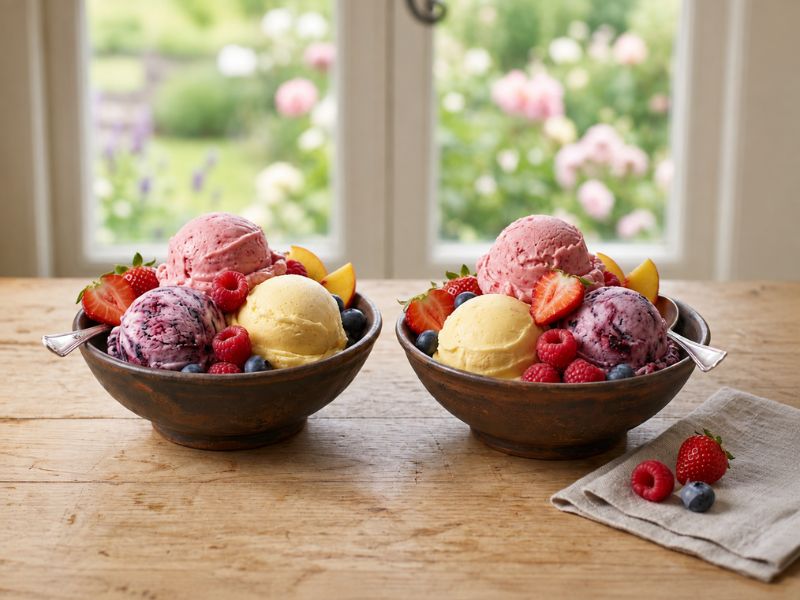
Tips for Creamy Fruit Ice Cream
Getting a creamy texture at home is mostly about controlling the ingredients and the amount of water added by the fruit.
When making fruit ice cream at home, using ripe fruit and keeping the mixture well chilled can make a noticeable difference in the final texture.
Use flavorful ripe fruit. Fruit that is naturally sweet and fragrant will give the ice cream a much better flavor than bland or underripe fruit.
Avoid adding too much watery fruit. Fruits contain varying amounts of water. Excess liquid can contribute to larger ice crystals when the dessert freezes.
Use a puree for an even texture. Blended fruit distributes flavor throughout the ice cream and avoids large frozen chunks.
Chill the base before churning. Starting with a properly chilled mixture can make the freezing process more effective.
Do not overfill your ice cream maker. Follow the capacity recommended by the manufacturer so the mixture has enough room to churn properly.
Let frozen ice cream soften slightly before scooping. A few minutes outside the freezer can make serving much easier.
Fruit Ice Cream Variations and Substitutions
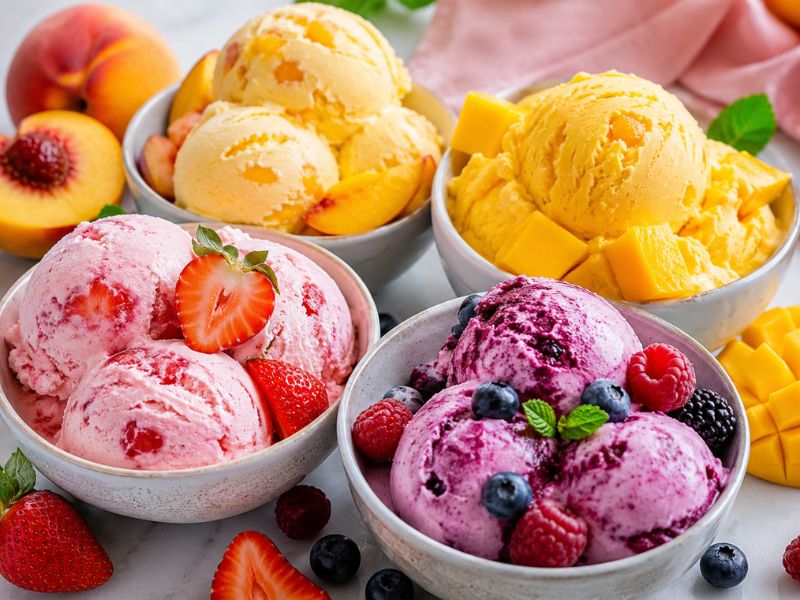
The beauty of this dessert is that you can change the fruit according to the season.
Strawberry Ice Cream
Fresh strawberries create a familiar sweet-tart flavor. Chop them finely or blend them into a puree for a smoother result.
Peach Ice Cream
Ripe peaches are naturally fragrant and work particularly well with a creamy dairy base. Remove the pit and peel if desired before blending.
If you enjoy the fresh flavor of peaches, you can also try this peach ice cream recipe for another creamy homemade dessert.
Mango Ice Cream
Mango produces a rich tropical flavor and a naturally smooth puree. Choose ripe mangoes for the best taste.
Mixed Berry Ice Cream
Combine strawberries, blueberries, raspberries, or blackberries for a more complex berry flavor. If using berries with noticeable seeds, strain the puree if you prefer a smoother texture.
Frozen Fruit
Frozen fruit can be a convenient alternative when fresh fruit is out of season. Thaw it as needed and drain excess liquid before adding it to the mixture.
You can also experiment with combinations such as peach and raspberry or strawberry and banana. Keep the total amount of fruit reasonably balanced so that the mixture does not become overly watery.
How to Store Fruit Ice Cream
Store homemade fruit ice cream in a tightly covered, freezer-safe container.
Pressing a piece of parchment or freezer-safe wrap directly against the surface can help limit direct exposure to air before closing the container.
Keep the ice cream consistently frozen and avoid repeatedly allowing it to melt and refreeze. Changes in temperature can negatively affect the texture.
For the best texture and flavor, homemade ice cream is generally most enjoyable when eaten relatively soon after preparation rather than stored indefinitely.
When ready to serve, allow the container to sit briefly at room temperature so the ice cream becomes easier to scoop.
If you’re looking for another creamy homemade treat, you may also enjoy coconut ice cream for a simple tropical-inspired flavor.
Frequently Asked Questions
Can I make fruit ice cream without an ice cream maker?
Yes. A no-churn approach can be used with an appropriate cream-based mixture. The texture may differ from traditionally churned ice cream, but it can still produce a creamy frozen dessert.
What fruit works best for homemade ice cream?
Strawberries, peaches, mangoes, blueberries, raspberries, and similar flavorful fruits are good options. The most important factor is choosing fruit with strong flavor and good ripeness.
Can I use frozen fruit?
Yes. Frozen fruit can work well, especially when fresh fruit is out of season. Thawing and draining excess liquid can help prevent unnecessary water from entering the ice cream mixture.
Why does homemade fruit ice cream become hard?
Homemade ice cream can become firm because of its water content and freezer temperature. Fruit naturally contains water, and excess water can contribute to a harder texture and ice crystals.
Should I puree the fruit?
You do not have to. Pureeing creates a smoother, more evenly flavored dessert, while chopped fruit creates small pieces throughout the ice cream. You can also combine both approaches.
How can I make the fruit flavor stronger?
Use ripe, flavorful fruit and consider turning part of it into a concentrated puree. This distributes fruit flavor throughout the mixture without relying entirely on large fruit pieces.
Conclusion
Making fruit ice cream at home is an easy way to enjoy a creamy, refreshing dessert made with ripe fruit, heavy cream, and whole milk. You can use strawberries, peaches, mangoes, or berries and choose between a smooth fruit puree or small fruit pieces. With a simple method and a few fresh ingredients, you can create a flavorful homemade treat that is perfect for any season.

I am an SEO Specialist with 2 years of experience in keyword research, on-page SEO, content optimization, and WordPress SEO. At Desserts Avenue, I focus on creating SEO-friendly content, improving search visibility, and helping readers find valuable dessert recipes and guides through organic search.