

There’s a reason honey ice cream tastes different from a standard vanilla scoop, even when the two recipes look almost identical on paper. Honey doesn’t just sweeten the base, it changes how the finished ice cream feels in your mouth, how quickly it softens on the counter, and how long the flavor lingers after the last bite. That’s what makes honey ice cream worth making from scratch instead of treating it as a novelty flavor.
This guide walks through a real, tested approach to a churned honey ice cream base, along with a simpler no-churn version for anyone without an ice cream maker. Along the way, you’ll learn why honey behaves differently than granulated sugar in a frozen dessert, how to pick a honey that actually suits your taste, and how to avoid the icy or grainy texture that trips up a lot of home cooks.
What Is Honey Ice Cream?
Honey ice cream is a frozen custard or cream-based dessert where honey replaces some or all of the granulated sugar as the sweetener. It can be churned in an ice cream maker using a cooked egg-yolk custard, with different Types of Ice Cream offering their own textures and preparation methods, or made without churning by folding honey and vanilla into whipped cream and sweetened condensed milk.
The key difference from ordinary ice cream comes down to how honey behaves at a molecular level. Honey is mostly fructose and glucose, while table sugar is sucrose. Fructose lowers the freezing point of a liquid more than sucrose does, which is why a base sweetened partly or fully with honey tends to freeze slightly softer and scoop more easily straight from the freezer. Honey also carries its own aroma floral, earthy, or slightly caramelized depending on the variety so the final ice cream has a flavor depth that plain sugar simply can’t provide.
Why You’ll Love This Honey Ice Cream
- The flavor is layered, not one-note. Honey brings floral and caramel notes that vanilla alone can’t replicate, so every bite tastes a little more complex.
- The texture stays soft. Because honey resists freezing solid, this ice cream scoops more easily than a fully sugar-based version, even after several days in the freezer.
- It uses ingredients you likely already have. Whole milk, cream, egg yolks, and honey are pantry and fridge staples for most home bakers.
- It’s easy to customize. Honey pairs naturally with warm spices, toasted nuts, citrus, and fruit, so the base works as a starting point for several flavors.
- The sweetness feels rounder. Honey doesn’t hit the palate the same sharp way refined sugar does, which makes the finished ice cream taste smooth rather than aggressively sweet.
- It’s a satisfying weekend project. The steps are simple enough for a confident home cook, with mostly hands-off chilling and freezing time.
Recipe Overview
| Category | Details |
| Prep Time | 20 minutes |
| Chilling Time | 4 hours (or overnight) |
| Churning Time | 25–30 minutes |
| Freezing Time | 4 hours minimum |
| Total Time | About 9 hours (mostly hands-off) |
| Servings | 6 (makes about 1 quart) |
| Difficulty | Intermediate |
| Method | Churned, cooked custard base |
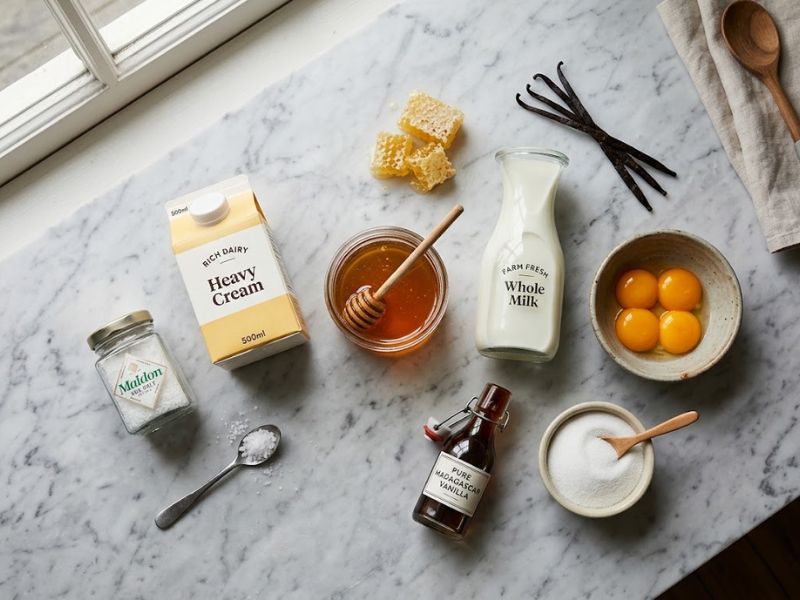
Honey Ice Cream Ingredients
| Ingredient | Amount | Purpose |
| Whole milk | 1 cup (240 ml) | Loosens the base so it isn’t overly dense |
| Heavy cream | 2 cups (480 ml) | Provides richness and a smooth, creamy structure |
| Egg yolks | 5 large | Thickens the custard and adds body |
| Honey | ¾ cup (180 ml) | Main sweetener and primary source of flavor |
| Granulated sugar | 2 tablespoons | Helps balance freezing texture alongside the honey |
| Fine salt | ¼ teaspoon | Sharpens and rounds out the sweetness |
| Vanilla extract | 1 teaspoon | Supports the honey flavor without overpowering it |
Key Ingredients to Know
The egg yolks, honey, and small amount of granulated sugar each play a different role in this ice cream. Egg yolks give the custard its rich, velvety body, while honey provides both sweetness and its distinctive floral character. The granulated sugar helps fine-tune the freezing texture, keeping the finished ice cream easier to scoop without making it noticeably sweeter. Using good-quality ingredients matters here because the simple base gives each one room to stand out.
How to Make Honey Ice Cream
- Warm the milk and cream. In a medium saucepan over medium heat, combine the whole milk and heavy cream. Heat until steam rises and small bubbles form at the edges, but do not let it boil.
- Whisk the egg yolks. In a separate bowl, whisk the egg yolks with the granulated sugar and salt until the mixture lightens slightly in color.
- Temper the yolks. Slowly pour about a cup of the warm milk mixture into the yolks while whisking constantly. This raises the temperature of the eggs gradually so they don’t scramble.
- Cook the custard. Pour the tempered yolk mixture back into the saucepan with the remaining milk and cream. Cook over medium-low heat, stirring constantly with a wooden spoon or spatula, until the custard thickens enough to coat the back of the spoon this usually happens between 170°F and 175°F. Run your finger across the coated spoon; if the line holds without the custard running back together, it’s ready.
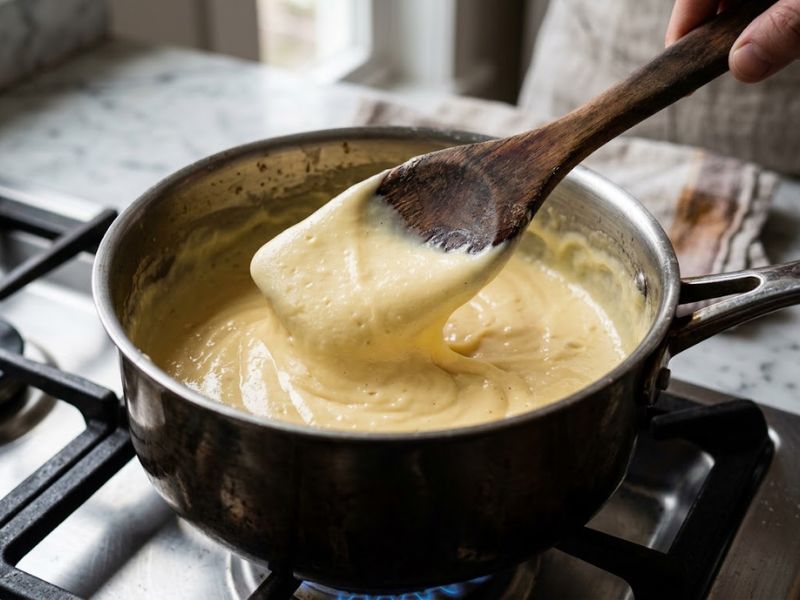
- Strain and cool slightly. Pour the custard through a fine-mesh strainer into a clean bowl to catch any bits of cooked egg.
- Add the honey and vanilla. Whisk the honey into the warm (not hot) custard until fully combined, then stir in the vanilla extract. Adding honey off the heat helps preserve its more delicate aromatic notes.
- Chill thoroughly. Cover the bowl and refrigerate for at least 4 hours, or overnight. The base should be completely cold before churning, or the ice cream maker won’t be able to freeze it properly.
- Churn. Pour the chilled base into your ice cream maker and churn according to the manufacturer’s instructions, usually 25 to 30 minutes, until it reaches a soft-serve consistency.
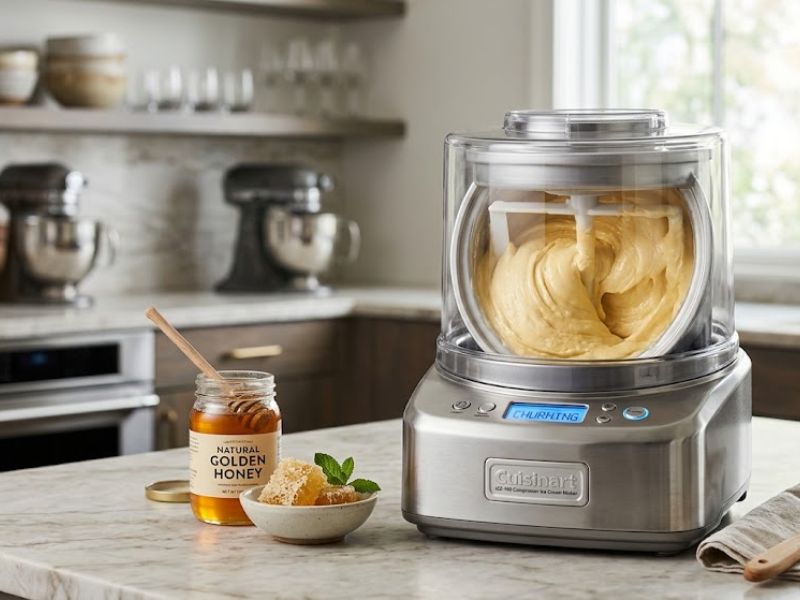
- Freeze to set. Transfer the churned ice cream into an airtight container, press a piece of parchment or plastic wrap directly onto the surface, and freeze for at least 4 hours before scooping.
Tips for Creamy Honey Ice Cream
- Cook the custard low and slow. Rushing this step with high heat is the most common cause of a grainy texture, since the eggs can scramble before the mixture thickens evenly.
- Chill the base completely. A base that’s still even slightly warm won’t churn properly and will result in more ice crystals.
- Don’t skip the strainer. Straining removes any small curdled bits, giving you a smoother final texture.
- Watch the churn time, not just the clock. Stop churning once the mixture looks like soft-serve rather than waiting for it to firm up completely it will finish setting in the freezer.
- Press plastic wrap onto the surface before freezing. This small step prevents a layer of ice crystals from forming on top during storage.
- Don’t overload the honey. More honey doesn’t always mean better flavor; too much can leave the ice cream noticeably softer than intended and can mute the vanilla.
What Kind of Honey Is Best for Ice Cream?
There isn’t a single honey that works best for everyone the right choice depends on how strong you want the flavor to come through. Mild, light-colored honeys like clover or acacia blend smoothly into the base and let the vanilla and cream flavors stay in the foreground, which works well if you want a more classic, subtly sweet result. Darker, more robust honeys like buckwheat or wildflower carry stronger, more distinct notes sometimes earthy or slightly molasses-like and will make the honey flavor the clear star of the dessert.
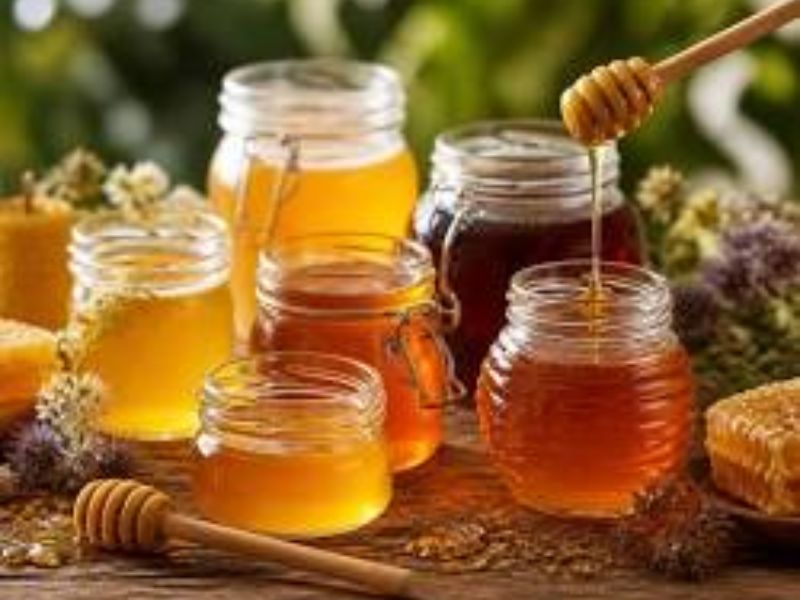
Mild vs. Bold Honey Varieties
If you’re making honey ice cream for the first time, a mild honey is usually an easy place to start because it blends naturally with the cream and vanilla. Clover and acacia honey offer a gentle sweetness, while wildflower and buckwheat honey can bring more noticeable floral, earthy, or molasses-like notes. The important thing is to choose a honey whose flavor you enjoy on its own, since its character will remain noticeable even after it is mixed into the frozen base.
Raw or pure honey, as opposed to heavily processed blends, tends to bring more of its original aroma into the finished ice cream, since some processing can strip out delicate flavor compounds. If you’re unsure where to start, a mild wildflower or clover honey is a reasonable middle ground, and you can experiment with bolder ice cream flavors once you know how much honey flavor you personally enjoy.
Easy Honey Ice Cream Variations
Honey Vanilla
Increase the vanilla extract slightly and, if you have one, scrape in the seeds of half a vanilla bean for visible flecks and a deeper aroma.
Honey Cinnamon
Warm a cinnamon stick in the milk and cream while heating, then remove it before tempering the eggs. This infuses gentle spice without overwhelming the honey.
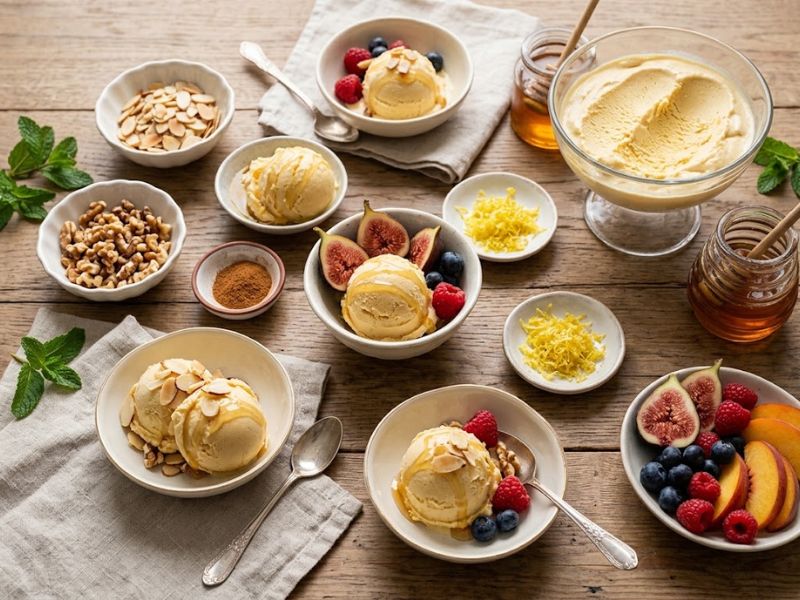
Honey Almond
Stir in ½ cup of toasted, chopped almonds right after churning, along with a few drops of almond extract for a fuller flavor.
Honey & Toasted Walnut:
Fold in ½ cup of toasted walnut pieces after churning; the slight bitterness of the walnuts balances the honey’s sweetness nicely.
Honey Almond
Stir in ½ cup of toasted, chopped almonds right after churning, along with a few drops of almond extract for a fuller flavor similar to our Almond Ice Cream Recipe.
No-Churn Honey Ice Cream Option
How to Make No-Churn Honey Ice Cream
The no-churn method relies on whipped cream and sweetened condensed milk to create a creamy frozen texture without the need for an ice cream machine. Honey adds its characteristic floral sweetness, while vanilla rounds out the flavor. The key is to fold the ingredients together gently so the whipped cream keeps as much air as possible before the mixture goes into the freezer.
If you don’t own an ice cream maker, a no-churn version can still deliver a satisfying result, though the texture will be a little denser and less airy than a properly churned custard base. To make it, whip 2 cups of heavy cream to stiff peaks, then gently fold in a mixture of one 14-ounce can of sweetened condensed milk, ½ cup of honey, and 1 teaspoon of vanilla extract. Spread the mixture into a loaf pan, cover, and freeze for at least 6 hours.
This method skips the cooked custard step entirely, which makes it faster and more beginner-friendly, but it won’t have quite the same smooth, dense mouthfeel as the churned version. Think of it as a close, convenient cousin rather than an identical result.
How to Serve Honey Ice Cream
Toppings and Pairings
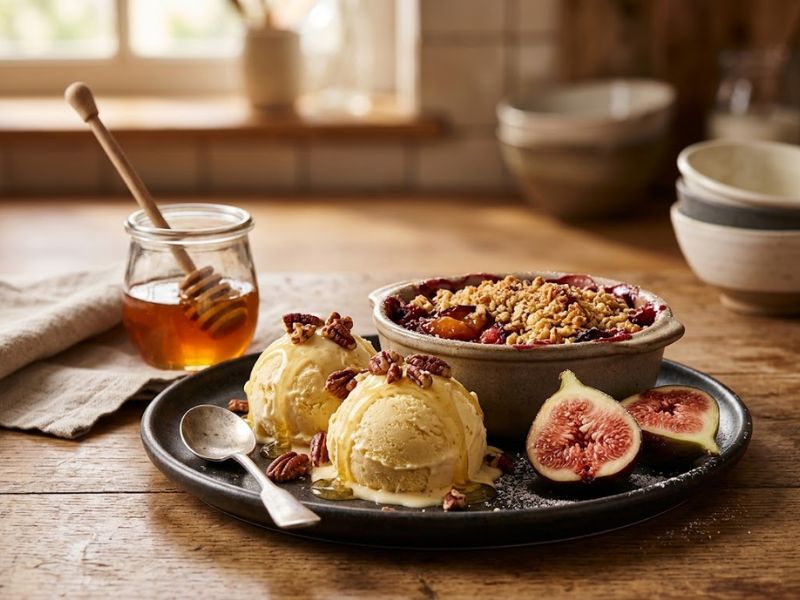
The simplest toppings work especially well with honey ice cream. Toasted pecans, almonds, walnuts, fresh berries, peaches, and figs add texture and balance the creamy sweetness. A light drizzle of honey on top can also bring out its natural flavor.
For a warmer dessert, serve a scoop alongside fruit crumble, pie, or crisp shortbread cookies. The contrast between the warm dessert and cold honey ice cream makes an easy, satisfying pairing.
How to Store Homemade Honey Ice Cream
Best Storage Practices
Store honey ice cream in an airtight, freezer-safe container with parchment paper or plastic wrap pressed directly against the surface. This helps prevent ice crystals and freezer burn. For the best texture and flavor, enjoy homemade honey ice cream within about two weeks.
Because honey keeps ice cream slightly softer, let it sit at room temperature for 5–10 minutes if needed before scooping.
Common Mistakes to Avoid
- Adding honey too early and at high heat. Cooking honey directly with the custard at high temperatures can flatten its aroma; add it once the custard is off the heat and only warm.
- Skipping the chilling step. Churning a warm or even room-temperature base leads to a softer, less structured ice cream with more ice crystals.
- Overcooking the custard. Custard cooked past around 175°F risks curdling, which shows up as small lumps in the final texture.
- Using only honey with no granulated sugar. A base sweetened entirely with honey can end up too soft to scoop properly once frozen.
- Over-churning. Letting the machine run too long past the soft-serve stage can cause the texture to turn buttery or grainy.
- Storing in a container that isn’t airtight. This is one of the most common reasons homemade ice cream develops a stale, freezer-burned taste within days.
- Choosing a honey without tasting it first. Since honey varieties differ so much in intensity, using an unfamiliar honey without sampling it first can lead to a stronger or weaker flavor than expected.
Frequently Asked Questions
Can you make ice cream with honey instead of sugar?
Yes. Honey can replace most or all of the granulated sugar in an ice cream base. Because honey has a lower freezing point than sucrose, recipes usually keep a small amount of regular sugar alongside it to help the texture stay scoopable rather than overly soft.
Does honey make ice cream softer?
Generally, yes. Honey’s fructose content lowers the freezing point of the base, so ice cream made with honey tends to stay a bit softer and scoops more easily straight from the freezer compared to versions made only with granulated sugar.
What type of honey works best in ice cream?
It depends on personal taste rather than one correct answer. Mild honeys like clover or acacia let other flavors like vanilla shine through, while darker honeys such as buckwheat or wildflower create a bolder, more assertive honey flavor.
Can honey ice cream be made without an ice cream maker?
Yes. A no-churn method using whipped cream, sweetened condensed milk, and honey can produce a satisfying result, though it will be denser and less airy than a churned custard-based version.
Why is homemade honey ice cream hard after freezing?
This is usually caused by too little fat or sweetener in the base, an overly long freezing time, or a freezer set colder than necessary. Letting it sit at room temperature for a few minutes before scooping typically solves the problem.
Conclusion
Honey ice cream rewards a little extra attention with a flavor and texture that plain sugar-based versions simply can’t match. Once you understand how honey behaves in a frozen base softer texture, deeper aroma, and a rounder sweetness the recipe becomes easy to repeat and adjust to your taste. Try it first with a mild honey and classic vanilla, then experiment with a bolder variety or one of the flavor variations above to find the combination you like best.