

Ube ice cream stands out before you even take the first bite. Its naturally purple color makes it instantly recognizable, while the flavor is much more subtle than its appearance suggests. Ube has a mildly sweet, earthy, and nutty character that works especially well with a rich, creamy ice cream base.
This homemade ube ice cream recipe combines ube with heavy cream, whole milk, and a little ube extract for a smooth texture and deeper flavor. You can make it with an ice cream maker for a classic scoopable texture, or use the no-churn method when you want a simpler approach.
What Is Ube Ice Cream?
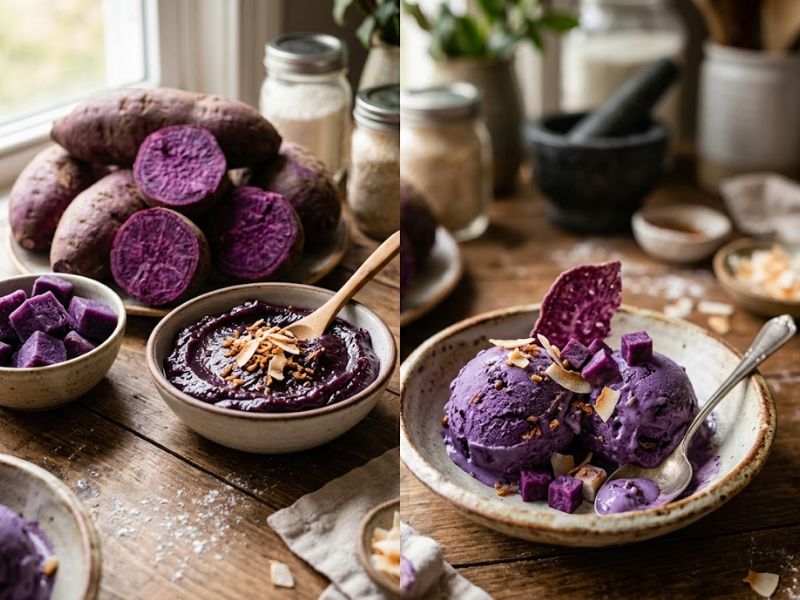
Ube ice cream is a frozen dessert flavored with ube, a purple yam widely used in Filipino cooking and desserts. Ube is different from the orange sweet potatoes commonly found in American grocery stores. Its flesh naturally ranges from purple to deep violet, and its flavor is mildly sweet with earthy and nutty notes.
In desserts, ube is often used as ube halaya, a sweet purple yam spread, or as ube extract or flavoring. Each form can give an ice cream base a slightly different intensity.
For homemade purple yam ice cream, ube halaya is particularly useful because it contributes both flavor and sweetness. A small amount of ube extract can then reinforce the characteristic flavor and color without requiring a large quantity of cooked yam.
The result is a creamy dessert with a distinctive purple appearance and a flavor that pairs naturally with vanilla, coconut, white chocolate, and toasted nuts. It is also a fun example of the many unique options found in different Types of Ice Cream.
What Does Ube Ice Cream Taste Like?
Ube has a flavor that is difficult to compare with just one ingredient. It is mildly sweet and earthy, with a gentle nuttiness and subtle vanilla-like quality.
When combined with a rich ice cream base, those flavors become softer and more rounded. The cream adds richness, while ube provides the distinctive character. If ube halaya is used, the finished ice cream can taste sweeter and more dessert-like.
The intensity also depends on the ingredients. A recipe made mostly with ube halaya may taste different from one that uses cooked purple yam with a small amount of extract. Ube extract is concentrated, so adding too much can make the flavor taste artificial rather than balanced. If you enjoy trying distinctive flavors, you can also explore more Ice Cream Flavors for other creative combinations.
Why Is Ube Ice Cream Purple?
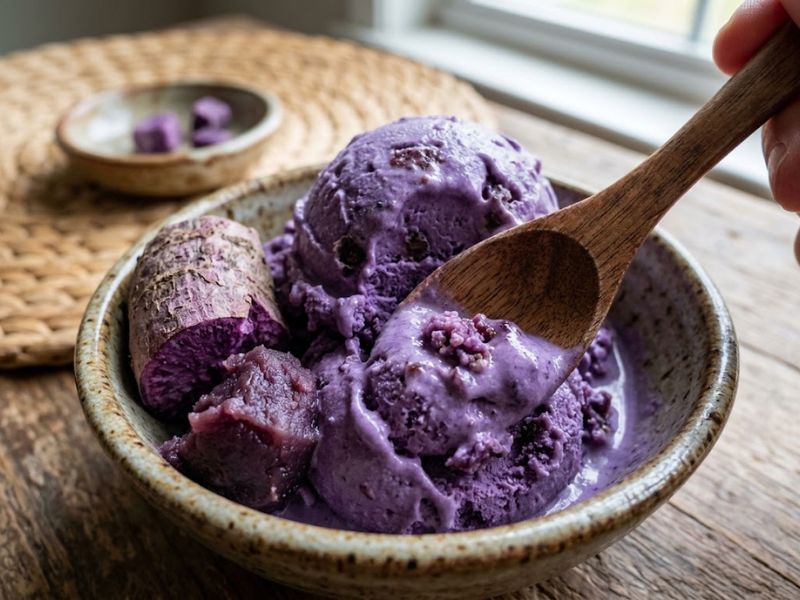
The purple color comes from the ube itself and from ube-based ingredients used in the recipe.
Fresh ube has naturally purple flesh, although the exact shade can vary. Ube halaya and ube extract can also contribute color to an ice cream mixture. Some commercial ube products contain additional coloring, so the color of store-bought and homemade versions may not always look exactly the same.
For homemade ube ice cream, the goal is not simply to make the brightest purple possible. A good recipe should balance the color with a pleasant ube flavor.
Ingredients You’ll Need
For a creamy homemade ube ice cream, keep the ingredient list straightforward.
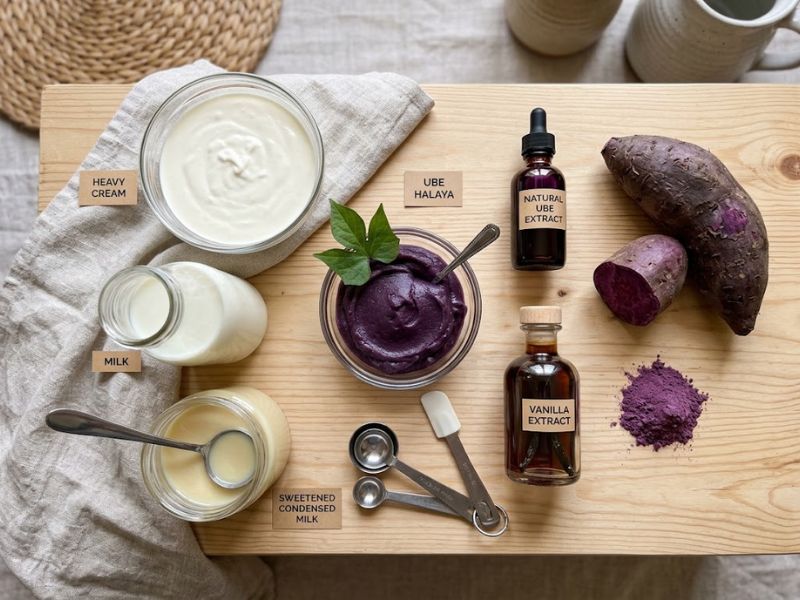
- Ube halaya: Provides concentrated purple yam flavor, sweetness, and body.
- Heavy cream: Creates the rich, creamy texture expected from homemade ice cream.
- Whole milk: Lightens the base slightly while adding dairy richness.
- Sweetened condensed milk: Adds sweetness and helps create a smooth, soft texture.
- Ube extract: Intensifies the characteristic ube flavor and can deepen the color.
- Vanilla extract: Adds a subtle background flavor that complements the ube.
- Salt: A small amount balances the sweetness and helps the other flavors stand out.
If your ube halaya is particularly sweet, you may need to adjust the sweetness slightly rather than adding extra sugar automatically.
For the best result, use ingredients that are cold when you begin mixing. A well-chilled base generally gives an ice cream maker an easier job and helps the finished ice cream freeze more evenly.
Recipe Information
| Detail | Information |
| Prep Time | 20 minutes |
| Chilling Time | 2–4 hours |
| Churning Time | According to ice cream maker |
| Freezing Time | 4–6 hours |
| Total Time | About 6–10 hours |
| Servings | About 8 |
| Category | Dessert |
| Cuisine | Filipino-inspired |
| Method | Churned |
Ube Ice Cream Recipe Card
Ingredients
- 1 cup ube halaya
- 1 cup whole milk
- 1 can sweetened condensed milk
- 2 cups heavy cream
- 1 teaspoon ube extract
- 1 teaspoon vanilla extract
- ⅛ teaspoon salt
Instructions
- Combine the ube halaya, sweetened condensed milk, ube extract, vanilla extract, and salt in a large bowl.
- Pour in the whole milk and whisk until everything is smooth and well blended.
- Pour the heavy cream into a separate chilled bowl and whip it until soft peaks form.
- Gently fold the whipped cream into the ube mixture in batches.
- Cover and refrigerate until the mixture is thoroughly chilled.
- Churn in an ice cream maker according to the manufacturer’s instructions.
- Transfer the thickened ice cream to a freezer-safe container.
- Cover the container tightly and freeze for 4–6 hours, or until the ice cream is firm and easy to scoop.
- Let the ice cream sit briefly at room temperature before serving if it is too firm to scoop.
No-Churn Option
Prepare the mixture through step 4, then transfer it to a freezer-safe container. Smooth out the top, cover the container tightly, and freeze until the ice cream is firm.
Storage
Store the ice cream in the freezer with the container tightly covered. For the best texture and flavor, take out only the amount you plan to serve and return the container to the freezer promptly.
How to Make Ube Ice Cream
1. Prepare the Ube Mixture
Add the ube halaya, sweetened condensed milk, ube extract, vanilla extract, and salt to a mixing bowl. Stir until the mixture looks smooth and well blended.
If the ube halaya is very thick, take a little time to break it down with the back of a spoon or whisk. You want the finished mixture to blend easily into the dairy rather than leaving large streaks of ube throughout the ice cream.
2. Add the Milk
Pour in the whole milk and whisk until the ube mixture is evenly distributed.
At this stage, the mixture should have a smooth purple appearance. Taste a small amount before adding the cream. If the ube flavor seems very strong, the heavy cream will mellow it once incorporated.
3. Whip the Heavy Cream
In a separate chilled bowl, whip the heavy cream until it reaches soft peaks.
Do not whip it until it becomes stiff and grainy. Soft, smooth whipped cream is easier to fold into the ube mixture and helps maintain a creamy texture.
4. Combine the Mixtures
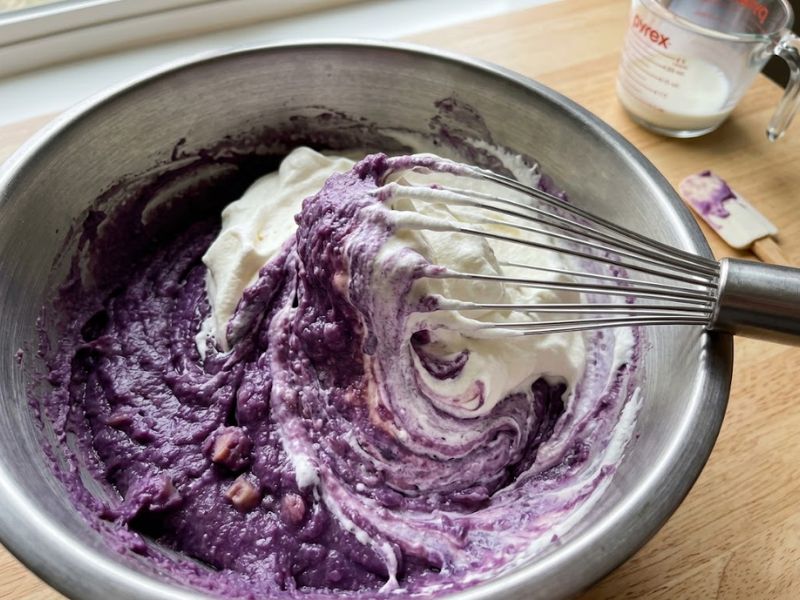
Gently fold the whipped cream into the ube mixture in batches.
Use a spatula and fold rather than vigorously stirring. This helps keep the mixture light and prevents unnecessary overworking.
5. Chill Before Churning
Cover the mixture and refrigerate it until thoroughly chilled.
Starting with a cold base helps the ice cream maker freeze the mixture more efficiently. If the base is still warm or noticeably loose, give it more time in the refrigerator before moving to the next step.
6. Churn the Ice Cream
Pour the chilled mixture into your ice cream maker and churn according to the manufacturer’s instructions.
The ice cream should gradually become thicker and develop a soft-serve-like consistency. Once it has thickened sufficiently, transfer it to a freezer-safe container.
7. Freeze Until Firm
Cover the container tightly and freeze until the ice cream reaches your preferred scooping consistency.
Homemade ice cream is often softer immediately after churning and becomes firmer after additional time in the freezer.
How to Make Ube Ice Cream Without an Ice Cream Maker
You can also make ube ice cream without an ice cream maker by using the no-churn method.
Prepare the ube mixture as described above, then fold it gently into softly whipped heavy cream. Transfer the mixture to a shallow, freezer-safe container and smooth the surface.
Cover it well before freezing. A shallow container can help the mixture freeze more evenly than a very deep container.
The texture of no-churn ice cream will not be exactly the same as ice cream made in a machine. The no-churn version can still be rich and creamy, but churning incorporates air while continuously freezing the mixture, which affects the final texture.
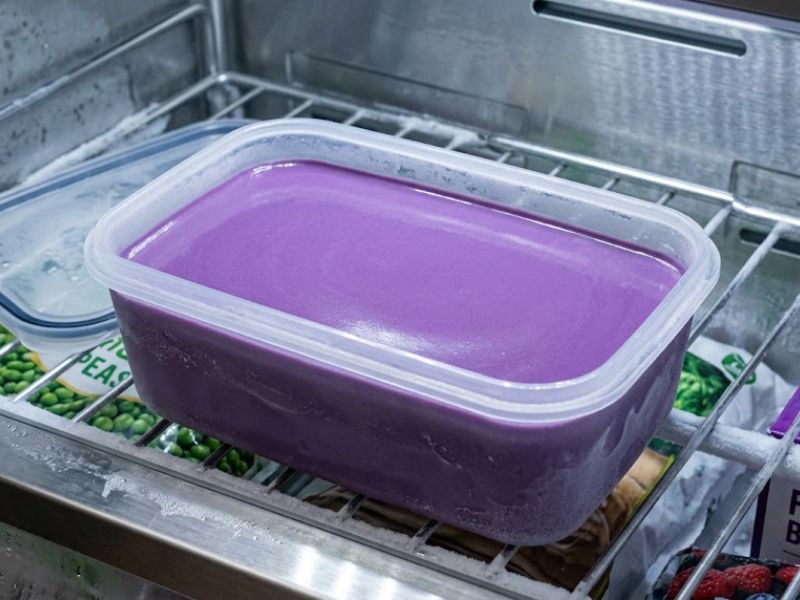
Tips for Creamy Ube Ice Cream
Use a balanced amount of ube. Too much ube halaya can make the mixture excessively sweet or heavy. Too little may leave the finished ice cream lacking the characteristic flavor.
Don’t overdo the extract. Ube extract is concentrated. Start with the amount called for in the recipe rather than adding a large splash.
Chill the base properly. A cold mixture freezes more efficiently and can help produce a smoother finished texture.
Use a freezer-safe container. A container with a secure lid helps protect the ice cream from unwanted freezer odors and excessive surface exposure.
Keep the surface covered. Pressing a piece of parchment or freezer-safe wrap directly over the surface before sealing the container can help reduce direct air exposure.
Let it soften slightly before serving. If the ice cream has been frozen for several hours or overnight, give it a few minutes at room temperature before scooping. This makes serving easier without needing to melt the entire container.
Common Mistakes to Avoid
Adding Too Much Ube Extract
More extract does not automatically mean better flavor. Excessive extract can overpower the creamy dairy base and create an artificial-tasting result.
Adding Too Much Moisture
Extra liquid can interfere with the texture of homemade ice cream. Stick to the measured ingredients rather than adding additional milk simply to loosen the mixture.
Skipping the Chilling Step
A warm or insufficiently chilled base can take longer to freeze and may produce a less satisfying texture. Give the mixture enough time to become properly cold before churning.
Overworking the Mixture
Once the whipped cream has been incorporated, gentle folding is enough. Excessive mixing can reduce the lightness of a no-churn base.
Freezing It Uncovered
Leaving the ice cream exposed in the freezer can lead to surface drying and unwanted ice formation. Keep the container tightly covered.
Ube Ice Cream Toppings and Serving Ideas
Ube already has a distinctive flavor, so toppings should complement rather than overpower it.
Toasted coconut is an especially natural pairing, adding a light crunch and complementary tropical flavor. Crushed nuts can provide texture, while white chocolate offers extra sweetness and richness.
For a simple presentation, serve a scoop with coconut flakes and a small amount of chopped toasted nuts. Fresh fruit can also provide contrast, while wafer cookies add a crisp element alongside the soft ice cream.
If you enjoy Filipino-inspired desserts, small pieces of mochi can also make an interesting topping or accompaniment.
For the cleanest flavor, start with a plain scoop before adding several toppings at once. This lets the ube remain the main flavor. If you enjoy that tropical flavor combination, Coconut Ice Cream is another option worth trying.
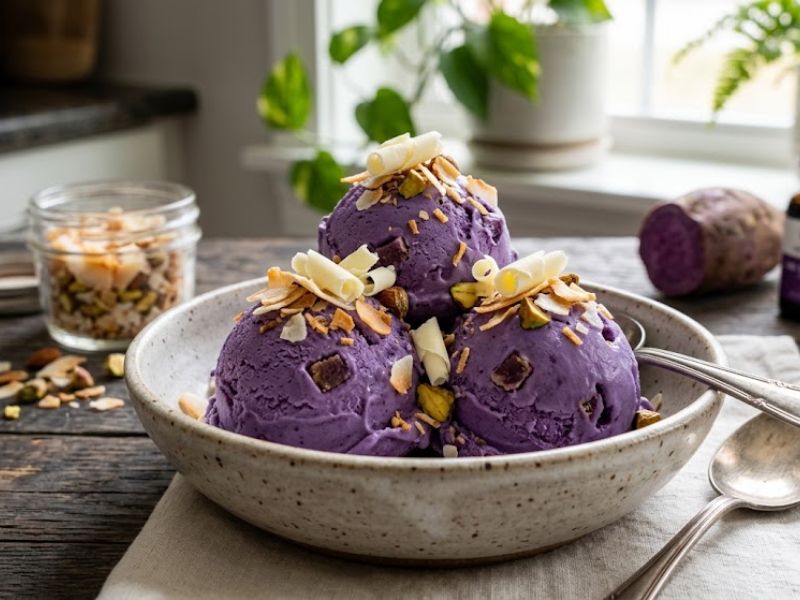
How to Store Ube Ice Cream
Transfer the finished ice cream to a clean, freezer-safe container with a tight-fitting lid. Keep it toward the back of the freezer where the temperature is generally more stable than near the door.
Protecting the surface is important because repeated exposure to warm air can contribute to ice crystals and texture changes.
For the best quality, homemade ice cream is generally best enjoyed while it remains fresh and creamy rather than being stored indefinitely. If it becomes very firm in the freezer, allow it to sit briefly before scooping.
Avoid repeatedly letting the entire container soften and then refreezing it. Instead, take out only the amount you plan to serve.
Frequently Asked Questions
What Is Ube?
Ube is a purple yam commonly used in Filipino cuisine, particularly in desserts. It has a mildly sweet, earthy, and nutty flavor and naturally gives many desserts a purple color.
Is Ube the Same as Sweet Potato?
No. Ube is a purple yam, while sweet potatoes are a different type of root vegetable. Their flavors, textures, and culinary uses are not identical.
Why Is Ube Ice Cream Purple?
The purple color comes from ube and ube-based ingredients. The exact shade can vary depending on whether the recipe uses fresh ube, ube halaya, ube extract, or additional coloring.
Can I Make Ube Ice Cream Without an Ice Cream Maker?
Yes. A no-churn version can be made by combining the ube mixture with whipped heavy cream and freezing it in a covered container. Its texture will differ somewhat from churned ice cream.
What Does Ube Ice Cream Taste Like?
Ube ice cream is mildly sweet, creamy, earthy, and slightly nutty, with subtle vanilla-like notes. The exact flavor depends on the type and amount of ube used.
Conclusion
Ube Ice Cream is a good example of how a simple frozen dessert can become distinctive through one memorable ingredient. Ube brings its natural purple color and gently sweet, nutty flavor, while a creamy dairy base keeps the finished dessert smooth and balanced.
Whether you churn it in an ice cream maker or use a no-churn method, the key is to keep the ube flavor balanced and give the mixture enough time to chill and freeze properly. Serve it simply with toasted coconut or nuts, or enjoy a scoop on its own so the ube can take center stage.