

Butterscotch Ice Cream has a warm, buttery sweetness that makes it stand out from ordinary vanilla or caramel flavors. The combination of brown sugar and butter gives the base a deeper flavor, while cream and whole milk keep each scoop smooth and rich without making it overwhelmingly heavy.
This homemade version builds the butterscotch flavor directly into the ice cream base instead of relying only on a bottled topping. That approach gives the Butterscotch Ice Cream a more consistent flavor from the first bite to the last. A small amount of vanilla and salt helps balance the sweetness, while an optional swirl of butterscotch sauce adds little pockets of extra flavor. The result is a creamy frozen dessert with a mellow buttery finish and plenty of character.
Recipe at a Glance
| Detail | Information |
| Prep Time | 20 minutes |
| Chilling Time | 4 hours |
| Churning Time | 20–25 minutes |
| Freezing Time | 4 hours |
| Total Time | About 8 hours 45 minutes |
| Servings | 8 |
| Yield | About 1 quart |
| Method | Stovetop + Ice Cream Maker |
| Difficulty | Easy to Moderate |
Why You’ll Love This Butterscotch Ice Cream
- Deep butterscotch flavor: Brown sugar and butter create the main flavor rather than making the ice cream taste like plain vanilla with sauce added afterward. The result is a Butterscotch Ice Cream with a richer flavor than versions that depend entirely on a topping or syrup.
- Creamy texture: Heavy cream and whole milk give the base a rich but scoopable texture.
- Balanced sweetness: Salt and vanilla keep the brown sugar from tasting one-dimensional.
- Easy to customize: You can add toffee pieces, a butterscotch swirl, or a little chocolate for a different finish.
- Ice cream maker friendly: The base is straightforward to chill and churn at home.
Ingredients You’ll Need
For the Ice Cream Base
- 1 1/2 cups heavy cream
- 1 cup whole milk
- 3/4 cup packed light brown sugar
- 4 tablespoons unsalted butter
- 4 large egg yolks
- 1 teaspoon vanilla extract
- 1/4 teaspoon fine salt
Optional Butterscotch Swirl
- 1/3 cup prepared butterscotch sauce, completely cooled
Optional Topping
- 1/3 cup finely chopped toffee pieces
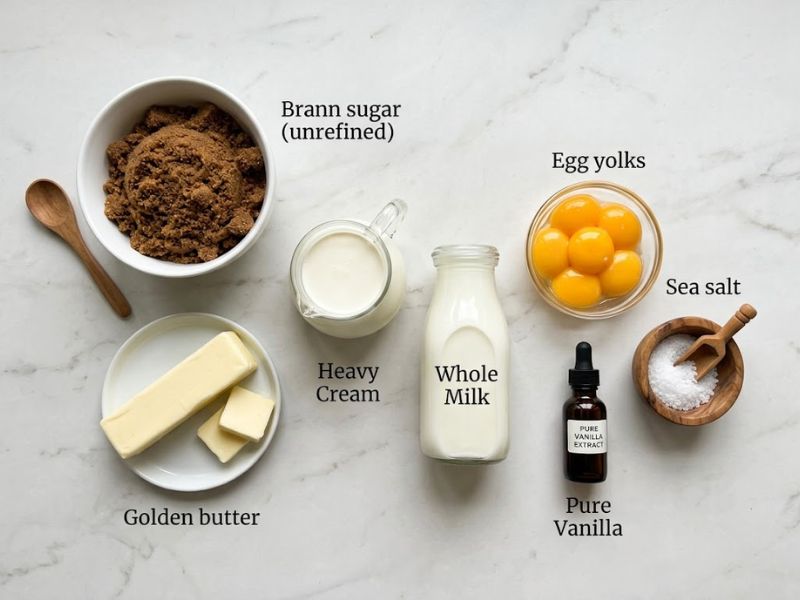
Brown sugar is particularly important here because it gives the ice cream its characteristic molasses-like depth. Light brown sugar keeps the flavor balanced, while butter supplies the rounded richness associated with classic butterscotch.
Whole milk adds enough water and dairy to keep the base from becoming excessively rich, while heavy cream contributes the smooth, creamy texture you expect from homemade ice cream. Together, these ingredients give the Butterscotch Ice Cream its creamy body while allowing the brown sugar and butter to remain the main flavors.
How to Make Butterscotch Ice Cream
1. Make the Butterscotch Base
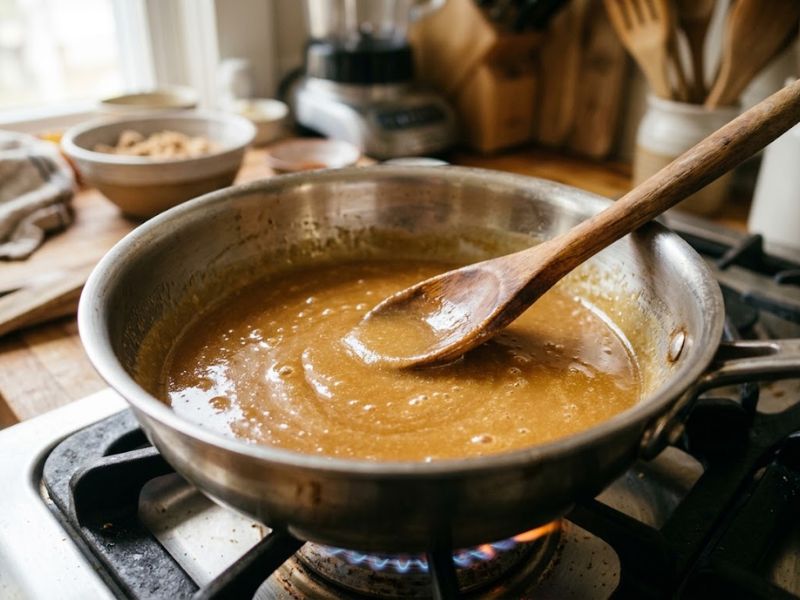
Place the butter in a medium saucepan over medium-low heat. Let it melt gently, then add the brown sugar and salt.
Cook for about 2 minutes, stirring constantly, until the butter and sugar form a smooth, glossy mixture. The sugar should look moist and evenly coated with butter. Avoid cooking it until it becomes dark or bitter.
Pour in the whole milk and heavy cream gradually while whisking. The mixture may bubble slightly as the cooler dairy meets the hot sugar mixture, so add it carefully.
Continue heating until the mixture is hot and steamy but do not bring it to a full boil.
2. Temper the Egg Yolks
Place the egg yolks in a medium bowl and whisk them until smooth.
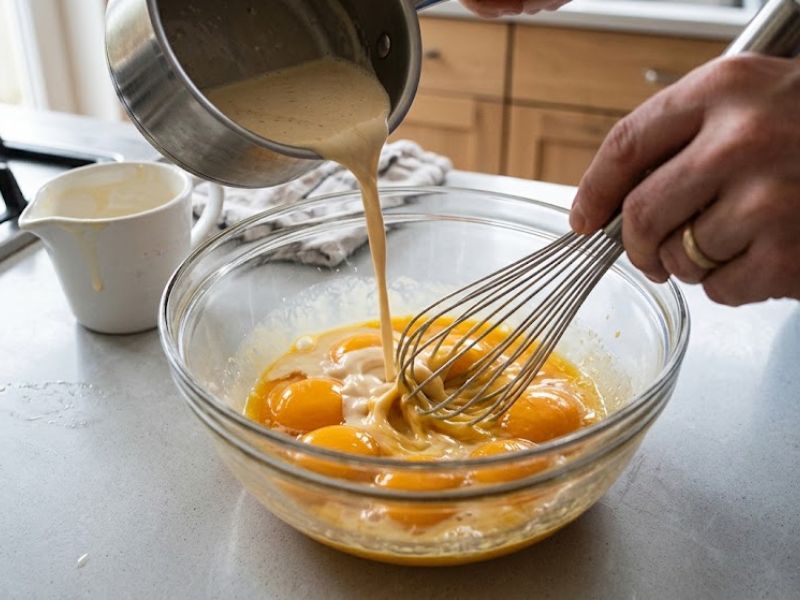
Slowly pour about 1 cup of the hot dairy mixture into the yolks while whisking constantly. This gradually warms the eggs instead of exposing them to the full heat of the saucepan at once.
Pour the warmed egg mixture back into the saucepan.
3. Cook Until Slightly Thickened
Return the saucepan to low heat. Stir continuously with a wooden spoon or silicone spatula, making sure to scrape across the bottom and around the edges.
Cook until the custard reaches approximately 170–175°F. It should coat the back of a spoon, and when you run a finger through the coating, the line should remain visible.
Do not let the mixture boil. High heat can cause the egg proteins to scramble and leave the ice cream base with a grainy texture.
4. Add the Vanilla
Remove the saucepan from the heat and stir in the vanilla extract.
For the smoothest result, pour the custard through a fine-mesh strainer into a clean bowl. This catches any tiny cooked egg particles and leaves you with a silky ice cream base.
Let the mixture cool for several minutes.
5. Chill Thoroughly
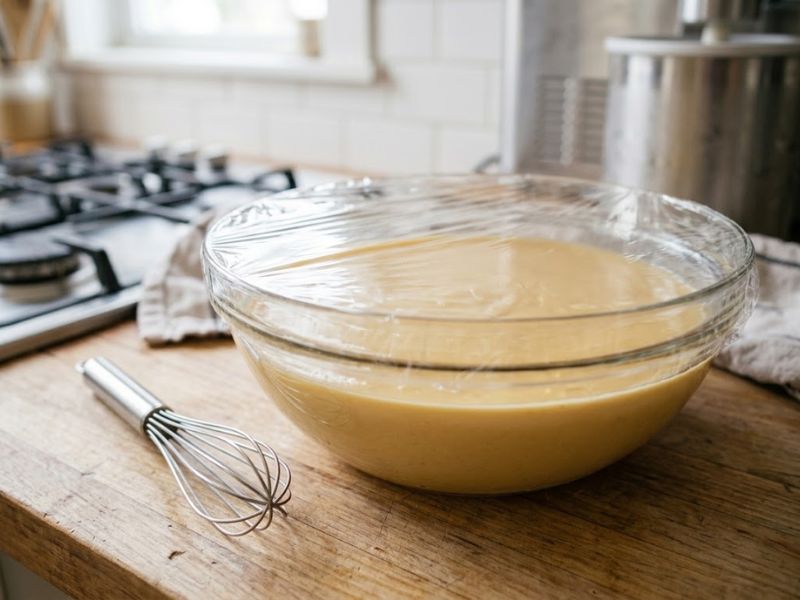
Cover the bowl and refrigerate the base for at least 4 hours, preferably until it is completely cold.
Do not rush this step. A properly chilled base is much easier for an ice cream maker to churn into a creamy frozen dessert.
For convenience, you can prepare the base the evening before and churn it the following day.
6. Churn the Ice Cream
Pour the cold mixture into your ice cream maker and churn according to the manufacturer’s instructions. Most home machines take approximately 20 to 25 minutes, but the exact time varies.
The finished mixture should look thick and soft, similar to soft-serve ice cream. It should hold its shape briefly rather than flowing like a liquid.
If you’re adding toffee pieces, add them during the final few minutes of churning so they distribute throughout the ice cream without becoming completely crushed.
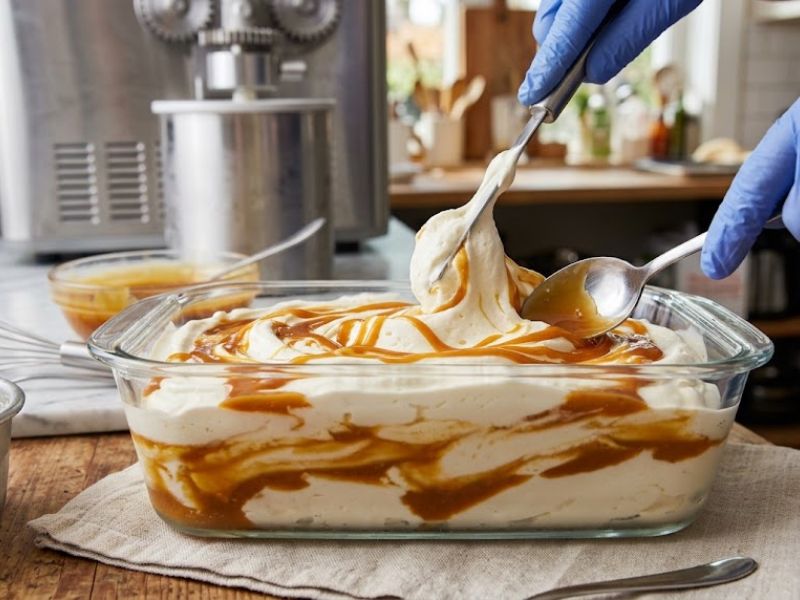
7. Add a Butterscotch Swirl
Transfer about one-third of the churned ice cream to a freezer-safe container. Drizzle a few spoonfuls of cooled butterscotch sauce over it.
Repeat the layers until all the ice cream and sauce have been used. Use a butter knife or skewer to make just a few gentle swirls.
Don’t overmix the sauce. Leaving visible ribbons creates a better contrast between the creamy base and concentrated butterscotch flavor.
8. Freeze Until Firm
Press a piece of parchment paper directly against the surface if your container leaves a lot of exposed space. Cover tightly and freeze for about 4 hours, or until firm enough to scoop.
Let the ice cream sit at room temperature for about 5 to 10 minutes before serving if it feels very firm.
The Trick to a Deeper Butterscotch Flavor
The easiest way to make homemade butterscotch ice cream taste more distinctive is to give the butter and brown sugar enough time to combine properly before adding the dairy.
You don’t need to brown the butter or aggressively caramelize the sugar. In fact, taking the mixture too far can push the flavor toward burnt caramel.
Instead, cook the butter and brown sugar gently until they become glossy and fragrant. That short step develops a fuller flavor while keeping the sweetness under control.
A small amount of salt also matters. It doesn’t make the ice cream salty; it helps keep the brown sugar and butter from tasting overly sweet and flat.
If you enjoy rich, buttery ice cream flavors, our Caramel Ice Cream is another delicious recipe to try
Common Mistakes to Avoid
Cooking the Custard Too Hot
A rolling boil is unnecessary. Keep the heat low and stir constantly once the egg yolks have been added. If the custard becomes too hot, the eggs can cook into small pieces.
Skipping the Straining Step
Even if the custard looks perfectly smooth, straining it takes only a minute and can remove tiny bits of cooked egg before they become noticeable in the finished ice cream.
Using Warm Sauce for the Swirl
Hot butterscotch sauce can partially melt the freshly churned ice cream. Always cool the sauce completely before layering it into the container.
Adding Too Much Sauce
It can be tempting to add extra sauce for a stronger butterscotch flavor, but too much liquid can make the finished ice cream excessively sweet and softer around the swirl. A few concentrated ribbons are usually enough.
Freezing Without Properly Covering the Ice Cream
Air exposure encourages ice crystals to form on the surface. Use a container with a tight-fitting lid and minimize the amount of empty space above the ice cream.
Easy Variations
Crunchy Toffee Butterscotch
Fold 1/3 cup of finely chopped toffee pieces into the ice cream during the last few minutes of churning. The pieces add a crisp contrast to the creamy base.
Extra-Butterscotch Version
Add a little additional cooled butterscotch sauce as a swirl rather than increasing the sugar in the custard. This gives you concentrated pockets of flavor without making the entire base excessively sweet.
Chocolate Butterscotch
Add a small handful of chopped semisweet chocolate during the final minutes of churning. Chocolate works particularly well with the buttery brown-sugar flavor.
No-Churn Option
For a simple no-churn ice cream, whip 2 cups of cold heavy cream until stiff peaks form. Fold in one 14-ounce can of sweetened condensed milk, 1 teaspoon vanilla, and a cooled butterscotch sauce mixture to taste.
Transfer to a freezer-safe container, add a few sauce ribbons, cover tightly, and freeze for at least 6 hours.
The texture will be slightly different from churned ice cream, but it is a convenient option when you don’t have an ice cream maker.
If you like buttery flavors with a little crunch, our Butter Pecan Ice Cream is another homemade flavor worth trying.
How to Serve It
Let the ice cream soften for several minutes before scooping. This gives you cleaner scoops and makes the creamy texture easier to appreciate.
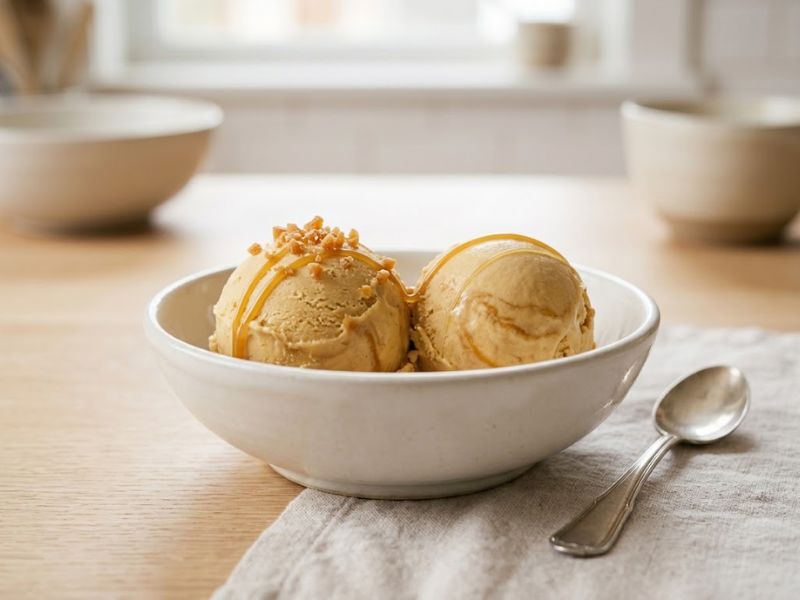
For a simple presentation, serve it with a light drizzle of butterscotch sauce and a few crushed toffee pieces. It also pairs nicely with warm brownies, apple desserts, crisp cookies, or a slice of pound cake.
If you’re serving it for guests, chill the bowls or dessert glasses beforehand so the ice cream stays firm a little longer. For a simpler classic flavor, you can also try our Vanilla Ice Cream recipe.
How to Store Butterscotch Ice Cream
Keep homemade ice cream in a shallow, airtight freezer-safe container. Press parchment paper or freezer paper against the surface before putting the lid on if there is a noticeable amount of exposed space.
For the best texture and flavor, enjoy it within about 2 weeks. It can remain frozen longer, but homemade ice cream gradually develops more ice crystals and may lose some of its fresh texture.
Avoid repeatedly letting the entire container soften and refreeze. Instead, remove only the amount you plan to serve and return the container to the freezer promptly.
Frequently Asked Questions
Does butterscotch ice cream taste like caramel?
They have some similarities, but butterscotch has a more buttery, brown-sugar-forward flavor. Caramel is typically associated more strongly with cooked white sugar, while classic butterscotch relies on brown sugar and butter.
Can I make butterscotch ice cream without an ice cream maker?
Yes. A no-churn version can be made with whipped heavy cream and sweetened condensed milk. The texture will differ somewhat from a churned custard-based ice cream, but it is a useful alternative for a simple homemade dessert.
Why is my ice cream too hard after freezing?
Homemade ice cream can become quite firm after several hours in the freezer. Let it stand at room temperature for 5 to 10 minutes before scooping. Properly chilling the base before churning also helps create a better final texture.
Can I add toffee pieces to the recipe?
Absolutely. Add finely chopped toffee during the final few minutes of churning so the pieces remain distinct. Larger pieces can be used, but smaller pieces distribute more evenly through each scoop.
How can I make the butterscotch flavor stronger?
A cooled butterscotch sauce swirl is one of the easiest ways to intensify the flavor. You can also add toffee pieces for another layer of buttery sweetness. Avoid simply adding much more sugar to the base, since that can make the finished ice cream overly sweet.
Conclusion
This Butterscotch Ice Cream combines brown sugar, butter, vanilla, and rich dairy into a smooth frozen dessert with a distinctly warm, buttery flavor. The key is to build the flavor carefully rather than relying on excessive sweetness. A few ribbons of butterscotch sauce or crunchy toffee pieces can take each scoop in a different direction while keeping the base balanced.
Once the custard is chilled properly and churned until thick, the rest is simple: freeze, scoop, and serve. It is an easy homemade dessert to keep in the freezer when you’re craving something richer than ordinary vanilla but not quite as intense as a heavily flavored chocolate ice cream.