
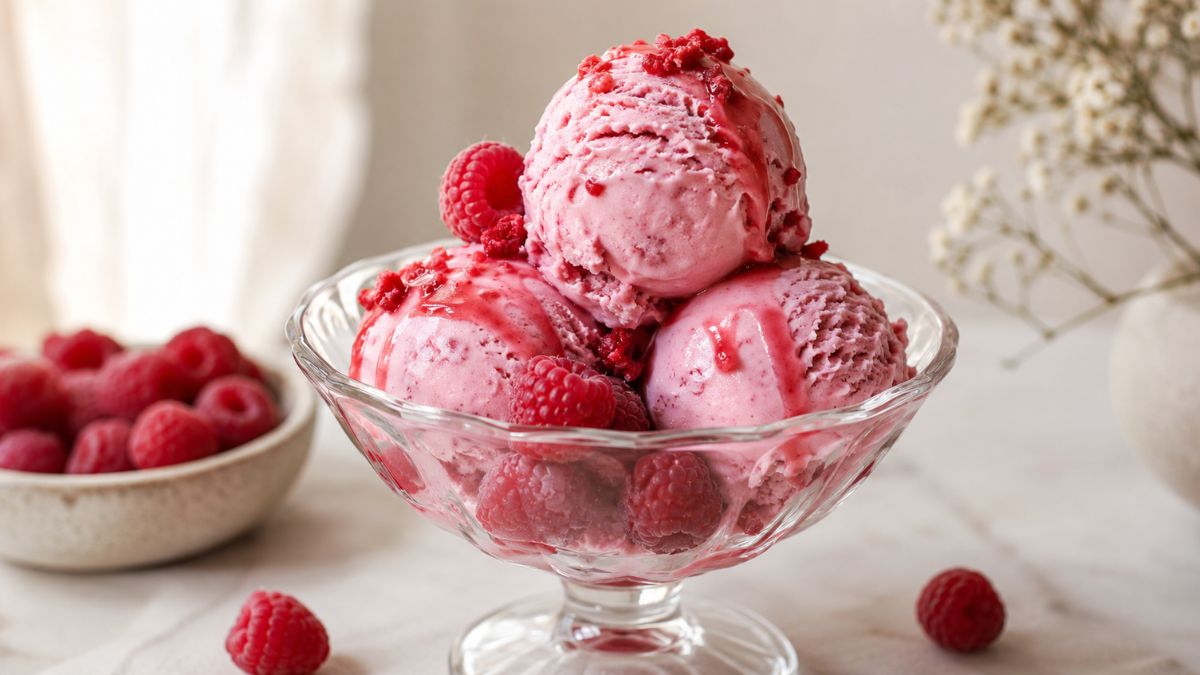
Raspberry ice cream has a particular kind of freshness that makes it stand out from richer chocolate or caramel flavors. The berries bring a bright, slightly tart taste, while cream and milk soften that sharpness into a smooth frozen dessert. When the raspberries are ripe and flavorful, you get a beautiful balance rather than an ice cream that tastes simply sweet.
This homemade raspberry ice cream recipe uses a raspberry puree to spread the berry flavor throughout the base while keeping the texture rich and scoopable. You’ll learn how to choose between fresh and frozen berries, control tartness, avoid an icy texture, and make a no-churn version if you don’t have an ice cream maker.
What Makes Raspberry Ice Cream So Good?
The best raspberry ice cream isn’t just sweetened cream with berries mixed in. Its appeal comes from contrast. Raspberries naturally have a tart acidity, and that acidity keeps the richness of heavy cream from feeling too heavy. If you enjoy fruit-forward frozen desserts, fruit ice cream is another simple way to explore bright flavors beyond berries.
Sugar plays another important role besides sweetness. It helps soften the perception of raspberry’s acidity and also affects how firm the ice cream becomes in the freezer. Meanwhile, the combination of whole milk and heavy cream gives the base enough richness for a smooth texture without completely covering the fruit’s flavor.
For an especially noticeable raspberry flavor, turning the berries into a puree before adding them to the dairy mixture works well. It distributes the fruit more evenly than simply folding whole berries into the finished ice cream.
What Does Raspberry Ice Cream Taste Like?
A good scoop has a clear berry flavor first, followed by the mellow richness of cream. Raspberries can range from sweet to quite tart, so the final flavor depends partly on the berries you use.
Fresh berries usually provide a lively, fruity character, while frozen raspberries can produce a slightly deeper and more concentrated fruit flavor once cooked and pureed. A small amount of lemon juice can make the raspberry taste seem brighter, but too much will push the mixture toward sourness.
If your berries are particularly tart, don’t automatically add a large amount of extra sugar. Taste the puree first and adjust gradually. This gives you better control over the finished dessert.
The result is a refreshing raspberry ice cream with enough fruit flavor to stand out without overpowering the creamy base.
Ingredients You’ll Need
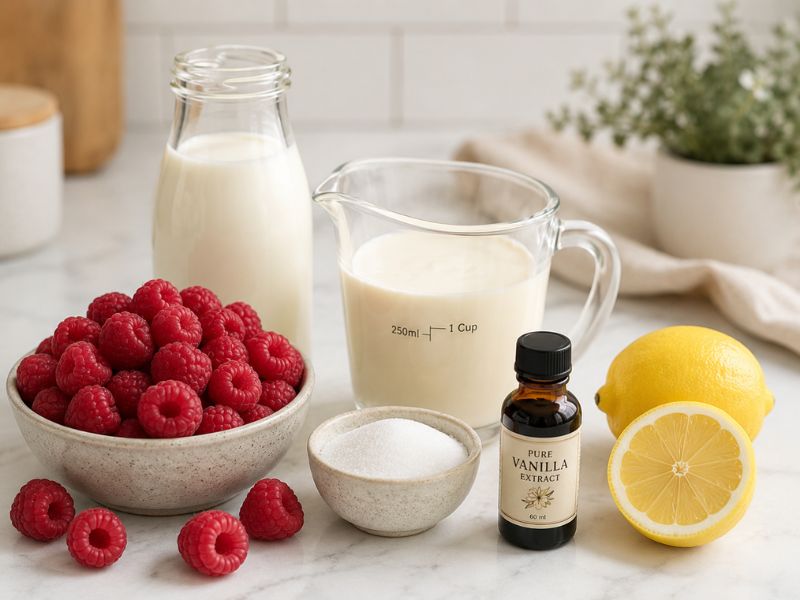
For this raspberry ice cream recipe, you’ll need:
- 2 cups fresh or frozen raspberries
- ¾ cup granulated sugar, divided
- 1 cup whole milk
- 1½ cups heavy cream
- 1 teaspoon vanilla extract
- 1 tablespoon lemon juice
- A small pinch of salt
Raspberries: Fresh berries are excellent when they’re ripe and naturally sweet, while frozen raspberries are convenient and available year-round.
Sugar: It sweetens the berries and contributes to a softer frozen texture. Dividing the sugar allows part of it to be used with the fruit and part in the dairy base.
Whole milk: Milk lightens the base while contributing dairy flavor.
Heavy cream: This provides richness and helps create a smoother mouthfeel.
Vanilla: A small amount rounds out the fruit flavor rather than making the ice cream taste strongly of vanilla.
Lemon juice: This is optional, but a little acidity can make the raspberry flavor more pronounced.
Salt: Just a pinch can balance the sweetness and help the other flavors stand out.
Fresh vs. Frozen Raspberries
Both fresh and frozen raspberries can make excellent homemade raspberry ice cream.
Fresh raspberries are ideal when they’re ripe, fragrant, and naturally flavorful. Look for berries that are plump and free from mold or excessive moisture. Since fresh berries vary considerably in sweetness, tasting them before making the puree is useful.
Frozen raspberries are a practical alternative when fresh fruit isn’t at its best. They are usually picked when ripe and can provide plenty of flavor. Letting them thaw slightly before cooking also makes them easier to handle.
For this recipe, there’s no need to insist on fresh fruit. Frozen raspberries can actually be preferable when fresh berries are out of season or bland. You can also explore a peach ice cream recipe for a softer, naturally sweet fruit flavor.
Either option can produce flavorful raspberry ice cream, so choose the berries that are freshest and most flavorful for you.
How to Make Raspberry Ice Cream
1. Make the Raspberry Puree
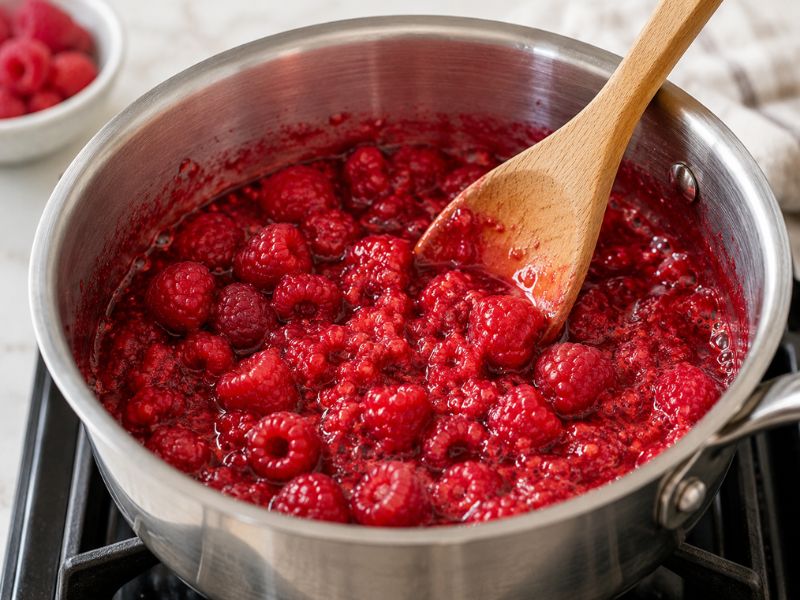
Place the raspberries, ¼ cup of the sugar, and lemon juice in a saucepan over medium-low heat.
Cook for about 5 to 8 minutes, stirring occasionally, until the berries soften and release their juices. Don’t boil the mixture aggressively. You only need enough heat to break down the fruit.
Remove it from the heat and blend until smooth.
If you prefer completely smooth ice cream, press the puree through a fine-mesh strainer to remove the raspberry seeds. This takes a little extra time, but the difference in texture can be significant.
Allow the puree to cool before combining it with the dairy base.
2. Prepare the Cream Base
In a separate saucepan, combine the whole milk, heavy cream, remaining ½ cup sugar, and a small pinch of salt.
Warm the mixture over medium-low heat, stirring until the sugar dissolves. It should become hot and steamy, but you don’t need to bring it to a full boil.
Remove the saucepan from the heat and stir in the vanilla extract.
Let the mixture cool for several minutes.
3. Combine the Raspberry and Dairy Mixtures
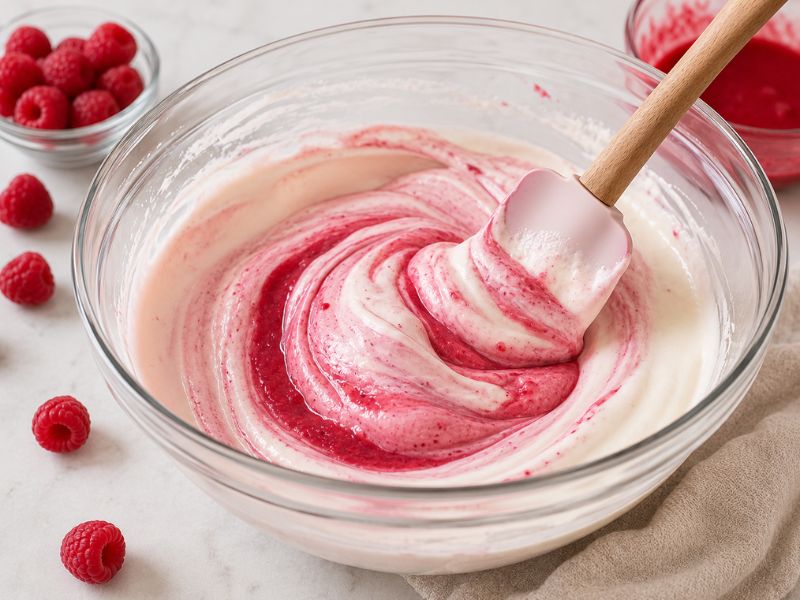
Stir the cooled raspberry puree into the cream mixture.
Taste a small amount before chilling it. This is the best opportunity to adjust the flavor. If the raspberries are very tart, you may want a little additional sugar. If the mixture tastes overly sweet, a tiny amount of lemon juice can restore some balance.
The mixture should taste slightly more intense than you expect the final frozen dessert to taste because freezing dulls sweetness and aroma somewhat.
4. Chill Thoroughly
Transfer the mixture to a covered container and refrigerate it until completely cold, preferably for at least 4 hours.
For better results, you can chill it overnight.
Starting with a cold base helps an ice cream maker freeze the mixture more efficiently and can contribute to smaller ice crystals and a smoother texture.
5. Churn the Ice Cream
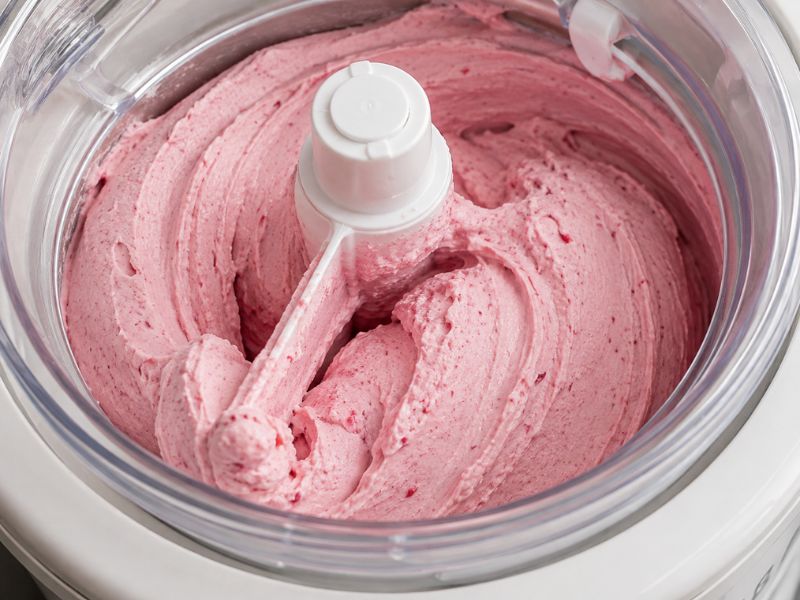
Pour the chilled mixture into your ice cream maker and churn according to the manufacturer’s instructions.
The ice cream is ready when it becomes thick and resembles soft-serve in consistency.
Transfer it to a freezer-safe container, smooth the surface, and cover it tightly.
Freeze for another 3 to 4 hours, or until firm enough to scoop.
Let it sit at room temperature for a few minutes before serving if it becomes very firm.
Tips for Smooth, Creamy Raspberry Ice Cream
Strain the puree for a smoother texture. Raspberry seeds aren’t harmful, but they can make an otherwise silky ice cream feel slightly coarse. Straining is optional but worthwhile if you prefer a very smooth dessert.
Don’t overcook the berries. Prolonged cooking can dull the fresh fruit character. The goal is to soften the raspberries and concentrate their flavor, not turn them into a thick jam.
Taste before freezing. This is one of the most useful steps. Raspberry sweetness varies from batch to batch, and the frozen mixture will taste less sweet than it does while liquid.
Chill the base properly. Putting a warm mixture directly into an ice cream maker can make the freezing process less efficient.
Avoid adding too much fruit juice. Extra liquid can increase the amount of water in the mixture, which may contribute to larger ice crystals. Concentrated puree is generally more useful than simply adding raspberry juice.
These small adjustments help keep your raspberry ice cream smooth while allowing the natural berry flavor to remain noticeable.
Can You Make Raspberry Ice Cream Without an Ice Cream Maker?
Yes. A no-churn method can work when you don’t have an ice cream machine, although the texture won’t be exactly the same as traditionally churned ice cream.
For a simple version, prepare and cool the raspberry puree as described above. Whip about 2 cups of cold heavy cream until soft-to-medium peaks form. Gently fold in sweetened condensed milk and the cooled raspberry puree.
Transfer the mixture to a shallow freezer-safe container, cover it tightly, and freeze for about 6 hours or until firm.
A shallow container helps the mixture freeze more evenly. Avoid repeatedly opening the freezer and stirring unless the recipe specifically requires it, because temperature fluctuations can encourage ice crystal formation.
Raspberry Ice Cream Variations
Once you have the basic recipe, it’s easy to create different versions.
Raspberry chocolate chip: Fold finely chopped semisweet chocolate into the churned ice cream during the final minute.
Raspberry cheesecake: Add small pieces of cheesecake or a few spoonfuls of cheesecake-style swirl after churning.
Raspberry lemon: Increase the lemon element slightly and add a little finely grated lemon zest for a sharper citrus note.
Raspberry white chocolate: Fold in chopped white chocolate after churning. Its sweetness works particularly well with tart raspberries.
Raspberry vanilla: Keep the recipe simple and slightly increase the vanilla for a softer, more rounded flavor. For another berry-inspired dessert, strawberry shortcake ice cream offers a different combination of fruit, cream, and cake-like flavor.
Serving Ideas
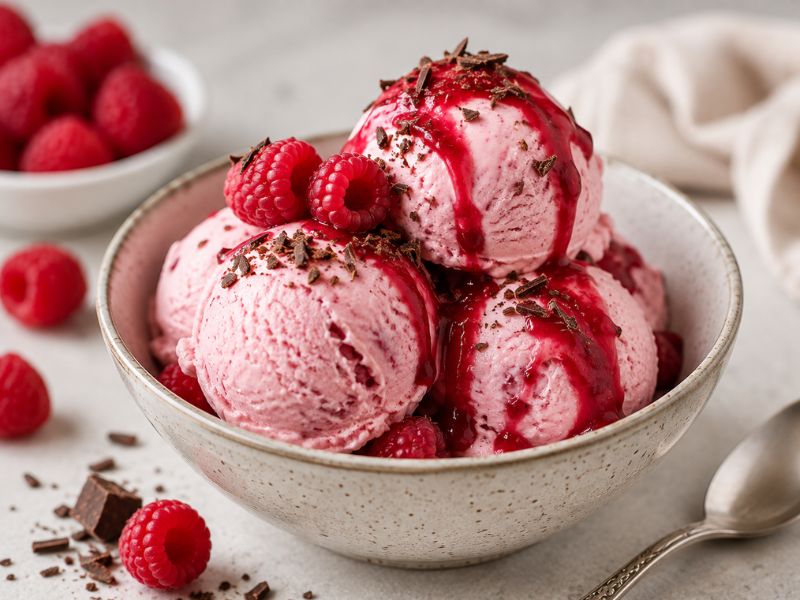
Raspberry ice cream is flavorful enough to serve on its own, but a few simple additions can make it part of a larger dessert.
Try serving it with fresh raspberries, a thin drizzle of raspberry sauce, or a few chocolate shavings. It also pairs nicely with warm brownies, shortbread cookies, pound cake, or crisp meringues.
For contrast, serve a scoop alongside something warm straight from the oven. The combination of hot dessert and cold ice cream creates a more interesting texture than adding lots of toppings.
Storage and Freezing Tips
Store homemade ice cream in a shallow, airtight freezer-safe container. Press a piece of parchment or freezer-safe wrap directly against the surface before sealing the container to reduce exposure to air.
For the best texture, enjoy homemade raspberry ice cream within about 1 to 2 weeks. It can remain frozen longer, but its texture and fresh fruit flavor will gradually decline.
If the ice cream becomes very hard, leave it on the counter for around 5 to 10 minutes before scooping. Avoid repeatedly thawing and refreezing the entire container.
Freezer burn, a dry surface, excessive ice crystals, and a noticeably dull fruit flavor are signs that the dessert has been stored too long or exposed to too much air.
Common Mistakes to Avoid
Using extremely tart berries without adjusting the base
Raspberries vary in acidity. Taste the puree before combining it with the dairy and adjust the sweetness gradually.
Skipping the chilling step
A warm base can freeze poorly and produce a less desirable texture. Give the mixture enough time to become thoroughly cold.
Adding too much liquid
Extra juice may seem like an easy way to increase raspberry flavor, but excess water can make the finished ice cream icier. Concentrated puree is a better option.
Overcooking the raspberries
Cooking the fruit for too long can turn its bright flavor into something more jam-like. Keep the cooking time relatively short.
Freezing in a poorly sealed container
Air is one of homemade ice cream’s biggest enemies. A tightly covered container helps protect both flavor and texture.
FAQs
Can I use frozen raspberries for raspberry ice cream?
Yes. Frozen raspberries work very well, especially when fresh berries are out of season. Cook and puree them just as you would fresh berries, then cool the puree before combining it with the dairy mixture.
How do I keep raspberry ice cream from becoming icy?
Use a balanced dairy base, avoid unnecessary liquid, chill the mixture thoroughly before churning, and store the finished ice cream in a tightly sealed container. Proper freezing also helps minimize large ice crystals.
Can I make raspberry ice cream without an ice cream maker?
Yes. A no-churn version made with whipped heavy cream, sweetened condensed milk, and raspberry puree is a practical alternative. Its texture will be somewhat different from churned ice cream but can still be smooth and scoopable.
Why is my raspberry ice cream too tart?
The raspberries may naturally contain more acidity than expected. Taste the puree before freezing and gradually add a little more sugar if necessary. Remember that cold temperatures reduce the perception of sweetness.
How long does homemade raspberry ice cream last in the freezer?
For the best flavor and texture, aim to enjoy it within about 1 to 2 weeks. Keep it tightly covered and minimize temperature changes to help preserve its quality.
Conclusion
This raspberry ice cream combines bright berry flavor with a rich dairy base for a balanced homemade dessert that’s easy to customize. The key is to taste the raspberry puree before freezing, keep unnecessary liquid to a minimum, and chill the base thoroughly before churning. Whether you use fresh summer berries or frozen raspberries, those small details can make the difference between an icy dessert and a smooth, flavorful scoop.

I am an SEO Specialist with 2 years of experience in keyword research, on-page SEO, content optimization, and WordPress SEO. At Desserts Avenue, I focus on creating SEO-friendly content, improving search visibility, and helping readers find valuable dessert recipes and guides through organic search.