
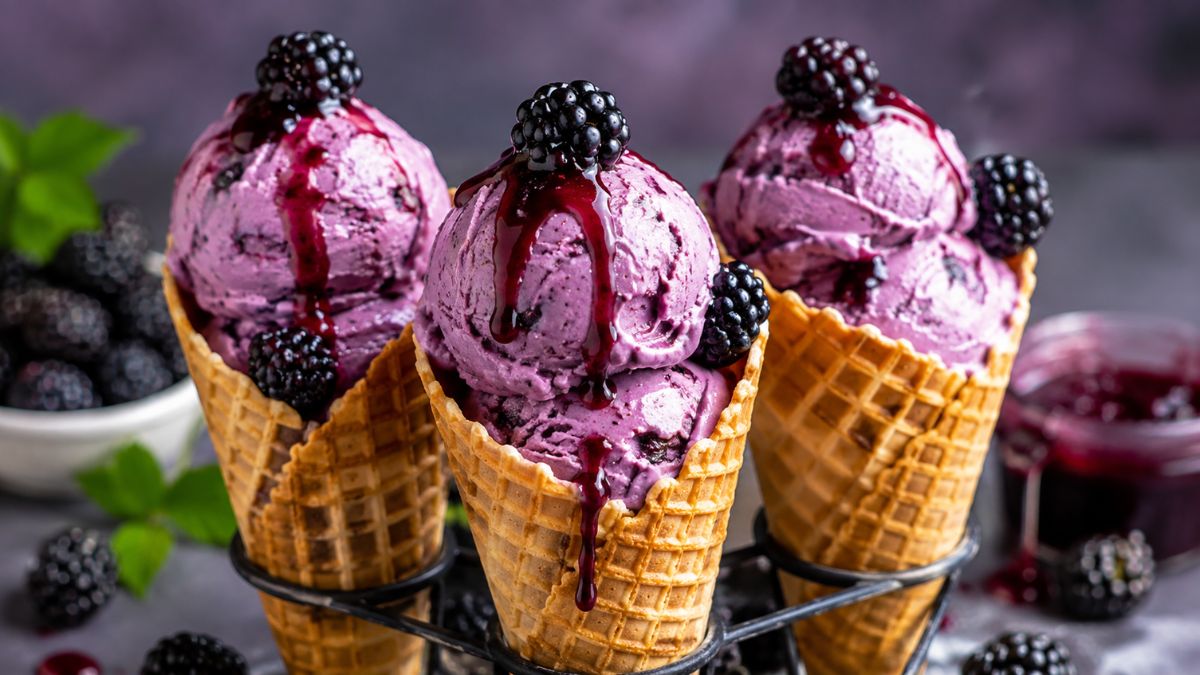
Blackberry ice cream brings together the bright, slightly tart flavor of ripe berries with a smooth, rich ice cream base. The fruit gives blackberry ice cream its naturally deep purple color and a fresh flavor that stands out from more traditional vanilla or chocolate varieties. When the berries are prepared properly, you get a balanced dessert that tastes fruity without losing the richness of homemade ice cream.
This blackberry ice cream recipe uses a simple egg-free base, so there is no need to make a custard or separate egg yolks. The blackberries are cooked briefly and strained into a smooth puree before being combined with cream, milk, sugar, and vanilla. After chilling and churning, the mixture becomes a soft, scoopable fruit ice cream with a concentrated berry flavor.
What Makes Blackberry Ice Cream Special?
Blackberries have a naturally sweet-tart flavor, which makes blackberry ice cream particularly well suited to a rich dairy-based dessert.Their acidity keeps the ice cream from tasting overly heavy, while their natural fruitiness gives the finished dessert plenty of character. If you enjoy other berry-based frozen desserts, raspberry ice cream offers a similarly bright fruit flavor with its own sweet-tart character.
The key is finding the right balance between the berries, sugar, and dairy. Very tart berries may need a little more sweetness, while particularly ripe blackberries can provide enough natural flavor that you can keep the recipe relatively simple.
Homemade blackberry ice cream also gives you more control over texture and flavor. Straining the blackberry puree removes most of the seeds, while thoroughly chilling the base before churning helps the mixture freeze more evenly.
Ingredients You’ll Need
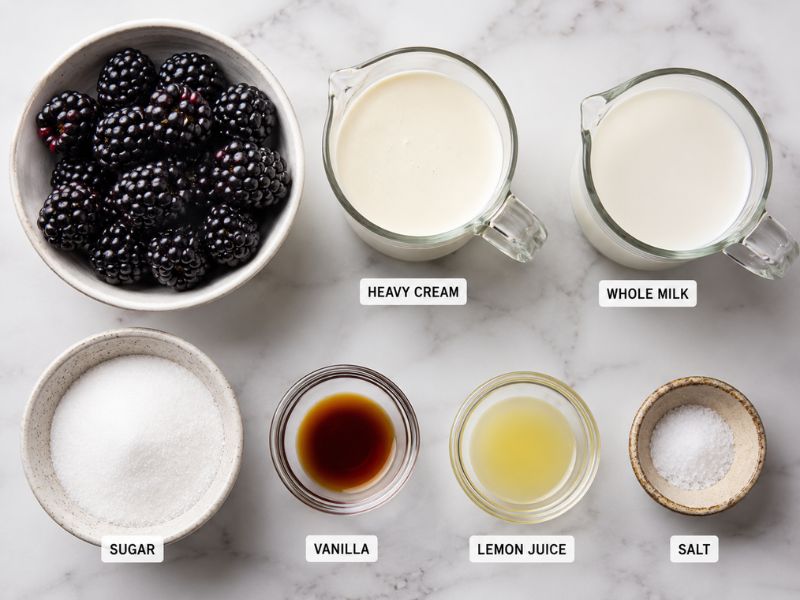
For the Blackberry Puree
- 2 cups fresh blackberries — Choose ripe berries with a deep color and good aroma. Frozen blackberries can also be used.
- 1/4 cup granulated sugar — Helps draw out the berry juices and softens the tartness.
- 1 tablespoon lemon juice — Brightens the blackberry flavor and adds balance.
For the Ice Cream Base
- 1 1/2 cups heavy cream — Provides richness and helps create a smooth, creamy texture.
- 1 cup whole milk — Lightens the base while still giving it enough body.
- 1/2 cup granulated sugar — Sweetens the dairy base and contributes to a softer frozen texture.
- 1 teaspoon vanilla extract — Adds a gentle background flavor that complements the berries.
- Pinch of salt — Helps bring the other flavors into balance.
Optional
- 1 tablespoon blackberry liqueur or berry syrup — This is optional and can intensify the berry character, but it is not necessary for the recipe.
For a family-friendly version of this blackberry ice cream, simply leave out the optional liqueur.
How to Make Blackberry Ice Cream
Step 1: Prepare the Blackberries
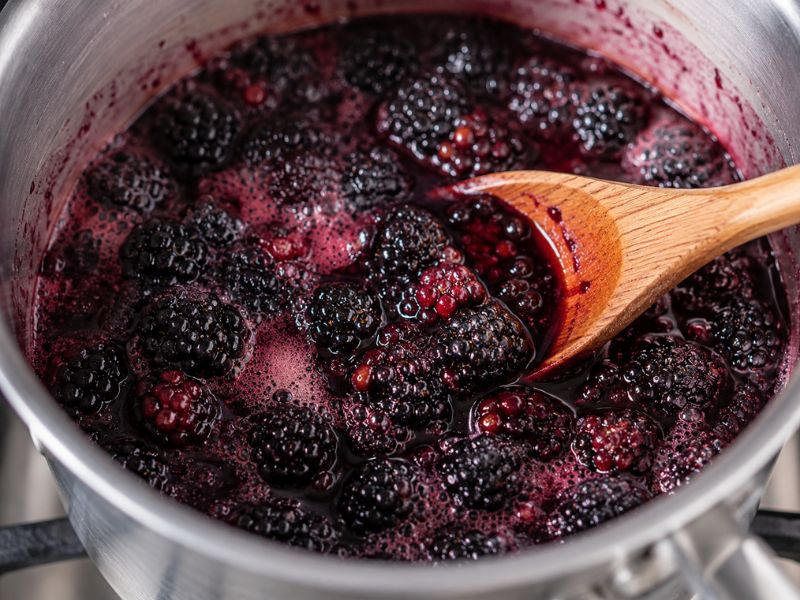
Place the blackberries, 1/4 cup sugar, and lemon juice in a medium saucepan over medium-low heat. Cook for about 5 to 8 minutes, stirring occasionally, until the berries soften and release their juices.
You do not need to cook the berries until they become a thick jam. The goal is simply to soften them enough to release their flavor and make them easy to puree.
Remove the saucepan from the heat and let the mixture cool slightly.
Transfer the berries and their juices to a blender or food processor and blend until smooth.
Pour the mixture through a fine-mesh sieve set over a bowl. Use the back of a spoon or spatula to press the puree through the sieve, leaving most of the berry seeds behind.
Set the strained blackberry puree aside to cool.
Step 2: Prepare the Ice Cream Base
In a large bowl, whisk together the heavy cream, whole milk, remaining 1/2 cup sugar, vanilla extract, and salt.
Continue whisking until the sugar has dissolved. The mixture does not need to be heated for this egg-free recipe.
If the sugar is taking a long time to dissolve, let the mixture stand for a few minutes and whisk again.
Step 3: Combine the Blackberry Mixture
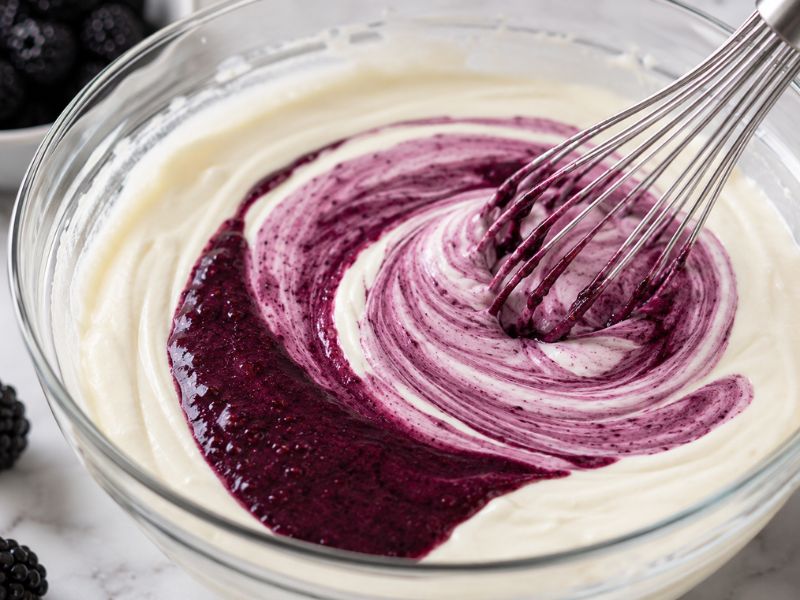
Once the blackberry puree has cooled to room temperature, pour it into the dairy mixture.
Whisk gently until the puree is evenly distributed throughout the base. At this point, the blackberry ice cream base should have a noticeable berry aroma and an even purple color.
Taste a small amount before chilling. If your blackberries were particularly tart, you may find that a little additional sugar is needed. Make small adjustments rather than adding a large amount at once.
Step 4: Chill the Mixture
Cover the bowl and refrigerate the ice cream base until thoroughly chilled, preferably for at least 4 hours.
For an even more convenient preparation, you can chill it overnight.
Starting with a cold base helps the ice cream maker freeze the mixture more efficiently. It also reduces the amount of time the mixture spends partially frozen, which can contribute to larger ice crystals.
Step 5: Churn the Ice Cream
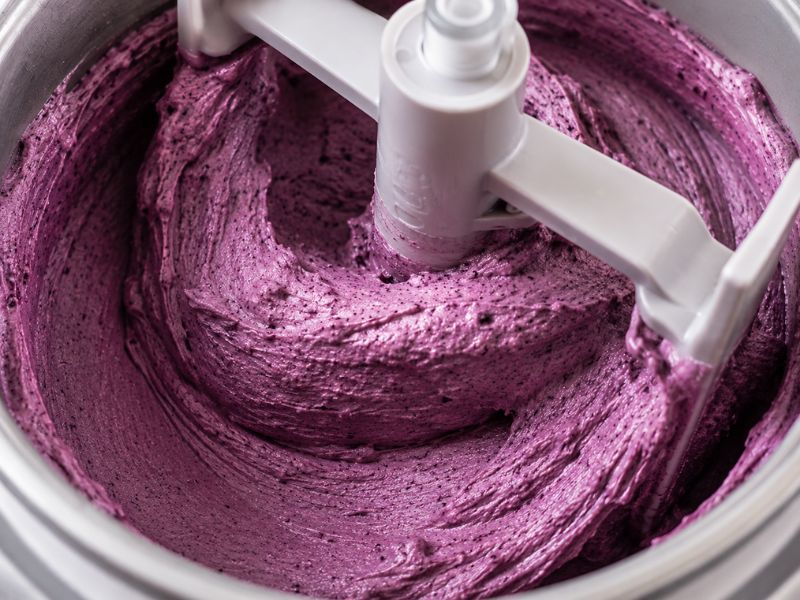
Pour the chilled mixture into your ice cream maker and churn according to the manufacturer’s instructions.
Instead of focusing only on a specific number of minutes, watch the texture. The mixture should thicken noticeably and reach a consistency similar to soft serve.
Avoid overfilling your machine because blackberry ice cream needs room to expand as it churns.
Step 6: Freeze Until Firm
Transfer the freshly churned ice cream to a clean, freezer-safe airtight container.
Smooth the surface with a spatula and press a piece of parchment paper directly against the surface if you want to minimize exposure to air.
Cover tightly and freeze for several hours, or until firm enough to scoop.
If the ice cream becomes very firm after extended freezing, allow it to sit at room temperature for several minutes before serving.
Tips for the Best Blackberry Ice Cream
Use flavorful blackberries. The quality of the fruit has a noticeable effect on the finished blackberry ice cream. Choose ripe berries that have a deep color and fresh aroma.
Strain the puree carefully. Blackberry seeds are small but noticeable. A fine-mesh sieve gives the finished ice cream a smoother texture.
Taste the berries before adjusting the sugar. Blackberries can vary considerably in sweetness. The amount of sugar needed can depend on the fruit you are using.
Don’t skip the chilling stage. A thoroughly chilled ice cream base generally churns more effectively than a warm or room-temperature mixture.
Keep the container shallow when possible. A relatively shallow freezer-safe container can make the ice cream easier to portion and may help it firm up more evenly.
Protect the surface from air. Keeping the container tightly covered helps maintain the quality of the ice cream and reduces the chance of freezer burn.
Should You Use Fresh or Frozen Blackberries?
Both fresh and frozen blackberries can work well when making blackberry ice cream.
Fresh blackberries are especially useful when they are ripe, flavorful, and readily available. They can provide a bright fruit flavor and are convenient when you are already shopping for other fresh ingredients.
Frozen blackberries are a practical alternative when fresh fruit is out of season or when you want to keep berries available for homemade frozen desserts. Allow them to thaw enough to cook evenly, then follow the same puree and straining process.
The main thing to watch is sweetness. Some frozen berries may taste more tart than particularly ripe fresh fruit, so taste the puree before combining it with the ice cream base.
Can You Make Blackberry Ice Cream Without an Ice Cream Maker?
Yes. You can make blackberry ice cream without a machine, although the texture will not be exactly the same as traditionally churned ice cream.
For a simple no-churn method, prepare and cool the blackberry puree as directed. Whip about 2 cups of cold heavy cream until it reaches firm peaks. In another bowl, combine the blackberry puree with sweetened condensed milk and vanilla, then gently fold the whipped cream into the mixture.
Transfer the mixture to a freezer-safe container, cover it well, and freeze until firm.
No-churn ice cream can be rich and pleasant, but churning incorporates air while the mixture freezes, which can produce a different texture. If you have an ice cream maker, it is the better choice for the egg-free base used in this recipe.
How to Store Homemade Blackberry Ice Cream
Store the finished ice cream in a clean, airtight freezer container with a secure lid.
Keep the container toward the back of the freezer rather than repeatedly moving it in and out of the door. Frequent temperature changes can affect the texture over time.
For the best quality, homemade blackberry ice cream is generally best enjoyed within a few weeks rather than being left in the freezer indefinitely. Always keep it properly frozen and avoid allowing it to repeatedly melt and refreeze.
If ice crystals begin forming on the surface, check that the container is tightly sealed and that there is not excessive air space around the ice cream.
Common Problems and How to Fix Them
Ice Cream Is Too Hard
Homemade ice cream can become quite firm after several hours in a cold freezer. Let it rest at room temperature for a few minutes before scooping.
If the texture is consistently hard, check that the recipe has enough sugar and fat. Both play an important role in the texture of frozen desserts.
Ice Cream Is Too Icy
An icy texture can result from excess water, insufficient chilling control, or an ice cream base that was not churned efficiently.
Straining the berries and using a balanced amount of dairy can help. Thoroughly chill the base before churning, and transfer the finished ice cream to the freezer promptly after churning.
Blackberry Flavor Is Too Tart
Blackberries naturally have some acidity, and their flavor can become particularly sharp when the fruit is underripe.
Taste the puree before adding it to the base. If necessary, gradually add a little more sugar to balance the acidity without overwhelming the berry flavor.
There Are Too Many Blackberry Seeds
If the seeds are distracting, strain the cooked berry mixture through a fine-mesh sieve before adding it to the dairy base.
For an especially smooth puree, strain it twice. This takes a little extra time but can make a noticeable difference in the finished texture.
The Ice Cream Melts Too Quickly
A homemade frozen dessert can soften quickly when served in a warm room or in a warm dish.
Chill the serving bowls or cones beforehand if convenient, and avoid leaving the entire container out while serving. Scoop only what you need and return the rest to the freezer.
Serving Ideas
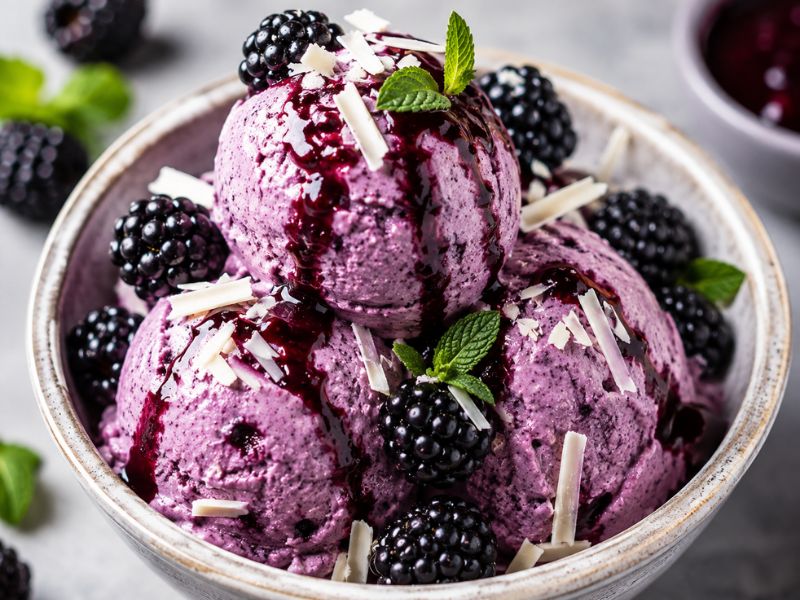
The fresh berry flavor of blackberry ice cream pairs well with simple toppings that add texture without overpowering the dessert.
Try serving scoops with:
- Fresh blackberries
- A spoonful of blackberry sauce
- Crushed shortbread or vanilla cookies
- White chocolate shavings
- Toasted chopped pistachios or almonds
- A few fresh mint leaves
- A simple waffle cone or sugar cone
For a more composed blackberry dessert, place a scoop alongside a slice of pound cake and add a small amount of warm berry sauce.
Recipe Variations
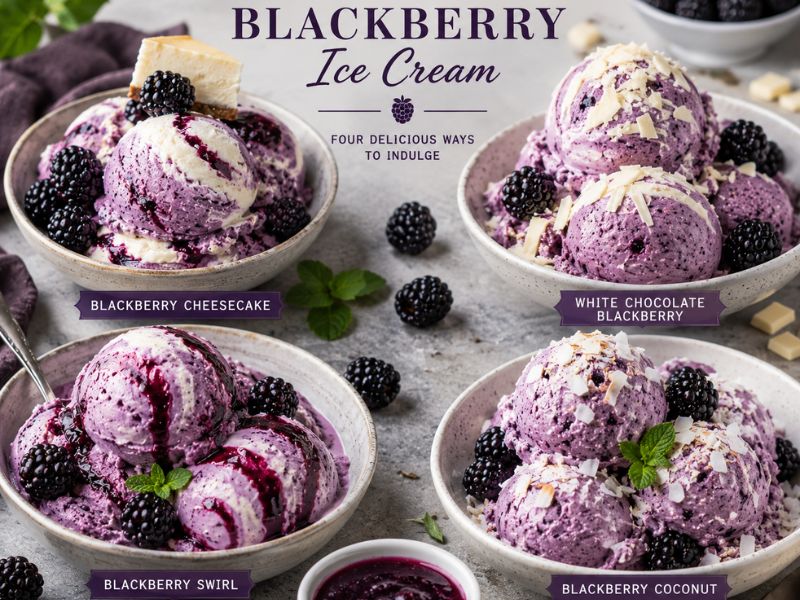
Blackberry Cheesecake Ice Cream
For a cheesecake-inspired version, blend a small amount of softened cream cheese into the dairy base before adding the blackberry puree. A few crushed graham crackers can also be folded in after churning.
Blackberry and White Chocolate Ice Cream
Add finely chopped white chocolate during the final stage of churning. The mild sweetness of white chocolate pairs naturally with the tartness of blackberries.
Blackberry Swirl Ice Cream
Instead of completely mixing all of the puree into the base, reserve some cooled puree. After churning, layer the ice cream and puree in the storage container, then gently swirl them together with a knife.
Blackberry Coconut Ice Cream
Replace part of the whole milk with unsweetened coconut milk for a subtle tropical note in this coconut ice cream variation. The coconut should complement rather than overpower the blackberry flavor.
Frequently Asked Questions
1. Can I use frozen blackberries for blackberry ice cream?
Yes. Frozen blackberries are a convenient alternative to fresh berries. Cook and puree them as directed, then strain the mixture before adding it to the ice cream base. Taste the puree first because sweetness can vary between different berries.
2. How do I keep blackberry ice cream from becoming icy?
Use a balanced dairy base, strain excess seeds and pulp from the berries, chill the mixture thoroughly, and churn it efficiently. Storing the finished ice cream in a tightly sealed container also helps maintain its texture.
3. Do I need to strain blackberry puree for ice cream?
You do not absolutely have to, but straining is recommended if you want a smoother texture. Blackberries contain numerous small seeds, and removing most of them makes the finished ice cream more pleasant to eat.
4. Can I make blackberry ice cream without an ice cream maker?
Yes. A no-churn method can be made with whipped heavy cream, sweetened condensed milk, vanilla, and blackberry puree. The result can be rich and creamy, although its texture will differ from traditionally churned ice cream.
5. How should homemade blackberry ice cream be stored?
Keep it in a tightly sealed, freezer-safe container. Protecting the surface from air helps reduce ice crystals and freezer burn. For the best quality, enjoy homemade ice cream within a few weeks.
Conclusion
This blackberry ice cream combines ripe berry flavor with a smooth, rich base without requiring an egg custard. By cooking and straining the berries, chilling the base properly, and churning it until thick, you can create a homemade frozen dessert with a balanced sweet-tart flavor and a smooth texture. It is simple enough for a regular weekend dessert while still giving you plenty of options for toppings and variations.

I am an SEO Specialist with 2 years of experience in keyword research, on-page SEO, content optimization, and WordPress SEO. At Desserts Avenue, I focus on creating SEO-friendly content, improving search visibility, and helping readers find valuable dessert recipes and guides through organic search.