
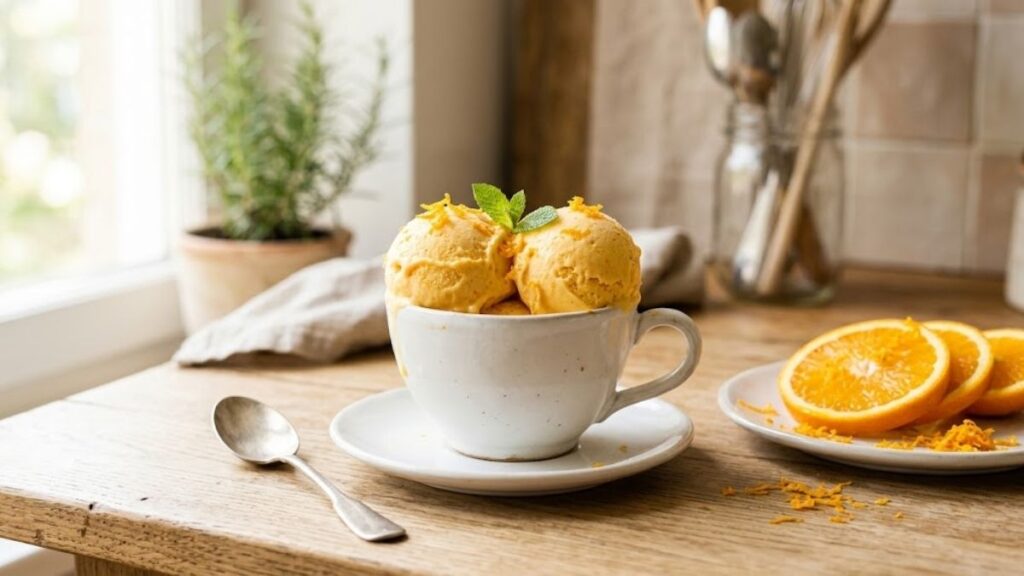
There is something especially refreshing about combining the bright flavor of fresh oranges with a cool, creamy dessert. Orange ice cream has a naturally cheerful citrus taste that feels lighter and fresher than many rich chocolate or caramel-based flavors. The secret is finding the right balance between orange juice, fragrant zest, cream, and sweetness.
This homemade version is designed to give you a smooth texture without making the orange flavor disappear beneath the dairy. Fresh orange juice provides the fruity base, while finely grated zest adds the aromatic citrus notes that juice alone cannot provide. A little vanilla rounds everything out without competing with the orange.
Whether you are looking for an easy summer dessert, a homemade frozen treat, or simply a new flavor to add to your ice cream collection, this recipe is a delicious place to start.
What Is Orange Ice Cream?
Orange ice cream is a creamy frozen dessert flavored with fresh oranges, usually through a combination of orange juice and orange zest. Unlike an orange sorbet, which is primarily fruit juice, water, and sugar, traditional ice cream contains dairy ingredients that give it a richer texture.
The orange flavor needs a little care because citrus juice contains acidity and additional liquid. Too much juice can make an ice cream base less creamy, while relying only on juice can produce a flavor that tastes surprisingly mild once frozen.
That is why orange zest is so useful. The colored outer layer of the peel contains aromatic oils that deliver a concentrated citrus fragrance. When zesting an orange, remove only the thin orange-colored layer and avoid the white pith underneath, which can taste bitter.
Fresh orange juice gives the best flavor, particularly when the oranges are ripe and naturally sweet.
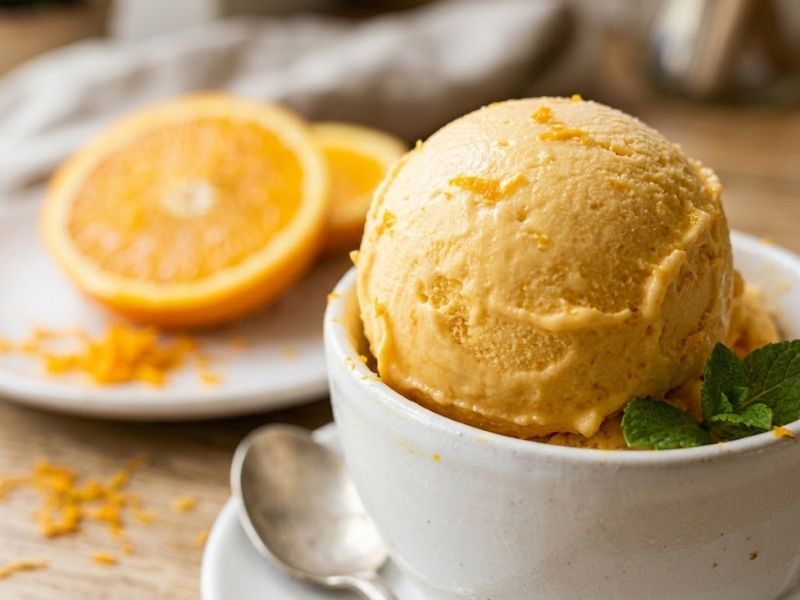
Why You’ll Love This Orange Ice Cream
- Bright citrus flavor: Fresh orange juice and zest give the ice cream a recognizable natural orange taste.
- Creamy texture: Heavy cream provides richness while whole milk keeps the mixture from becoming overly heavy.
- Simple ingredients: You do not need a long list of unusual ingredients.
- Great for warm weather: The cool citrus flavor makes this an especially refreshing summer dessert.
- Easy to customize: You can turn the basic recipe into orange-vanilla, orange-chocolate, or creamsicle-style ice cream.
- No complicated techniques: An ice cream maker gives the smoothest texture, but a no-churn approach is also possible.
Ingredients You’ll Need
| Ingredient | Purpose |
| Fresh oranges | Provide the main citrus flavor and juice |
| Orange zest | Adds concentrated orange aroma |
| Fresh orange juice | Gives the ice cream its fruity character |
| Heavy cream | Creates richness and a creamy texture |
| Whole milk | Lightens the cream while keeping the base smooth |
| Granulated sugar | Balances the acidity of the orange |
| Vanilla extract | Adds a subtle background flavor |
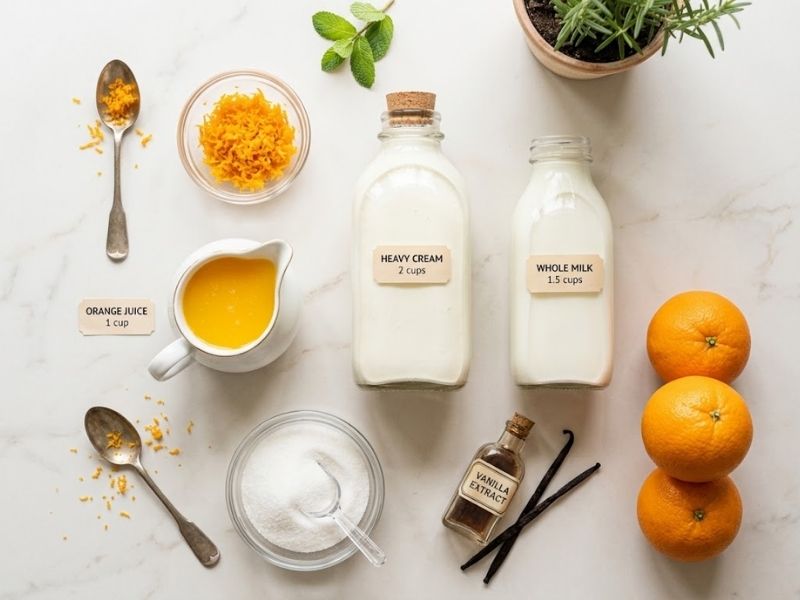
For the best fresh orange ice cream, use oranges that smell fragrant and feel heavy for their size. Freshly squeezed juice generally gives a brighter flavor than bottled juice.
When zesting, use a fine grater or microplane and stop as soon as you reach the white layer beneath the peel. Fresh oranges give this orange ice cream its brightest flavor.
How to Make Orange Ice Cream
1. Prepare the Oranges
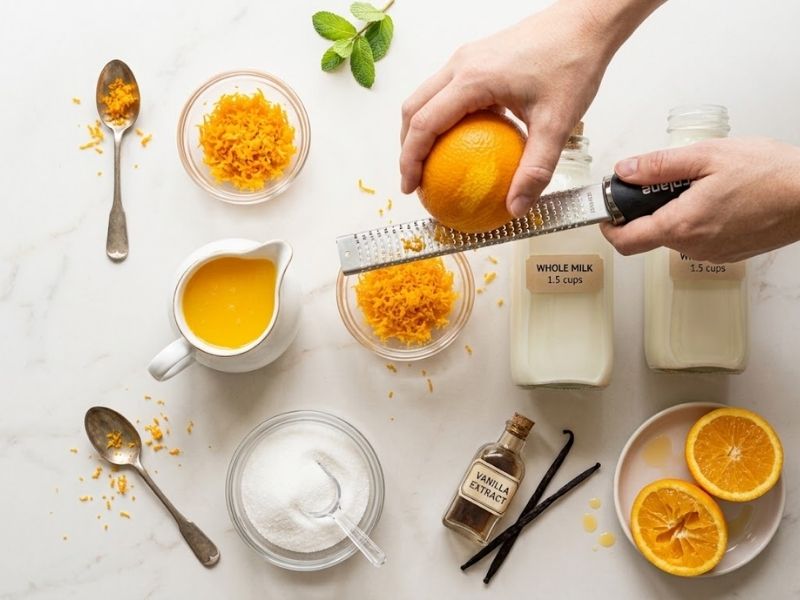
Wash and dry the oranges well. Finely grate the colored outer peel to collect the zest, being careful not to grate into the white pith.
Then cut the oranges and squeeze enough juice for the recipe.
Fresh juice can vary in sweetness and acidity depending on the oranges, so taste it before adding it to the ice cream base. If the fruit is particularly tart, the finished dessert may need slightly more sweetness.
2. Combine the Orange Flavor
Place the orange zest, fresh orange juice, and sugar in a bowl. Stir until the sugar begins to dissolve.
Letting the zest sit with the sugar and juice for a short time helps distribute its citrus aroma through the mixture.
Do not add excessive juice simply because you want a stronger orange taste. Once frozen, extra liquid can interfere with the smooth texture. This keeps the orange ice cream smooth and balanced.
3. Prepare the Creamy Base
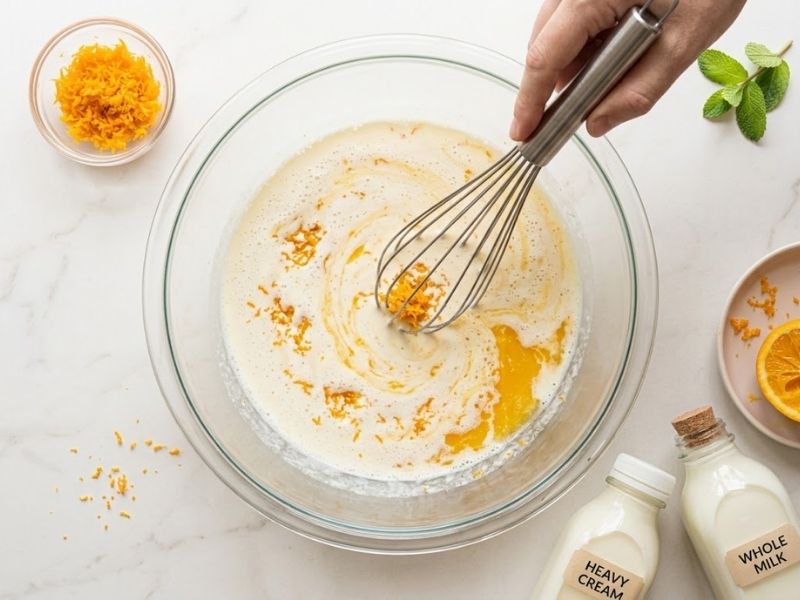
Pour the heavy cream and whole milk into a separate bowl. Add the orange mixture and vanilla extract.
Whisk everything together until the mixture is evenly combined.
The goal is not to whip the cream. You simply want a smooth liquid ice cream base with the orange ingredients evenly distributed.
4. Chill the Mixture
Cover the bowl and refrigerate the ice cream base until thoroughly cold.
This step is easy to skip when you are in a hurry, but it matters. Starting with a well-chilled mixture helps the ice cream freeze more efficiently and can improve the final texture.
5. Churn the Ice Cream
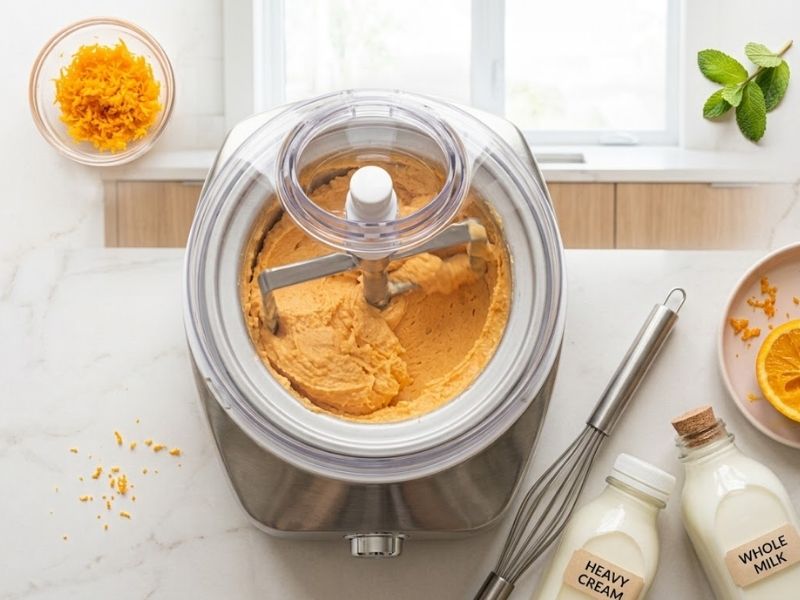
Pour the chilled mixture into your ice cream maker and churn according to the manufacturer’s instructions.
As the mixture freezes and incorporates air, it should gradually become thicker and resemble soft ice cream.
When it reaches a soft-serve consistency, transfer it to a freezer-safe container.
6. Freeze Until Firm
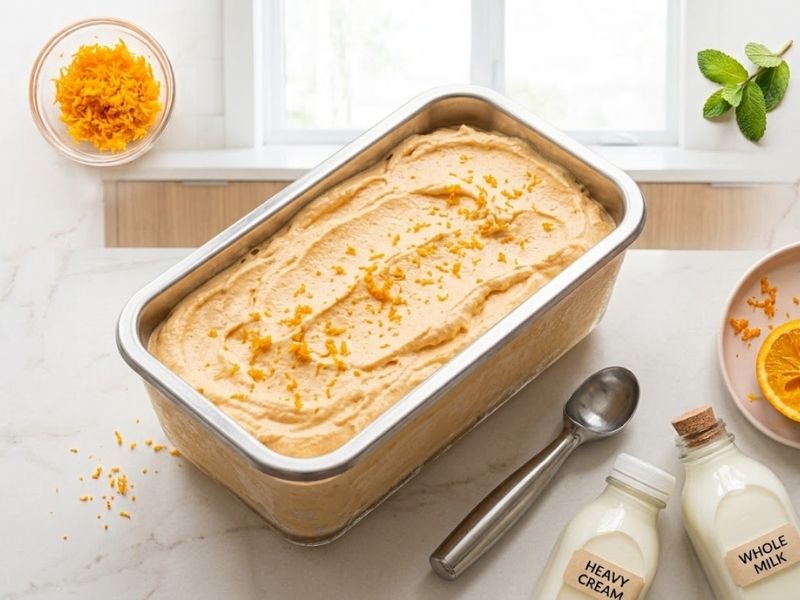
Cover the container tightly and place it in the freezer until the ice cream reaches a scoopable, firm consistency.
For the best texture, use a shallow freezer-safe container rather than an extremely deep one. A tightly covered surface also helps reduce the formation of ice crystals.
Before serving, allow the ice cream to sit at room temperature for a few minutes if it has become very firm.
How to Get the Best Orange Flavor
The biggest difference between ordinary orange-flavored ice cream and a really fragrant citrus dessert comes from how you use the oranges.
Use both juice and zest. Juice supplies fruity acidity and sweetness, while zest contributes aromatic oils. This helps give the orange ice cream a brighter flavor.
Choose flavorful oranges. If the fruit tastes bland before it goes into the recipe, the finished ice cream will probably taste bland too.
Avoid the white pith. Even a small amount can introduce bitterness.
Don’t overdo the juice. More juice does not automatically mean more orange flavor. It also adds water, which can affect the frozen texture.
Let the base chill completely. A properly chilled ice cream base freezes more effectively during churning. This keeps the orange ice cream smooth and balanced.
No-Churn vs. Churned Orange Ice Cream
If you do not own an ice cream maker, you can still make a simple no-churn version using a whipped cream-based mixture.
| Method | Texture | Difficulty | Best For |
| Churned | Smooth and airy | Moderate | Best overall texture |
| No-churn | Creamy and dense | Easy | Beginners without an ice cream maker |
The churned method generally gives you greater control over texture. The no-churn method is convenient, but the finished ice cream can be somewhat denser.
For a no-churn version, whip cold heavy cream until it reaches soft peaks, then gently fold in sweetened condensed milk, orange zest, and a modest amount of orange juice. Transfer it to a covered container and freeze until firm. Be careful not to add too much juice, as excess liquid can make the texture icy.
Common Mistakes to Avoid
Using Too Much Orange Juice
Adding extra juice may seem like an easy way to increase the citrus flavor, but it also increases the amount of water in the mixture. Keep the recipe balanced instead.
Grating the White Pith
The white portion underneath the orange peel is considerably more bitter than the fragrant outer zest. Use a light touch when zesting.
Using Bland Oranges
Not all oranges taste equally flavorful. A sweet, aromatic orange will give you a much better starting point.
Skipping the Chilling Step
Adding a warm or insufficiently chilled base to an ice cream maker can make freezing less efficient. Give the mixture enough time to become thoroughly cold.
Leaving the Ice Cream Uncovered
Air exposure can encourage ice crystals and freezer odors. Press a lid firmly onto the container before storing it.
Serving It Straight From a Very Cold Freezer
Homemade ice cream can become quite firm. Let it soften briefly before scooping rather than trying to force a spoon through a rock-hard container.
Easy Variations
Orange Vanilla
Add a little extra vanilla to create a softer, creamier flavor profile. This works particularly well when you want the orange to taste rounded rather than sharply citrusy.
Orange Chocolate
Add finely chopped chocolate or chocolate shavings after churning. Orange and chocolate make a classic dessert combination.
Orange Creamsicle-Style
Increase the vanilla slightly and keep the orange flavor bright but balanced. The result has the familiar creamy-citrus character associated with an orange creamsicle.
Orange and Cinnamon
A small amount of cinnamon can add warmth to the citrus flavor. Use it lightly so that it does not overpower the orange.
Dairy-Free Version
For a dairy-free alternative, replace the dairy ingredients with suitable unsweetened coconut or other plant-based alternatives designed for frozen desserts. Keep in mind that the substitute can change both flavor and texture.
If you enjoy trying different flavors, you can also explore Neapolitan ice cream for a classic homemade option.
How to Store Orange Ice Cream
Store homemade ice cream in a freezer-safe, airtight container. A container with a tight-fitting lid is preferable because it limits exposure to air and helps protect the dessert from freezer odors.
Keep the ice cream toward the back of the freezer where the temperature tends to remain more stable. Repeatedly allowing it to partially melt and refreeze can lead to a less pleasant texture.
For the best quality, homemade ice cream is generally best enjoyed while it remains fresh rather than being stored indefinitely.
If the ice cream becomes very hard, allow it to sit at room temperature for several minutes before scooping. Avoid leaving the entire container out for a long period.
How to Serve Orange Ice Cream
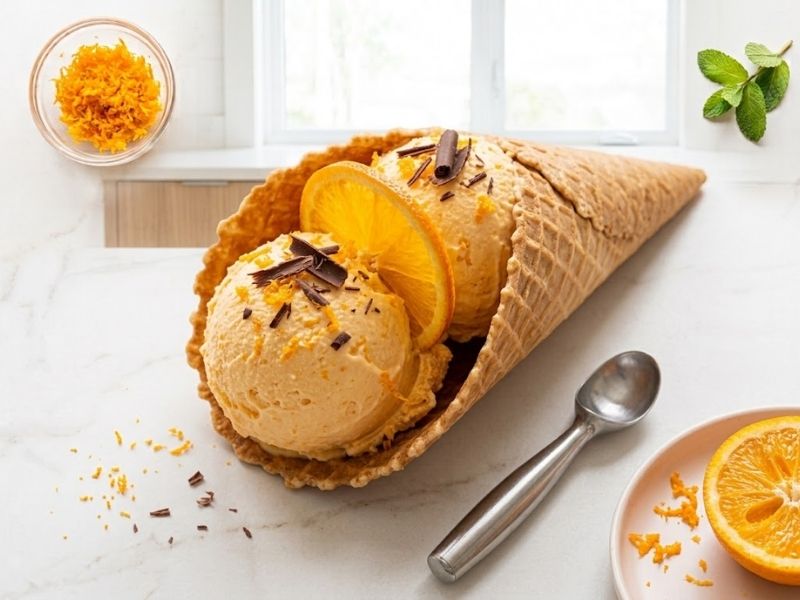
A scoop of orange ice cream can be served simply in a chilled bowl or waffle cone. For a little extra presentation, add a small amount of freshly grated orange zest immediately before serving.
You can also add:
- Thin orange slices
- Chocolate shavings
- Waffle cone pieces
- A small mint garnish
- Crushed cookies
- A drizzle of chocolate sauce
For a larger dessert, pair it with a simple vanilla cake, chocolate dessert, buttery cookies, or banana ice cream. The citrus flavor can provide a refreshing contrast to richer baked treats.
Frequently Asked Questions
Can I make orange ice cream without an ice cream maker?
Yes. A no-churn method using whipped heavy cream and sweetened condensed milk can work well. The texture will usually be somewhat different from traditionally churned ice cream, but it is a convenient option.
Can I use bottled orange juice?
You can, but freshly squeezed orange juice usually provides a more natural and vibrant citrus flavor. If using bottled juice, choose one without unnecessary added flavors.
Should I use orange zest?
Yes. Zest is one of the easiest ways to strengthen the aroma of an orange dessert without adding a large amount of extra liquid. Just avoid grating the bitter white pith.
Why does my orange ice cream taste bitter?
Bitterness can come from getting too much white pith into the zest, using particularly bitter citrus, or adding an excessive amount of zest. Use only the thin colored layer of the peel.
How long does homemade orange ice cream last in the freezer?
For the best texture and flavor, enjoy homemade ice cream while it is still fresh. Store it tightly covered and minimize temperature changes to help preserve its quality.
Can I use other citrus fruits?
Yes. Lemon, lime, tangerine, or grapefruit can inspire similar frozen desserts. However, each fruit has a different acidity and bitterness level, so the amount of juice and sweetness may need adjustment.
Why is my homemade ice cream too hard?
Homemade ice cream can freeze quite firmly, especially after extended freezer storage. Let it soften briefly at room temperature before scooping. Excess liquid or an imbalanced recipe can also contribute to an icy texture.
Conclusion
Homemade orange ice cream is a refreshing treat that brings together the bright taste of fresh oranges and the smooth richness of a creamy ice cream base. Using fresh juice and a little zest gives the dessert a natural citrus flavor without making it overly sharp or bitter. It is simple enough for a beginner and easy to adjust depending on how strong you want the orange flavor to be.
Serve it in a bowl or cone, or add a little orange zest or chocolate on top for an extra touch. For another homemade flavor idea, try Biscoff ice cream when you want something richer and more indulgent. Whether you make it for a warm afternoon, a family dessert, or simply because you have some fresh oranges on hand, this recipe is an easy and delicious way to enjoy citrus in a frozen treat.