
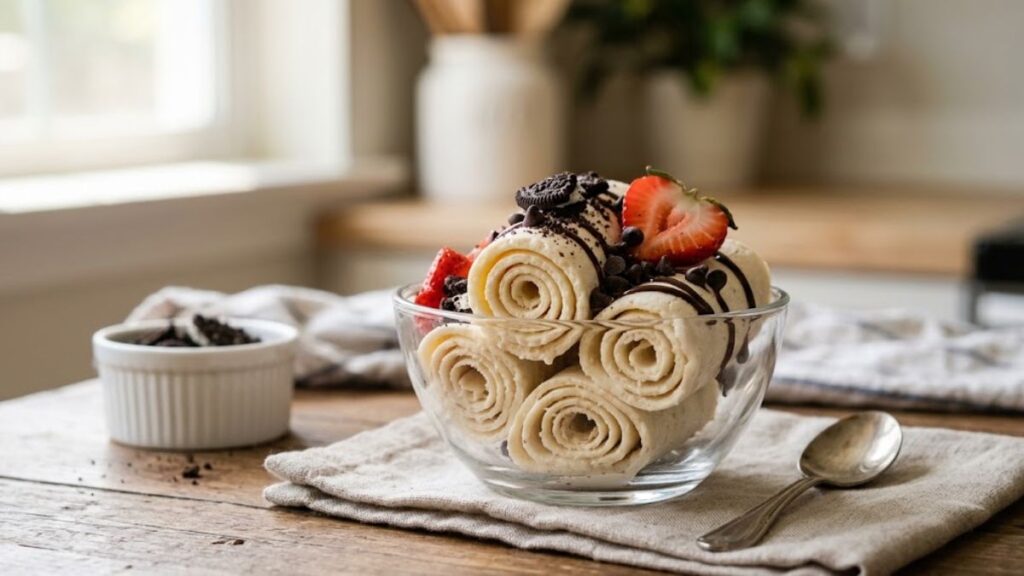
Rolled ice cream is one of those desserts that makes the serving process almost as fun as the eating. Instead of scooping a traditional tub of ice cream, a thin layer of ice cream base is frozen on a very cold surface and scraped into neat little rolls. The result is creamy, delicate, and fun to customize with your favorite toppings.
You may have seen this style of ice cream at specialty shops or in videos of Thai rolled ice cream being prepared on a freezing cold plate. Fortunately, you can make a homemade version without a commercial ice cream machine. This recipe uses a simple cream-based mixture and a couple of sheet pans to create thin layers that are easy to roll once completely frozen.
What Is Rolled Ice Cream?
Rolled ice cream, sometimes called Thai rolled ice cream or stir-fried ice cream, is made by spreading an ice cream mixture over an extremely cold flat surface. As the mixture freezes, it is spread into a thin layer and then scraped into cylindrical rolls.
The thin layer is important because it allows the mixture to freeze evenly and gives you enough flexibility to roll it without simply breaking into chunks. Commercial shops use specialized freezing plates, but a home freezer and rimmed baking sheets can work for a smaller batch. For a broader look at different frozen dessert styles, explore our Types of Ice Cream guide.
Unlike traditional churned ice cream, this method does not require you to whip air into the base. The finished texture is denser, and the rolls are best served soon after they are made because the thin pieces soften quickly.
Why You’ll Love This Recipe
- No ice cream maker needed: You can make the base with a bowl, whisk, and sheet pans.
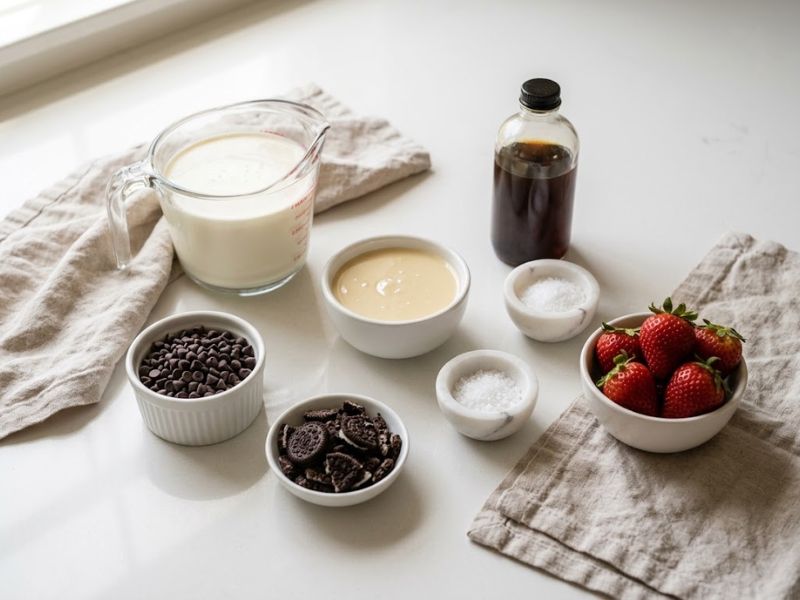
- Simple ingredients: Heavy cream, sweetened condensed milk, vanilla, and salt create the basic mixture.
- Easy to customize: Add crushed cookies, chocolate, fruit, or sauces to change the flavor.
- Fun presentation: The rolled shape makes an ordinary homemade dessert look completely different.
- Small-batch friendly: You can freeze one pan at a time if freezer space is limited.
Ingredients for Rolled Ice Cream
The ingredient list is short, but each ingredient has a job in the recipe.
Heavy Cream
Heavy cream provides the fat and richness needed for a creamy frozen dessert. Use heavy cream rather than a lower-fat milk because the texture of the finished rolls depends heavily on the richness of the base.
Sweetened Condensed Milk
Sweetened condensed milk supplies sweetness and gives the mixture body without requiring a cooked custard. Because it is already sweetened, there is no need to add a separate amount of granulated sugar.
Vanilla Extract
Vanilla gives the base a simple flavor that works well with fruit, cookies, chocolate, and caramel toppings.
Salt
A small amount of salt balances the sweetness and keeps the flavor from tasting flat.
Optional Mix-Ins and Toppings
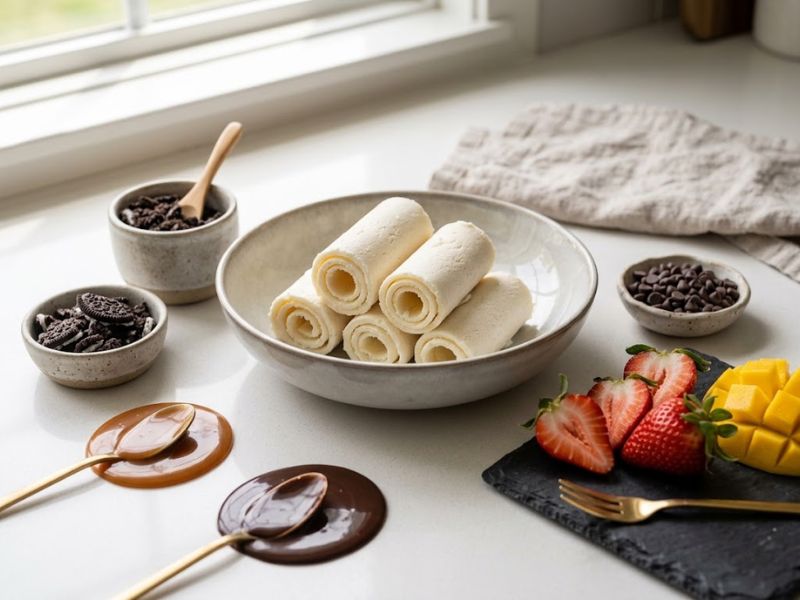
For the smoothest rolls, keep mix-ins small and use only a modest amount. Crushed chocolate sandwich cookies, mini chocolate chips, finely chopped strawberries, sprinkles, or a little caramel sauce are all good options.
How to Make Rolled Ice Cream
1. Chill the Sheet Pans
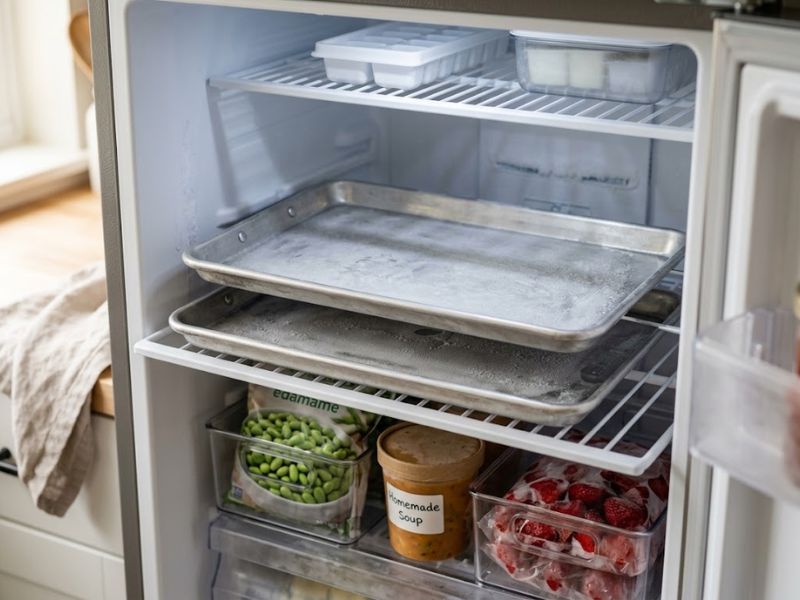
Place two clean, rimmed 9-by-13-inch metal baking sheets in the freezer. Let them become thoroughly cold before preparing the mixture.
A completely level freezer surface is important. If a pan sits at an angle, the mixture can collect more heavily on one side and freeze unevenly.
2. Make the Ice Cream Base
Add the heavy cream, sweetened condensed milk, vanilla extract, and salt to a mixing bowl.
Whisk gently until the ingredients are evenly combined. Do not whip the cream into soft peaks. You want a smooth liquid mixture rather than a whipped ice cream base.
3. Pour the Mixture Into the Pans
Remove the chilled pans from the freezer and divide the mixture between them.
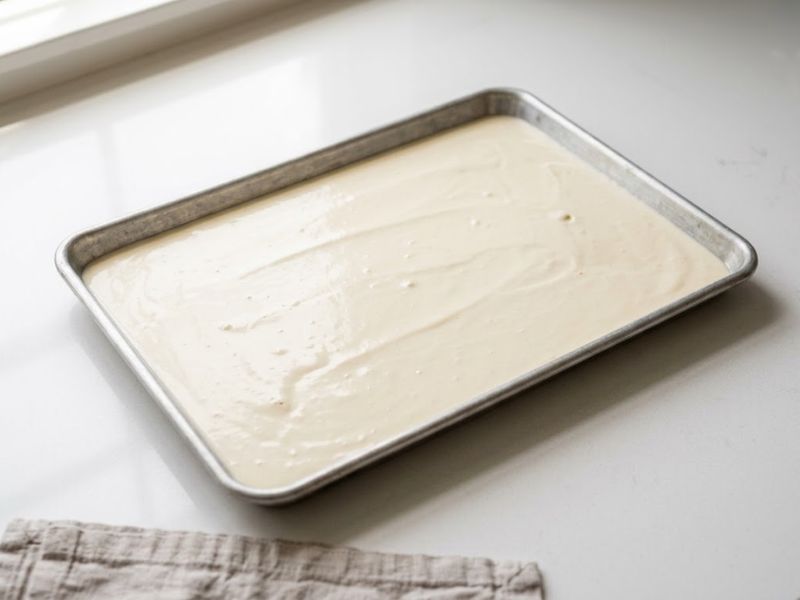
Tilt each pan carefully so the mixture spreads into a thin, even layer. Try not to leave thick areas around the edges because a thinner layer freezes more evenly and is easier to scrape.
If you only have enough freezer space for one pan, keep the remaining mixture covered in the refrigerator until the first pan is finished.
4. Freeze Until Completely Firm
Place the pans flat in the freezer. Freeze until the mixture is completely solid, which can take around 4 hours depending on your freezer and the thickness of the layer.
Do not rush this step. If the center is still soft, the ice cream will not scrape into clean rolls.
5. Prepare Your Serving Area
Have your bowls, toppings, and spatula ready before you begin scraping.
Rolled ice cream starts softening quickly once it leaves the frozen pan, so working efficiently makes a noticeable difference. Chilling the serving bowls beforehand can also give you a little more time.
6. Scrape the Ice Cream Into Rolls
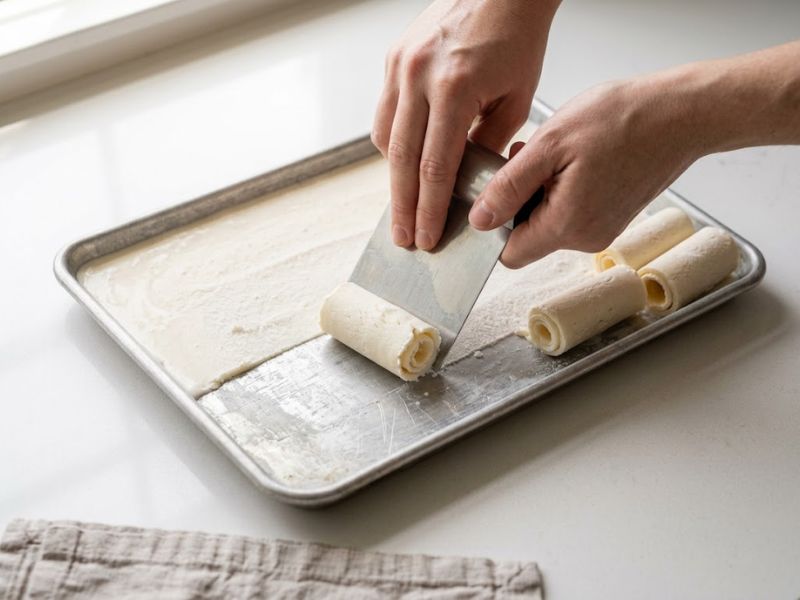
Use a sturdy, straight-edged metal spatula or food-safe scraper.
Start at one long edge of the frozen layer. Hold the scraper at a slight angle and push firmly across the ice cream so the frozen sheet curls forward as you move.
Work slowly and steadily rather than using a series of short, jerky movements. If the ice cream breaks instead of curling, allow the pan to sit for a very short time before trying again.
7. Transfer and Serve
Place each finished roll upright in a serving bowl.
Add your toppings immediately. Fresh fruit, crushed cookies, chocolate pieces, whipped cream, caramel, or chocolate sauce can all work well.
For the best texture, serve the rolled ice cream shortly after scraping.
Recipe Card
Recipe Name: Homemade Rolled Ice Cream
Short Description: Make creamy rolled ice cream at home with a simple four-ingredient base, chilled sheet pans, and your favorite toppings.
Yield: 4 servings
Prep Time: 15 minutes
Chill Time: 15 minutes for the pans
Freeze Time: About 4 hours
Total Time: About 4 hours 30 minutes
Ingredients
- 2 cups heavy cream
- 1/2 cup sweetened condensed milk
- 1 teaspoon vanilla extract
- 1/4 teaspoon salt
- Optional toppings and finely chopped mix-ins
Instructions
- Place two clean 9-by-13-inch rimmed baking sheets in the freezer to chill.
- Whisk the heavy cream, sweetened condensed milk, vanilla extract, and salt together in a bowl until smooth. Do not whip the cream.
- Divide the mixture evenly between the chilled pans.
- Spread the mixture into thin, even layers and place the pans flat in the freezer.
- Freeze for about 4 hours, or until completely firm.
- Remove one pan at a time and use a sturdy straight-edged metal spatula to scrape the frozen layer into rolls.
- Transfer the rolls to serving bowls and add your chosen toppings.
- Serve immediately for the best texture.
Notes
For the easiest rolling, keep the frozen layer thin and work quickly once the pan comes out of the freezer. If the rolls soften too quickly,
How to Get Perfect Ice Cream Rolls
The biggest factor is thickness. A thin, even layer gives you the best chance of creating rolls that curl instead of breaking.
Keep these tips in mind:
- Freeze the pans before adding the mixture.
- Make sure the pans sit completely flat in the freezer.
- Spread the mixture as evenly as possible.
- Avoid adding large chunks of mix-ins before freezing.
- Use a straight-edged metal scraper rather than a flexible plastic spatula.
- Scrape with steady pressure instead of stopping repeatedly.
- Have your bowls and toppings ready before you start.
- Work with one pan at a time if your freezer space is limited.
If the mixture is frozen solid but refuses to curl, the layer may be too thick or the scraper may not be making enough contact with the surface.
Best Mix-Ins and Toppings
Rolled ice cream has a neutral creamy base, so there are plenty of ways to change the flavor.
Cookies
Crushed chocolate sandwich cookies, chocolate wafer cookies, or small cookie pieces add crunch and a familiar flavor.
Chocolate
Mini chocolate chips, finely chopped chocolate, chocolate shavings, or a drizzle of chocolate sauce pair especially well with the vanilla base.
Fruit
Finely diced strawberries, blueberries, bananas, or mango can add a fresh contrast. Chop fruit into very small pieces so it does not interfere with the thin frozen layer.
Sauces
Caramel sauce, chocolate sauce, or strawberry sauce can be drizzled over the finished rolls. A small amount is usually enough because the base is already sweet.
Simple Toppings
Whipped cream, sprinkles, chopped nuts, coconut, and colorful candy pieces can finish the bowl without changing the base recipe.
Rolled Ice Cream Flavor Ideas
Once you are comfortable with the basic method, try one of these combinations:
Cookies and Cream: Add finely crushed chocolate sandwich cookies and finish with extra cookie crumbs.
Strawberry Shortcake: Use finely diced strawberries with a small amount of crushed shortbread or vanilla cookies.
Chocolate Brownie: Add very small brownie pieces to the finished rolls and drizzle them with chocolate sauce.
Mango Cream: Serve the vanilla rolls with finely diced ripe mango and a light drizzle of mango sauce.
Chocolate Caramel: Add chocolate shavings and finish the rolls with caramel sauce and a few chocolate chips.
Birthday Cake: Use colorful sprinkles and small pieces of vanilla cake, then finish with a little whipped cream.
For an easy comparison of different frozen dessert styles, you can also explore our guide to ice cream flavors and varieties.

Common Mistakes to Avoid
Using Warm Sheet Pans
A room-temperature pan can make the mixture take longer to freeze and may lead to an uneven layer. Always chill the pans first.
Making the Layer Too Thick
A thick layer is harder to scrape and roll. Divide the mixture between two pans when possible rather than piling everything into one.
Adding Large Mix-Ins
Large fruit chunks or cookie pieces can interrupt the scraper and cause the frozen sheet to break. Keep additions small.
Using a Flexible Spatula
A thin plastic spatula may bend instead of lifting the frozen layer cleanly. A sturdy straight-edged metal spatula gives you better control.
Scraping Too Quickly
Fast, uneven movements can break the ice cream. Use steady pressure and allow the scraper to do the work.
Waiting Too Long to Serve
Because the rolls have a large amount of exposed surface area, they soften quickly. Prepare the toppings first and serve soon after rolling.
How to Store Rolled Ice Cream
Rolled ice cream is best enjoyed fresh, but leftovers can be stored.
Arrange the rolls on a parchment-lined baking sheet and freeze them until firm again. Once they have firmed up, transfer them to a freezer-safe container with a tight-fitting lid.
Try to keep the rolls in a single layer or separate layers with parchment paper so they do not stick together. Homemade rolled ice cream is best used within about a week for better texture.
Keep in mind that the texture may become less delicate after being stored and refrozen. For that reason, make only as much as you expect to serve when possible.
Frequently Asked Questions
1. Can I make rolled ice cream without an ice cream machine?
Yes. This recipe is designed without an ice cream maker. The mixture freezes directly in chilled sheet pans before being scraped into rolls.
2. Why is my rolled ice cream breaking?
The layer may be too thick, the pan may not be cold enough, or the scraper may not be moving with enough steady pressure. A thin, completely frozen layer is easier to roll.
3. Can I add cookies to rolled ice cream?
Yes. Finely crushed cookies work particularly well. Keep the pieces small so they do not make the frozen layer difficult to scrape.
4. How long does rolled ice cream take to freeze?
The mixture generally needs about 4 hours to become completely firm, although freezer temperature, pan material, and layer thickness can affect the timing.
5. Can I store homemade rolled ice cream?
Yes. Freeze the finished rolls on parchment until firm, then transfer them to a tightly sealed freezer-safe container. For the best texture, use them within about a week.
Conclusion
Making rolled ice cream at home is mostly about controlling temperature and thickness. Once the pans are properly chilled and the mixture is spread into a thin layer, the scraping technique becomes much easier to manage.
The simple vanilla base also gives you plenty of room to experiment. Try cookies and cream, fresh fruit, chocolate, caramel, or your own combination of toppings. If you enjoy experimenting with homemade frozen desserts, our Vanilla Ice Cream recipe is another classic option to try.

I am an SEO Specialist with 2 years of experience in keyword research, on-page SEO, content optimization, and WordPress SEO. At Desserts Avenue, I focus on creating SEO-friendly content, improving search visibility, and helping readers find valuable dessert recipes and guides through organic search.